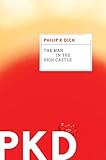
Editors Reads Verdict
The Man in the High Castle is Dick's most structurally ambitious novel, layering an alternate history premise with meditations on authenticity, colonialism, and the stories cultures tell to justify power. Its use of the I Ching as both plot device and compositional method gives the novel a quality unlike anything else in American fiction.
What We Loved
- The alternate history premise is developed with genuine historical intelligence
- Multiple converging narratives give the novel unexpected structural complexity
- The I Ching conceit is genuinely daring and surprisingly effective
- Dick's critique of authenticity in art applies directly to the novel itself
Minor Drawbacks
- Some narrative threads feel abandoned rather than resolved
- The pacing is deliberately oblique — readers expecting plot momentum may be frustrated
- Characterization is thinner than in Dick's later, more personal novels
Key Takeaways
- → Authenticity is a social construct — what is 'real' depends on who holds cultural authority
- → Conquered peoples internalize the values of their conquerors in ways that outlast the conquest itself
- → History's contingency is both terrifying and liberating: the world could always have been otherwise
- → Art derives its value from human connection, not from material origin or provenance
| Author | Philip K. Dick |
|---|---|
| Publisher | Mariner Books |
| Pages | 259 |
| Published | October 1, 1962 |
| Language | English |
| Genre | Science Fiction, Fiction, Classic |
| Difficulty | Intermediate |
| Best For | Readers interested in alternate history and speculative fiction; those curious about how Dick's literary ambitions extended beyond genre conventions. |
How The Man in the High Castle Compares
The Man in the High Castle at a glance against 3 similar books readers weigh alongside it.
| Book | Author | Rating | Best for |
|---|---|---|---|
| The Man in the High Castle (this book) | Philip K. Dick | ★ 4.1 | Readers interested in alternate history and speculative fiction |
| 1984 | George Orwell | ★ 4.7 | Every adult in a democracy |
| Brave New World | Aldous Huxley | ★ 4.5 | Readers of 1984 and other dystopian fiction, philosophy and ethics enthusiasts, |
| Martian Time-Slip | Philip K. Dick | ★ 4.1 | Philip K |
A World Where the Axis Won
Philip K. Dick wrote The Man in the High Castle using the I Ching — the ancient Chinese divination text — to make narrative decisions as he composed. The result, he said, was that the novel wrote itself, the hexagrams determining which direction each scene would take. This method produced what is formally his most unusual work: an alternate history of 1962 in which Imperial Japan controls the Pacific States of America, Nazi Germany controls the Eastern United States, and the Rocky Mountain States exist as a neutral buffer zone. The novel follows several characters whose paths intersect across this divided continent.
The premise alone would be sufficient for a conventional thriller. Dick is not interested in a conventional thriller. He wants to know what it means to live inside a history that feels wrong — and whether the characters in his novel have any way of knowing what the right history might look like.
Authenticity and Its Counterfeits
The novel’s most sustained concern is with authenticity. Robert Childan runs a shop selling Americana — artifacts of the pre-occupation United States — to Japanese collectors who find them beautiful and exotic. The central problem he faces is forgery: some of the artifacts are genuine, some are fabrications, and the cultural value of each depends entirely on provenance that cannot be verified by examination. A forged Colt .44 and an authentic one are physically identical. Their difference is a story.
Dick extends this into a meditation on what “authentic” culture means when the culture that produced it has been conquered and replaced. The Pacific States of America produces goods for Japanese consumption; Japanese aesthetes develop taste for American folk art; American artisans discover they can create objects that carry a quality the Japanese call wu — an ineffable spiritual presence — regardless of the object’s historical origin. Authenticity, Dick suggests, is not a property of objects but a relationship between object and perceiver.
The Book Within the Book
The novel’s most audacious device is The Grasshopper Lies Heavy, a banned novel that exists within Dick’s alternate history — a novel in which the Allies won the Second World War. Dick’s characters read it and find it compelling and plausible. Its history does not quite match ours, but its existence raises a question: if the characters in The Man in the High Castle can imagine an alternate history that corresponds roughly to our own, does that mean their world is the alternate and ours the baseline? Or are both equally contingent, equally constructed?
This is the novel’s genuinely philosophical achievement, and it earned Dick the Hugo Award in 1963 — the only major genre award he received in his lifetime. The conceit of nested alternate histories predates the postmodern literary games of Borges and Pynchon in American fiction, and it remains fresh.
Dick’s Career and the Place of This Book
Philip K. Dick wrote with extraordinary speed and under chronic financial pressure across the 1950s and 1960s, producing dozens of novels and well over a hundred short stories, many of them dashed off for the pulp markets that barely paid him a living. The Man in the High Castle, published in 1962, stands apart in that frantic output as the book where his literary ambitions and his pulp velocity came into balance. It is more carefully constructed than most of what surrounds it in his bibliography, and the Hugo Award it won — the only major prize he received while alive — marked the first real recognition that his genre work carried serious intellectual weight. Dick himself remained restlessly dissatisfied; he reportedly attempted a sequel, consulting the I Ching as he had for the original, and found the oracle unwilling to take him back into the world he had built. The book consequently stands alone, complete and unrepeated.
The preoccupations on display here run through the whole of Dick’s work, but they appear in High Castle in an unusually controlled form. The instability of reality, the difficulty of distinguishing the authentic from the counterfeit, the suspicion that the world we take for solid is a fabrication — these obsessions would later power Do Androids Dream of Electric Sheep?, Ubik, and A Scanner Darkly. What is striking about The Man in the High Castle is how its central metaphysical anxiety is grounded in concrete, historical, political material rather than in the drugs and simulations of the later novels. Here the question “what is real?” is asked of history itself.
Adaptation and Reception
For decades The Man in the High Castle was regarded as one of the great unfilmable Dick novels, too interior and oblique for conventional dramatization. That changed with the Amazon television series that ran from 2015 to 2019, which used the book’s premise as a launching point but expanded it considerably, inventing new plot machinery and replacing the embedded novel The Grasshopper Lies Heavy with films depicting alternate realities. The series introduced the story to a vast new audience and prompted many viewers to return to the source, where they often found a stranger, quieter, and more philosophically unsettling work than the action-driven adaptation suggested. The contrast is instructive: the show externalizes the conflict into a thriller, while the novel keeps its drama in the realm of perception, taste, and the unbearable suspicion that one’s whole world might be the forgery.
Critically, the book’s reputation has only grown. It is now routinely cited as a landmark of alternate history — arguably the work that established the subgenre’s literary credibility — and as one of the high points of Dick’s achievement, frequently the first of his novels recommended to readers approaching him through the side door of literary fiction rather than science fiction.
Who Should Read It
The Man in the High Castle is for the reader who values ideas, atmosphere, and ambiguity over propulsive plot. Newcomers to Philip K. Dick will find it one of his most accessible and rewarding entry points, less hallucinatory than his later work but rich with the questions that define him. Readers who came to the premise through the television series should be prepared for a very different experience — slower, more meditative, and resolutely uninterested in tidy resolution. Those who need their narrative threads neatly tied off may find the ending deliberately unsatisfying, since Dick is more concerned with leaving the reader inside an unresolved doubt than with delivering a verdict. But for anyone drawn to fiction that treats history as contingent and reality as negotiable, it remains one of the most quietly destabilizing novels in American science fiction.
Our rating: 4.1/5 — Dick’s Hugo-winning alternate history is less a thriller than a philosophical puzzle about authenticity, history, and the stories we tell to make sense of who won.
Frequently Asked Questions
What is "The Man in the High Castle" about?
An alternate history set in an Axis-occupied America where the Allies lost WWII — Philip K. Dick's Hugo Award-winning masterwork of speculative fiction.
Who should read "The Man in the High Castle"?
Readers interested in alternate history and speculative fiction; those curious about how Dick's literary ambitions extended beyond genre conventions.
What are the key takeaways from "The Man in the High Castle"?
Authenticity is a social construct — what is 'real' depends on who holds cultural authority Conquered peoples internalize the values of their conquerors in ways that outlast the conquest itself History's contingency is both terrifying and liberating: the world could always have been otherwise Art derives its value from human connection, not from material origin or provenance
Is "The Man in the High Castle" worth reading?
The Man in the High Castle is Dick's most structurally ambitious novel, layering an alternate history premise with meditations on authenticity, colonialism, and the stories cultures tell to justify power. Its use of the I Ching as both plot device and compositional method gives the novel a quality unlike anything else in American fiction.
Ready to Read The Man in the High Castle?
Check the current price on Amazon.
Check Price on Amazon (paid link)Prices and availability are subject to change. See Amazon for current price.
Review last updated: