Where to Start with Philip K. Dick: A Reading Guide
Where to start with Philip K. Dick — whether to begin with Do Androids Dream of Electric Sheep?, Ubik, or The Man in the High Castle. A complete reading guide.
Philip K. Dick (1928–1982) is the most philosophically significant writer in the history of science fiction — the novelist whose obsessive engagement with questions of reality, identity, and human consciousness has influenced fiction, philosophy, and film more than almost any other twentieth-century American writer. His fifty novels and over a hundred short stories ask, in various ways, the same questions: What is real? What is human? What constitutes an authentic experience? The films made from his work — Blade Runner, Total Recall, Minority Report, A Scanner Darkly, The Man in the High Castle — have shaped how contemporary culture thinks about these questions.
Where to Start
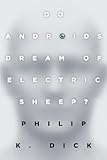
The Best Entry Point: Do Androids Dream of Electric Sheep? (1968)
The best first PKD novel — immediately gripping, philosophically central, and the source of Blade Runner. Rick Deckard is a bounty hunter tasked with ‘retiring’ six Nexus-6 androids who have escaped from the Martian colonies and are living illegally on Earth. The novel’s central question — whether androids capable of passing the empathy test are morally equivalent to humans — unfolds through Deckard’s growing uncertainty about the difference between human empathy and its simulation. The novel is very different from the film (which is excellent in its own right) and raises questions that the film cannot fully address.
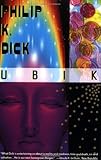
The Reality-Bending Classic: Ubik (1969)
PKD’s most sustained and disorienting investigation of reality’s instability. A novel in which the world the characters inhabit is subject to mysterious decay — objects regressing to earlier versions of themselves, time moving backward — and in which the nature of the characters’ situation is revealed only gradually and never entirely. The sprayed product ‘Ubik’ — which appears in advertisements at the beginning of each chapter and whose nature is gradually clarified — is the novel’s central mystery. Fans of PKD consider it his masterpiece; it is best approached after Do Androids Dream? so that his method is already familiar.
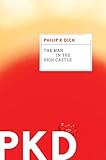
The Alternate History: The Man in the High Castle (1962)
Dick’s Hugo Award winner and his most straightforwardly plotted major novel. The alternate history conceit — Axis victory in the Second World War — is the setting for an investigation into authenticity and reality that operates on multiple levels: the fake American antiques that circulate in the Japanese-occupied West Coast, the novel-within-the-novel that imagines Allied victory, and the I Ching that several characters use to make decisions (and that Dick himself used to write the novel). The most accessible PKD starting point for readers of literary fiction who are uncertain about science fiction.
A Scanner Darkly (1977)
Dick’s most autobiographical novel — drawing directly on his experiences in the drug subculture of Orange County in the 1970s — and his most emotionally direct. Bob Arctor is an undercover narcotics officer surveilling a group of addicts, who is also himself a Substance D addict, and who eventually loses the ability to recognize that the person he is surveilling is himself. The novel is simultaneously a science-fiction thriller, a drug memoir, and a genuinely funny dark comedy. The afterword — in which Dick lists friends who died or were permanently damaged by drugs — is among the most moving things he wrote.
VALIS (1981)
Dick’s most explicitly autobiographical and most philosophical novel — the account of a version of himself (Horselover Fat, a name that translates Philip K. Dick from Greek and German) who receives, in 1974, a pink beam of information from what may be God, an alien satellite, or his own unconscious. The novel is the most demanding of his works, drawing on Gnostic theology, early Christianity, and Dick’s own considerable theological speculation. Essential for readers who want to understand Dick’s late career; not a starting point.
Why Do Androids Dream of Electric Sheep? Is the Ideal First Book
For a reader new to Philip K. Dick, Do Androids Dream of Electric Sheep? is the ideal first book because it is among his most famous and accessible novels, the source of the film Blade Runner, and a fine expression of his distinctive gifts, the mind-bending premises, the philosophical depth, and the questioning of reality and what it means to be human. Do Androids Dream of Electric Sheep? follows a bounty hunter tasked with hunting down rogue androids in a decaying future, raising profound questions about empathy, humanity, and authenticity. As an entry point it is ideal, for it is one of his best-known and most gripping works and a perfect example of his philosophically rich, reality-questioning science fiction. It welcomes the newcomer with its gripping premise, its philosophical depth, and its haunting questions, drawing the reader into his distinctive vision. It is among his major works and a fine representation of his gifts, so the new reader encounters Dick at his most characteristic. For the newcomer, then, Do Androids Dream of Electric Sheep? is the natural and ideal starting point.
What to Expect as a New Reader
As a new reader, you can expect Do Androids Dream of Electric Sheep? to be a gripping, philosophically rich, and reality-questioning work of science fiction. You can expect a gripping premise, for a bounty hunter is tasked with hunting down rogue androids in a decaying future. You can expect philosophical depth, for the novel raises profound questions about empathy, humanity, and what distinguishes the real from the artificial. You can expect a questioning of reality, a hallmark of Dick, for the novel unsettles our assumptions about what is real and human. You can expect a haunting, atmospheric future world. You can expect ideas-driven storytelling and emotional and philosophical resonance. You can expect a gripping, thought-provoking read. Expect, in short, a gripping, philosophically rich, and reality-questioning work of science fiction, a fine introduction to Dick’s gifts.
Going Deeper After Your First Book
Once Do Androids Dream of Electric Sheep? has introduced you to Dick’s gifts, the reader who wishes to go deeper can explore his many other novels and stories, which continue his mind-bending premises, his philosophical depth, and his questioning of reality, identity, and humanity. His acclaimed novels imagine alternate histories, drug-shattered realities, and worlds where the nature of the real is endlessly in doubt, including his famous novel of an alternate history and his disturbing later works, while his many short stories distill his inventive, reality-bending imagination and have inspired numerous films. Reading these after Do Androids Dream of Electric Sheep? deepens your appreciation of Dick’s distinctive gifts, the mind-bending premises, the philosophical depth, and the questioning of reality and humanity. His characteristic concerns run through his prolific work. Building your reading journey through Dick is a matter of following his fiction from Do Androids Dream of Electric Sheep? into his other novels and stories. The reader who begins here and continues will find one of the most inventive and philosophically rich writers in all of science fiction.
Reading Philip K. Dick
PKD’s prose is workmanlike rather than beautiful — he wrote quickly, under financial pressure, and his sentences do not have the elevation of Ursula Le Guin or Samuel Delany. What he has instead is ideas of extraordinary philosophical density and a gift for making reality feel unreliable. The best approach is to read him for the questions he raises rather than the style in which he raises them. The questions — about authenticity, empathy, consciousness, and the nature of human identity — remain the most urgent in contemporary technology and philosophy.
Frequently Asked Questions
Where should I start with Philip K. Dick?
Do Androids Dream of Electric Sheep? (1968) is the best starting point — the novel on which Blade Runner is based, in which bounty hunter Rick Deckard hunts down illegal androids in a post-apocalyptic San Francisco while questioning the nature of empathy, authenticity, and what it means to be human. It is immediately gripping, relatively short (around 200 pages), and raises the central PKD questions — what is real? what is human? — in their most accessible form. The Man in the High Castle is the best alternative starting point for readers who prefer alternate history; Ubik for those who want PKD's most mind-bending reality disruption.
What is Ubik about?
Ubik (1969) is Philip K. Dick's most sustained exploration of reality's instability — a novel in which the world that the characters inhabit is revealed, layer by layer, to be something other than what it appears. Joe Chip and his colleagues, working for a psychic-powers agency, travel to the Moon for a mission that goes catastrophically wrong, and find themselves in a world that is decaying around them and regressing backward in time. The novel's central mystery — what is happening, and who or what is Ubik? — is never fully resolved, because resolution is beside the point. PKD's most perfectly realised single novel.
What is The Man in the High Castle about?
The Man in the High Castle (1962) is set in a 1962 in which the Axis powers won the Second World War: the United States has been divided between Nazi Germany (which controls the East) and Imperial Japan (which controls the West Coast). Multiple characters navigate this occupied America — a craftsman, an antiques dealer, a Japanese trade official — while a forbidden novel circulates underground that imagines a different outcome. PKD won the Hugo Award for it. The novel is simultaneously an alternate history and a meditation on authenticity: the question of which reality is 'real' runs through every plotline.
Is Philip K. Dick's writing literary?
Philip K. Dick is one of the most philosophically serious writers in American fiction, though he was largely ignored by the literary establishment during his lifetime. His central concerns — the nature of reality, the definition of humanity, the relationship between empathy and consciousness, the unreliability of memory — are among the most significant in twentieth-century thought, and he explored them with more sustained consistency than most 'literary' novelists. His prose is workmanlike rather than beautiful, but his ideas are extraordinary, and the best of his novels (Ubik, A Scanner Darkly, The Man in the High Castle) are formally innovative as well as philosophically serious. He has been more influential on literature, film, and technology than almost any other writer of his generation.