Editors Reads Verdict
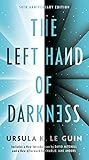
Le Guin's masterwork is the most intellectually serious exploration of gender in the science fiction canon. Its thought experiment — a world without fixed gender — illuminates by contrast what gender does to our world.
What We Loved
- One of science fiction's most profound thought experiments about gender and society
- Le Guin's prose is beautifully crafted
- Won the Hugo and Nebula Awards — the definitive genre recognition
- The friendship between Genly Ai and Estraven is one of science fiction's great relationships
Minor Drawbacks
- Le Guin's use of 'he' pronouns for the ambisexual inhabitants has been debated as a limitation of the experiment
- The political intrigue sections require patient tracking
- Some readers find the pacing deliberate to the point of slowness
Key Takeaways
- → Gender shapes virtually every aspect of human social interaction — its absence would transform everything
- → The outsider perspective (Genly Ai's viewpoint) makes the familiar strange and the strange familiar
- → Political loyalty and personal trust operate by different rules
- → Light and darkness are complementary rather than opposed — the title refers to the Ying/Yang unity
- → Cultural understanding requires genuine personal vulnerability — not just observation
| Author | Ursula K. Le Guin |
|---|---|
| Publisher | Ace |
| Pages | 304 |
| Published | March 1, 1969 |
| Language | English |
| Genre | Science Fiction, Literary Fiction, Classic |
| Difficulty | Intermediate |
| Best For | Science fiction readers interested in Le Guin's literary science fiction and the intersection of genre with feminist and anthropological thought. |
How The Left Hand of Darkness Compares
The Left Hand of Darkness at a glance against 3 similar books readers weigh alongside it.
| Book | Author | Rating | Best for |
|---|---|---|---|
| The Left Hand of Darkness (this book) | Ursula K. Le Guin | ★ 4.4 | Science fiction readers interested in Le Guin's literary science fiction and |
| A Wizard of Earthsea | Ursula K. Le Guin | ★ 4.5 | Fantasy readers of all ages who want the most concentrated and psychologically |
| Foundation | Isaac Asimov | ★ 4.6 | Science fiction readers interested in big ideas, galactic-scale history, and |
| Slaughterhouse-Five | Kurt Vonnegut | ★ 4.5 | Literary fiction readers, antiwar literature enthusiasts, and anyone seeking |
The Most Important Thought Experiment in Science Fiction
Ursula K. Le Guin published The Left Hand of Darkness in 1969, winning the Hugo and Nebula Awards and transforming science fiction’s understanding of what the genre could do. Her thought experiment: imagine a planet — Gethen, also called Winter — whose inhabitants are ambisexual. They are neither male nor female for most of the month, entering a brief period of sexual differentiation (kemmer) only when biology and chemistry align. How would such a society differ from ours?
The answer, which Le Guin works out with extraordinary anthropological rigour, is: profoundly. There is no gender-based division of labour. There is no concept of gender-based hierarchy. There is no sexual harassment, no gender-determined role allocation. Gethen has war but no organised combat — which Le Guin connects, provocatively, to the absence of the male sexual drive for dominance.
Genly Ai and Estraven
The novel’s human element is the relationship between Genly Ai, an envoy from the Ekumen (a loose federation of human worlds), and Estraven, a Gethenian political official who initially seems treacherous and gradually reveals himself to be Genly’s only genuine ally.
Le Guin’s structural genius is to make Genly, the human reader’s stand-in, constantly misread Estraven — applying gendered assumptions that are literally inapplicable on Gethen. His inability to trust Estraven fully is partly a failure of cultural comprehension. Their eventual genuine connection, forged during a desperate winter crossing of an ice plain, is one of science fiction’s most moving relationships.
The Anthropological Method
Le Guin was the daughter of the anthropologist Alfred Kroeber and grew up in a household where the systematic study of human cultures was dinner table conversation. Her science fiction is deeply anthropological: she builds alien cultures from the inside out, with consistent logic applied to the implications of the speculative premise.
The document chapters — folk tales, historical accounts, field reports — that are woven into the main narrative deepen the sense of Gethen as a real place with a real history rather than a thought experiment with furniture.
Le Guin’s Anthropological Background
Ursula K. Le Guin was born October 21, 1929 in Berkeley, California, the daughter of Alfred Kroeber, one of the most prominent anthropologists of the twentieth century, and Theodora Kroeber, who wrote Ishi in Two Worlds, the account of the last survivor of the Yahi people. Le Guin grew up in a household where the systematic study of human cultures was daily conversation, and the anthropological imagination — the attempt to understand a culture from within its own logic rather than imposing external categories — shaped everything she wrote.
Her Hainish Cycle, of which The Left Hand of Darkness is the most celebrated part, is essentially applied anthropology: each novel places a human observer from outside into a society built on different premises and traces what that observer fails to understand, then gradually comes to understand. Genly Ai’s failure to grasp Gethenian culture — his persistent application of gendered categories to beings for whom gender is periodic rather than permanent — is precisely what her father’s discipline would identify as the central challenge of cross-cultural understanding.
The Hugo and Nebula Awards
The Left Hand of Darkness won both the Hugo Award (voted by science fiction fans) and the Nebula Award (voted by science fiction writers) in 1970, making Le Guin the first writer to win both major genre awards in the same year for the same novel — a distinction she would repeat with The Dispossessed in 1975. The double recognition confirmed her status as the most significant literary voice in American science fiction of the era, a status she retained until her death on January 22, 2018.
The Pronoun Problem
Le Guin used masculine pronouns throughout for the Gethenians — a choice she later reconsidered and criticised in essays. Her 1995 essay “Is Gender Necessary? Redux” acknowledges that using “he” for ambisexual beings inadvertently reinforces the default maleness of the unmarked pronoun. Some later editions have experimented with alternatives. The limitation does not invalidate the novel’s achievement — the thought experiment retains its power regardless — but it is worth knowing as part of the work’s history.
The Ekumen and the Hainish Cycle
The Left Hand of Darkness is part of Le Guin’s Hainish Cycle, a loosely connected series of novels and stories set in a universe where humanity was seeded across many planets by an ancient civilisation. The Ekumen — the loose interplanetary federation Genly Ai represents — is organised on non-coercive principles: its envoys can only invite planets to join, not compel them. This political structure reflects Le Guin’s consistent interest in anarchism as both a political philosophy and a narrative principle. The Cycle includes The Dispossessed, The Word for World Is Forest, and many stories; they can be read independently but reward reading together.
Final Verdict
The Left Hand of Darkness is essential Le Guin — the clearest demonstration of what science fiction can do when it uses the strangeness of an alien world to defamiliarise the assumptions of our own.
Our rating: 4.4/5 — One of science fiction’s most profound and enduring texts. Le Guin at the height of her powers.
Reading Guides
Frequently Asked Questions
What is "The Left Hand of Darkness" about?
Le Guin's landmark science fiction novel about an envoy from a galactic federation who visits a planet whose inhabitants are ambisexual — neither male nor female — and the profound implications for society and consciousness.
Who should read "The Left Hand of Darkness"?
Science fiction readers interested in Le Guin's literary science fiction and the intersection of genre with feminist and anthropological thought.
What are the key takeaways from "The Left Hand of Darkness"?
Gender shapes virtually every aspect of human social interaction — its absence would transform everything The outsider perspective (Genly Ai's viewpoint) makes the familiar strange and the strange familiar Political loyalty and personal trust operate by different rules Light and darkness are complementary rather than opposed — the title refers to the Ying/Yang unity Cultural understanding requires genuine personal vulnerability — not just observation
Is "The Left Hand of Darkness" worth reading?
Le Guin's masterwork is the most intellectually serious exploration of gender in the science fiction canon. Its thought experiment — a world without fixed gender — illuminates by contrast what gender does to our world.
Ready to Read The Left Hand of Darkness?
Check the current price on Amazon.
Check Price on Amazon (paid link)Prices and availability are subject to change. See Amazon for current price.
Review last updated: