Best Standalone Fantasy Novels: Complete in One Book
The best standalone fantasy novels — from Jonathan Strange & Mr Norrell and Piranesi to American Gods and The Night Circus. Complete in a single volume.
Standalone fantasy novels — self-contained in a single volume, without the commitment of a series — represent some of the most accomplished fantasy fiction available. Free from the requirement to set up future volumes, standalone fantasies can commit entirely to their own internal world, revealing and resolving it within the space of one book. The best of them are among the most formally innovative novels in the genre.
The Essential List
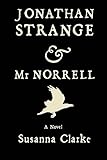
Jonathan Strange & Mr Norrell — Susanna Clarke (2004)
The most literarily accomplished fantasy novel of the twenty-first century. Clarke spent a decade writing this alternate history of magic’s return to Regency England — a novel in the form of a nineteenth-century three-decker, complete with extensive footnotes citing imaginary scholarly sources. Mr Norrell, the reclusive magician who has spent his life studying magic theoretically, is contrasted with the gifted Jonathan Strange, who learns magic intuitively and applies it on the battlefield of the Napoleonic Wars. The novel’s exploration of English magic, its forgotten history, and the mysterious figure of the Raven King is sustained across 1,000 pages with a patience and completeness that marks it as a major work of literature rather than merely a successful fantasy.
Piranesi — Susanna Clarke (2020)
Clarke’s second novel is her most formally original. Piranesi lives in a House of infinite halls, tides, and statues, keeping meticulous journals of tidal patterns and unusual birds while interacting with the only other person in his world (a man he calls The Other). The novel is an investigation — Piranesi’s, and the reader’s — into the nature of the House, the nature of his own identity, and the nature of his situation. Its central mystery is not immediately apparent, and its resolution is quietly devastating. At 272 pages, it achieves what much longer novels cannot; it demonstrates that the most effective fantasy world-building is not description but implication.
American Gods — Neil Gaiman (2001)
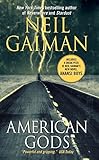
Gaiman’s most ambitious novel. Shadow Moon, recently released from prison, is recruited by Mr. Wednesday (Odin) to travel across America gathering the old gods — deities brought to America by successive waves of immigrants — for a war against the new gods (Media, the Internet, Technology). The novel is a road trip through forgotten American towns and a meditation on what gods actually are: entities that exist because people believe in them, and who diminish when belief is withdrawn. Gaiman’s America — the small towns, the motels, the strange monuments — is as vivid as his mythology.
The Night Circus — Erin Morgenstern (2011)
The most atmospheric of the standalone fantasies. Le Cirque des Rêves — a black-and-white circus that appears only at night — is the setting for a magical duel between two illusionists trained by rival mentors who have never met in person. Morgenstern’s prose is sensory and precise; she renders the circus’s attractions in such detail that the reader experiences them as physical. The love story between the two competitors — and the question of what happens when the competition cannot continue without one of them being destroyed — is the novel’s emotional engine.
The Left Hand of Darkness — Ursula K. Le Guin (1969)
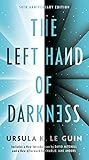
Le Guin’s masterpiece. Genly Ai, an envoy from an interstellar federation, arrives on the planet Gethen (Winter) to invite its inhabitants to join the Ekumen. The Gethenians are human in all respects but one: they have no fixed gender, cycling through brief periods of sexual activity and fertility. Le Guin’s novel uses this premise to ask what gender actually is — how much of human culture, hierarchy, and violence is shaped by the binary of male and female — through the relationship between Genly and the Gethenian politician Estraven. The most philosophically serious of the standalone fantasies and the most influential on subsequent speculative fiction.
A Wizard of Earthsea — Ursula K. Le Guin (1968)
The foundational fantasy coming-of-age novel. Ged, a young man from the island of Gont, attends the school for wizards on Roke and releases a shadow creature that pursues him across the Earthsea archipelago — until he understands that to defeat it he must face it rather than flee it. Le Guin’s Earthsea is the most carefully constructed fantasy world in the genre, built with the same anthropological rigor that she applied to her science fiction; the novel’s moral — that the shadow you flee is the shadow of yourself — is the most psychologically serious conclusion available in young-adult fantasy. The first of a series but complete in itself.
Neverwhere — Neil Gaiman (1996)
Gaiman’s most accessible novel — an urban fantasy set in a parallel London (London Below) that exists beneath and within the real London (London Above), populated by the mythological and historical figures that the real city has discarded. Richard Mayhew, an ordinary man, falls through the cracks between the two worlds and must find his way home through a London of abandoned tube stations and forgotten history. Less ambitious than American Gods but more immediately enjoyable; the best starting point for readers new to Gaiman.
Why Standalones Work
The advantage of the standalone fantasy is commitment: the author must resolve everything within the available space, creating a world complete enough to be convincing and a narrative complete enough to be satisfying. The best standalones achieve this without the shortcuts available to series fiction (setting up the next book, leaving threads unresolved) and without the padding that multi-volume series can conceal. They are the purest test of a fantasy writer’s ability.
Frequently Asked Questions
What is the best standalone fantasy novel?
Jonathan Strange & Mr Norrell (2004) by Susanna Clarke is the most literarily accomplished standalone fantasy — an alternate-history Victorian England in which practical magic has returned, told in the form of a nineteenth-century novel complete with footnotes. Piranesi (2020), also by Clarke, is the most formally original — a short, mysterious novel about a man living in a House of infinite halls whose investigation of his situation gradually reveals something deeply strange. Both are complete in one book; both reward rereading.
What is Jonathan Strange & Mr Norrell about?
Jonathan Strange & Mr Norrell (2004) by Susanna Clarke is set in an alternate nineteenth-century England where magic has fallen into theoretical decline — until the reclusive scholar Norrell demonstrates that practical magic is still possible. The novel follows his partnership and eventual rivalry with the gifted Jonathan Strange; their conflict shapes the fate of English magic and the war against Napoleon. Clarke spent ten years writing it; the novel is constructed with the patience and completeness of nineteenth-century fiction, complete with extensive footnotes citing imaginary scholarly sources. One of the finest fantasy novels of the twenty-first century.
What is Piranesi about?
Piranesi (2020) by Susanna Clarke follows a man who lives alone in a House of infinite halls filled with statues, where tides flood the lower floors and birds nest in the upper ones. He believes there are only two people in his world. His meticulous journals, kept as a record of tides and statues, become the medium through which the reader (and eventually Piranesi himself) begins to understand what the House actually is and who he actually is. The novel is short (272 pages), quietly disturbing, and deeply strange; its resolution is moving in a way that its strange premise does not initially suggest.
What is American Gods about?
American Gods (2001) by Neil Gaiman follows Shadow Moon, recently released from prison, who is recruited by the mysterious Mr. Wednesday to assist in gathering the old gods — Odin, Anansi, Czernobog — for a conflict with the new gods (Media, Technology, the Internet). Gaiman's argument is that gods exist because people believe in them, and that the gods immigrants brought to America have been diminished by their new country's different obsessions. The novel is a road trip across forgotten American towns as much as a mythological epic; its combination of Americana and mythology is distinctly Gaiman's.