Best Post-Apocalyptic Fiction: Essential Novels of the End
The best post-apocalyptic fiction — from The Road and Station Eleven to Oryx and Crake and On the Beach. Essential novels of collapse, survival, and what comes after.
Post-apocalyptic fiction asks the oldest questions available to literature in the language of the possible future: what is worth preserving when civilisation ends? What do human beings owe each other under conditions of radical scarcity? What makes life worth living when the structures that gave it shape have been destroyed? The best post-apocalyptic novels are not entertainments about catastrophe but moral inquiries conducted in extreme conditions.
The Essential List
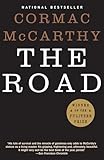
The Road — Cormac McCarthy (2006)
The most important post-apocalyptic novel. An unnamed father and son walk south through an ash-covered, lightless America after a catastrophe of unspecified cause, carrying ‘the fire’ — the moral commitment to be ‘the good guys’ — through a world populated almost entirely by people who have abandoned any such commitment. McCarthy’s prose, stripped of apostrophes, quotation marks, and ornament, mirrors the stripped landscape; the novel’s sentences are as spare and cold as its world. The love between the man and the boy is the only warmth available, and its intensity — the father’s absolute refusal to let the boy die, at any cost — is the novel’s argument for why survival is worth the effort.
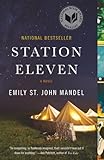
Station Eleven — Emily St. John Mandel (2014)
The most formally sophisticated post-apocalyptic novel. Mandel’s account of the Georgian Flu — which kills 99% of the world’s population — and its aftermath twenty years later is structured around Arthur Leander, a famous actor who dies on stage on the night the flu reaches Toronto, and the Travelling Symphony, a group of musicians and actors who perform Shakespeare in settlements across the Great Lakes region. The novel is equally interested in the pre-collapse world (Arthur’s three marriages, the childhood of a young actress who joins the Symphony) and the post-collapse one; its central argument — that art and human connection justify the effort of survival — is the most hopeful statement available in the genre.
Oryx and Crake — Margaret Atwood (2003)
The most scientifically extrapolated post-apocalyptic novel. Atwood’s imagined future — corporate compounds where genetic engineering and biotech have created both extraordinary luxury and the conditions for catastrophe — is more plausible than most science fiction’s version of the near future. The narrative (Snowman, the last unmodified human, guiding the genetically engineered Crakers left behind by his dead friend Glenn) is less interesting than the pre-collapse story of Jimmy and Crake’s friendship, which is the novel’s real subject: how two brilliant, damaged young men developed the opposed visions (art and science, survival and transcendence) that shaped the catastrophe.
The Year of the Flood — Margaret Atwood (2009)
The second volume of Atwood’s MaddAddam trilogy, set in the same world as Oryx and Crake but following two women whose experience of the pre-collapse world — in the pleeblands, not the corporate compounds — provides a different perspective on what was lost. The novel is more emotionally accessible than its predecessor and more explicitly concerned with community and solidarity. Best read after Oryx and Crake.
On the Beach — Nevil Shute (1957)
The most elegiac post-apocalyptic novel. Set in Melbourne in the aftermath of a nuclear war that has killed everyone north of the equator, On the Beach follows a small group of Australians waiting for the radiation cloud to reach them. Unlike most post-apocalyptic fiction, the novel is set in the space between the end of the world and awareness of it: the characters know they have perhaps six months before everyone in Melbourne is dead, and the novel is their account of what they do with that time. The most human of the end-of-world novels; the one that asks most honestly what matters when time is genuinely running out.
The Stand — Stephen King (1978)
The most ambitious genre post-apocalyptic novel. A superflu called ‘Captain Trips’ kills 99% of the world’s population; the survivors divide between two communities — one gathering around the elderly prophetess Mother Abagail, one under the dark man Randall Flagg — for a final confrontation between good and evil. King’s novel is enormous (1,152 pages in the extended edition) and operates as much as a religious allegory as a post-apocalyptic thriller; its scale, its cast, and its willingness to invest in both the horror of collapse and the mundane details of survivors rebuilding are what make it the defining work of popular post-apocalyptic fiction.
Stripping Civilization Bare
The fundamental imaginative move of post-apocalyptic fiction — the destruction of civilization and the reduction of human beings to a struggle for survival in its ruins — serves a profound purpose: it strips away the structures, comforts, and conventions of ordinary life to reveal what lies beneath, exposing the essential nature of human beings and the true foundations of the civilization we take for granted. By imagining the collapse of the civilized order, post-apocalyptic fiction conducts a kind of thought experiment, removing the elaborate structures of society, technology, law, and convention that ordinarily shape and constrain human life, and revealing what remains when these are stripped away. This stripping bare serves to expose truths that the comforts and structures of ordinary civilization conceal: the essential nature of human beings beneath the veneer of civilization, the true foundations on which social order rests, the fragility of the arrangements we take for granted, and the elemental realities of survival, cooperation, and conflict that civilization ordinarily mediates and obscures. In the stripped-bare world of the post-apocalypse, human beings are revealed in their essential nature, confronted with the elemental challenges of survival and forced to discover what they are without the structures and comforts of civilization to support and define them. This revelatory function is at the heart of post-apocalyptic fiction’s power and purpose, for the imagined collapse of civilization serves to illuminate the nature of human beings and the foundations of social order by stripping away the structures that ordinarily conceal them. Post-apocalyptic fiction matters because it reveals, through the imagined destruction of the civilized world, the essential truths about human nature and civilization that the comforts and structures of ordinary life obscure, and offers, through its thought experiment of collapse, a profound illumination of what human beings and human society fundamentally are.
Human Nature at the Extreme
Post-apocalyptic fiction places human beings in the most extreme of circumstances — the collapse of civilization and the struggle for survival in its aftermath — and in doing so it offers a powerful exploration of human nature under extremity, revealing both the depths of human cruelty and selfishness and the heights of human courage, compassion, and resilience that such extreme circumstances bring forth. The extreme circumstances of the post-apocalyptic world function as a crucible for human nature, testing human beings to their limits and revealing what they are truly capable of, for better and for worse, when the survival of themselves and those they love is at stake and the constraints of civilization no longer hold. The genre explores the full range of human response to such extremity. On one side, it reveals the darkness of which human beings are capable: the cruelty, selfishness, and brutality that survival pressures and the collapse of social order can bring forth, the descent into savagery and the war of all against all that the breakdown of civilization can produce. On the other side, it reveals the nobility of which human beings are also capable: the courage, compassion, sacrifice, and resilience that extreme circumstances can call forth, the persistence of love, decency, and hope even amid catastrophe, and the determination to preserve humanity and rebuild even in the ruins of the world. By exploring human nature at this extreme, post-apocalyptic fiction offers a profound meditation on the human capacity for both darkness and nobility, revealing the depths and the heights of human nature that extreme circumstances bring forth, and confronting the fundamental question of what human beings truly are when tested to their limits. This exploration of human nature at the extreme is among the most powerful contributions of post-apocalyptic fiction, for it uses the imagined catastrophe to illuminate the essential nature of human beings, revealing both the darkness and the nobility of which we are capable, and offering a searching meditation on the human capacity for cruelty and compassion, savagery and heroism, when civilization falls and human beings are tested to their limits.
Destruction and the Question of Hope
A defining and surprising feature of the best post-apocalyptic fiction is its preoccupation with hope amid destruction — the way that, beneath its visions of catastrophe and collapse, the genre is fundamentally concerned with the persistence of hope, the possibility of renewal, and the question of whether human beings can rebuild and begin again after the destruction of their world. For all its imagery of devastation and despair, post-apocalyptic fiction is rarely simply nihilistic, for beneath its visions of collapse runs a deeper concern with the human capacity to endure, to preserve what matters, and to rebuild and renew even after the destruction of civilization. The genre confronts the question of hope in its starkest form, asking whether, in the face of catastrophe and the collapse of all that human beings have built, hope and renewal remain possible, whether human beings can survive not merely physically but spiritually, preserving their humanity and their hope amid the ruins, and whether, after destruction, a new beginning can be made. The best post-apocalyptic fiction often answers this question with a hard-won and qualified hope, finding amid the devastation the persistence of human resilience, love, and the determination to rebuild, and suggesting that even after the destruction of the world, the human capacity for hope and renewal endures. This concern with hope amid destruction gives the genre a depth and a poignancy that distinguish it from mere catastrophe, for the best post-apocalyptic fiction is fundamentally concerned not with destruction for its own sake but with the human response to destruction, the persistence of hope and the possibility of renewal in the face of catastrophe. The question of hope, posed in its starkest form against the backdrop of the collapsed world, is at the heart of the best post-apocalyptic fiction, and the genre’s exploration of the persistence of hope and the possibility of renewal amid destruction is among its most powerful and moving features, offering, beneath its visions of catastrophe, a profound affirmation of the human capacity to endure, to preserve what matters, and to hope and rebuild even after the destruction of the world.
Why Post-Apocalyptic Fiction Matters
Post-apocalyptic fiction is not escapism but thought experiment — a way of testing values against conditions that strip away the structures that normally sustain them. The best novels in the genre are not primarily about catastrophe but about what remains when everything else has been taken: the relationship between a father and a son in The Road, the commitment to art in Station Eleven, the persistence of love in On the Beach. These are the things that post-apocalyptic fiction says are worth having — and, by extension, worth protecting before the apocalypse arrives.
Frequently Asked Questions
What is the best post-apocalyptic novel?
The Road (2006) by Cormac McCarthy is the greatest post-apocalyptic novel — a father and son walking south through a devastated America, the prose as stripped and desolate as the landscape, the love between them the only warmth in a frozen world. Station Eleven (2014) by Emily St. John Mandel is the most structurally sophisticated — its account of the Georgian Flu pandemic and its aftermath in a travelling symphony is told across multiple timelines, with the pre-collapse world given equal weight to the post-collapse one. Both are essential.
What is The Road about?
The Road (2006) by Cormac McCarthy follows a father and his young son as they walk south through a post-apocalyptic American landscape — ash-covered, lightless, populated by roving bands of murderous survivors. The novel withholds the cause of the catastrophe; it is not about how the world ended but about how people behave after it does. The relationship between the father and the son — the father's absolute determination to protect the boy at any cost — is the novel's moral centre. McCarthy's prose, stripped of punctuation and ornamentation, mirrors the stripped landscape. Won the Pulitzer Prize.
What is Station Eleven about?
Station Eleven (2014) by Emily St. John Mandel follows a Georgian Flu pandemic that kills 99% of the world's population, told across multiple timelines: the last night of a famous actor's life before the flu reaches Toronto, and the world twenty years later, where the Travelling Symphony moves between settlements performing Shakespeare ('Because survival is insufficient'). The novel is less interested in collapse than in continuity — what survives, what is worth preserving, how people construct meaning and culture when civilisation has ended. The most hopeful of the post-apocalyptic novels listed here.
What is Oryx and Crake about?
Oryx and Crake (2003) by Margaret Atwood is set after a bioengineered plague has wiped out most of humanity, with the sole survivor 'Snowman' (Jimmy) guiding the 'Crakers,' a genetically engineered replacement species created by his former best friend Glenn (Crake). The novel is told in alternating timelines — Snowman's post-collapse survival and Jimmy's pre-collapse story of how the two boys became the men who shaped the catastrophe. The first of Atwood's MaddAddam trilogy; more interested in the corporate and scientific hubris that produces the apocalypse than in its aftermath.