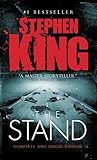
Editors Reads Verdict
The Stand is King's most openly ambitious work — an apocalyptic epic that assembles a vast cast across a devastated America and builds toward a genuinely mythological confrontation. At its best it is a masterpiece of American storytelling; at its most indulgent it is a reminder that even great writers benefit from editors who say no.
What We Loved
- The ensemble cast is one of King's greatest achievements — dozens of characters who feel fully alive
- The early pandemic sections are terrifyingly plausible and grimly fascinating
- Randall Flagg is the most fully realized embodiment of evil in King's catalog
- The novel's scope and ambition are matched by genuine emotional investment in its characters
Minor Drawbacks
- At 1,153 pages the novel has sections where the forward momentum genuinely stalls
- The final confrontation has been criticized as anticlimactic given the elaborate buildup
- Some Good versus Evil symbolism is heavy-handed even by King's standards
Key Takeaways
- → The social structures humans rebuild after catastrophe tend to recreate the same conflicts that preceded it
- → Dreams and visions can represent genuine psychological truth even without literal supernatural content
- → Communities formed around shared survival develop their own moral codes with remarkable speed
- → The banality of evil is as frightening as its dramatic manifestations
- → America as landscape and mythology is inseparable from American literature's most ambitious projects
| Author | Stephen King |
|---|---|
| Publisher | Anchor Books |
| Pages | 1153 |
| Published | October 3, 1978 |
| Language | English |
| Genre | Horror, Post-Apocalyptic Fiction, Fiction |
| Difficulty | Intermediate |
| Best For | King fans willing to commit to an epic; post-apocalyptic fiction readers; anyone interested in American mythology and the literature of plague. |
How The Stand Compares
The Stand at a glance against 3 similar books readers weigh alongside it.
| Book | Author | Rating | Best for |
|---|---|---|---|
| The Stand (this book) | Stephen King | ★ 4.5 | King fans willing to commit to an epic |
| It | Stephen King | ★ 4.4 | Horror readers willing to commit to an epic-length novel |
| Pet Sematary | Stephen King | ★ 4.3 | Horror readers who want emotionally serious fiction about grief and loss |
| The Shining | Stephen King | ★ 4.5 | Horror fans and general literary readers interested in psychological fiction |
American Mythology After the End
The Stand is the novel Stephen King was born to write: an epic American post-apocalyptic narrative populated by dozens of fully realized characters, driven by a mythology that reaches from frontier folklore to biblical confrontation, and sustained by the storytelling energy of a writer at the height of his powers.
The premise requires only a sentence: a government-engineered superflu called Captain Trips kills 99% of the world’s population, and the survivors begin to dream — some toward a 108-year-old Black woman in Nebraska named Mother Abagail, others toward a charismatic dark figure known as Randall Flagg, who is gathering power in Las Vegas.
The Cast as America
King’s greatest structural achievement here is the ensemble. The survivors who make their way toward Boulder, Colorado and the Free Zone include a rock musician, a simple-minded farmhand, a deaf-mute who becomes the group’s conscience, a writer dealing with addiction, a young mother, a sociology professor who chronicles everything. Each is rendered with the attention usually reserved for protagonists in single-protagonist novels.
Randall Flagg’s Las Vegas community is given equal care. The conflict that shapes the novel’s second half is not simply good against evil but two different human impulses — toward community, law, and accountability on one side; toward hierarchy, violence, and pure will-to-power on the other — with their supernatural figureheads providing organizing principles rather than external imposition.
The Pandemic Sections as Prescient Horror
The novel’s opening 200 pages — tracking the spread of Captain Trips through specific communities, watching denial give way to recognition give way to collapse — are among King’s finest writing and acquired new dimensions during the COVID-19 pandemic. The social response to the outbreak, including institutional suppression of early information and the slow dawning of public awareness, feels observed rather than imagined.
The final confrontation has disappointed some readers expecting a more cinematically dramatic resolution after 1,000 pages of buildup. King’s choice to end it as he does is more theologically coherent than dramatically satisfying, which is honest about the novel’s mythological ambitions if frustrating as narrative payoff.
Our rating: 4.5/5 — King’s most ambitious novel: a vast, flawed, frequently brilliant apocalyptic epic that works as horror, as character study, and as a genuine attempt at American mythology.
Reading Guides
- Stephen King Books in Order: The Complete Reading Guide (2026)
- 18 Best Horror Books of All Time: Novels That Will Keep You Up at Night
- The Shining vs IT: Which Stephen King Novel to Read First?
Publication History
The Stand was first published by Doubleday in October 1978. The original version ran to approximately 400,000 words, substantially cut from King’s original manuscript at the insistence of his editor — the production costs of printing such a large book in the 1970s made the full version commercially impractical. An uncut and expanded edition, adding approximately 150,000 words of restored material and updating the setting from 1980 to 1990, was published by Doubleday in 1990 and is the version most readers encounter today.
The novel debuted at number one on the New York Times bestseller list and remains one of King’s best-known and most admired works. It was his most ambitious project to that point in his career — a full-scale apocalyptic epic with a cast of dozens of fully realized characters, written when he was still in his late twenties.
Television Adaptations
A four-episode television miniseries adaptation aired on ABC in May 1994, starring Gary Sinise as Stu Redman, Molly Ringwald as Frannie Goldsmith, Rob Lowe as Nick Andros, and Jamey Sheridan as Randall Flagg, with Ruby Dee as Mother Abagail and Miguel Ferrer as Lloyd Henreid. The miniseries was a significant commercial success for ABC, drawing large audiences and generally positive critical reception. It has remained the definitive visual adaptation of the novel for most readers, despite the limitations of a 1994 television budget.
A nine-episode limited series adaptation premiered on CBS All Access (now Paramount+) in December 2020, starring James Marsden, Whoopi Goldberg, Alexander Skarsgård, and Amber Heard. The 2020 adaptation received a more mixed reception, with reviewers divided over its structural departures from the novel — including a framing device that introduces events out of sequence — and its updating of the material’s cultural context for a contemporary audience.
Randall Flagg
Randall Flagg is King’s most fully developed embodiment of evil and arguably his most important recurring villain. He appears under various names across multiple King novels — as Walter in the Dark Tower series, as the Ageless Stranger in other contexts — but The Stand is his fullest portrait. Flagg’s appeal is that he is not supernatural evil but recognizable human evil amplified to mythological scale: charismatic, intelligent, contemptuous of the people who follow him while exploiting their needs perfectly, ultimately self-defeating because his nature cannot sustain what it creates. He is the demagogue as metaphysical principle.
The shadow Flagg casts over King’s fiction extends well beyond The Stand. Understanding him as a recurring figure rather than a novel-specific antagonist is essential to understanding the architecture of King’s larger fictional universe.
The Pandemic Sections and COVID-19
The novel’s opening two hundred pages, tracking the spread of Captain Trips through specific communities with careful attention to institutional response and public denial, were widely discussed during the COVID-19 pandemic as an unusually prescient fictional account of what a novel pathogen could do to modern societies. King has acknowledged the parallel while noting that he was not prophesying but extrapolating from the documented history of the 1918 influenza pandemic and the institutional responses it had generated.
The sections depicting early media suppression of information, the slow dawning of public awareness, and the particular quality of denial that precedes mass recognition of a catastrophic outbreak gained new readers during 2020 who reported the experience of reading them as unsettling in ways that earlier readings had not been.
King’s National Book Award and Recognition
King received the National Book Foundation Medal for Distinguished Contribution to American Letters in 2003 — an occasion that acknowledged his impact on American popular culture across three decades. The Stand was frequently cited in the award’s presentation as an example of King’s sustained ambition and his ability to work at the scale of the great American novel while remaining accessible to a broad readership. The award reflected a gradual shift in critical attitudes toward popular fiction and toward King specifically, from the dismissiveness that had sometimes characterized literary establishment responses to his work in the 1970s and 1980s toward a more serious engagement with what he had accomplished.
Frequently Asked Questions
What is "The Stand" about?
A superflu kills 99% of the human population, and the survivors are drawn into a final confrontation between the forces of good and evil across the ruins of America.
Who should read "The Stand"?
King fans willing to commit to an epic; post-apocalyptic fiction readers; anyone interested in American mythology and the literature of plague.
What are the key takeaways from "The Stand"?
The social structures humans rebuild after catastrophe tend to recreate the same conflicts that preceded it Dreams and visions can represent genuine psychological truth even without literal supernatural content Communities formed around shared survival develop their own moral codes with remarkable speed The banality of evil is as frightening as its dramatic manifestations America as landscape and mythology is inseparable from American literature's most ambitious projects
Is "The Stand" worth reading?
The Stand is King's most openly ambitious work — an apocalyptic epic that assembles a vast cast across a devastated America and builds toward a genuinely mythological confrontation. At its best it is a masterpiece of American storytelling; at its most indulgent it is a reminder that even great writers benefit from editors who say no.
Ready to Read The Stand?
Check the current price on Amazon.
Check Price on Amazon (paid link)Prices and availability are subject to change. See Amazon for current price.
Review last updated: