18 Best Horror Books of All Time: Novels That Will Keep You Up at Night
From Stephen King's haunted hotels to Shirley Jackson's creeping dread, these 18 horror novels defined the genre — and still frighten experienced readers.
Great horror does something literary fiction is reluctant to attempt directly: it confronts you with death. Not the idea of death, understood at a comfortable intellectual distance, but death as a physical fact — what the body becomes, what remains after the person leaves, what we will do to avoid it and what we become in that avoidance. Horror externalises the fears the psyche generates in the dark and gives them teeth.
The distinction between literary horror and mere gore is not squeamishness — it is purpose. Gore shocks; literary horror means something. The best horror novels use their monsters (ghosts, vampires, shapeshifting clowns, incomprehensible extra-dimensional fungi) as instruments for examining what those monsters represent: grief, addiction, the cruelty of childhood, the fragility of the self. When you understand what a horror novel is really about, you understand why it frightens you.
The 18 novels on this list are the ones that pass that test: books where the horror earns its place because it is doing the work of serious fiction.
Stephen King: The Author Who Is the Genre
For most readers, Stephen King did not merely write horror novels — he invented the idea that horror could be serious, mainstream, American literature. He has published more than 60 novels and 200 short stories across 50 years, and the books on this list represent his essential work. For a full guide to reading order and where to start, see our complete Stephen King books in order guide.
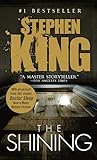
The Shining — Stephen King ⭐⭐⭐⭐⭐
The masterwork. Jack Torrance, an alcoholic writer with a violent history, takes his wife Wendy and five-year-old son Danny to serve as off-season caretaker at the isolated Overlook Hotel in the Colorado Rockies. The hotel is haunted. Danny can see things — dead women in bathtubs, two murdered girls in a corridor, the word REDRUM — and as the winter deepens and the snowdrifts close in, Jack begins to disappear into the hotel’s history.
The Shining is not really about a haunted hotel. It is about alcoholism, about the violence that lives inside families, about the way a father can become a monster to his own child. The horror is an externalisation of Jack’s inner collapse. King has never written anything more personally revealing — or more frightening.
Best for: Everyone. The place to start with King if you haven’t read him; the novel to reread if you have.
It — Stephen King ⭐⭐⭐⭐⭐
Derry, Maine, 1958. Seven children — the Losers’ Club — confront an ancient shapeshifting entity that takes the form of Pennywise the Dancing Clown and feeds on the fears of children. Twenty-seven years later, the killings begin again, and the Losers return as adults to finish what they started.
At 1,100+ pages, It is King at maximum scale: a novel about the terror of childhood, the cruelty children visit on each other, the way memory shapes and distorts, and what it means to grow up and lose the specific clarity of childhood fear. Pennywise is the most iconic monster in modern horror, but the book’s real subject is Derry itself — the town as organism, the town as collective denial.
Best for: Readers who want King at full power, and who can commit to an immersive epic.
Pet Sematary — Stephen King ⭐⭐⭐⭐⭐
King has said this is the one novel he wrote that genuinely frightened him — the one he considered not publishing. Louis Creed moves his family to rural Maine and discovers a pet cemetery in the woods behind his house, and beyond it, a burial ground with older and darker properties. What the ground brings back is not what you buried.
Pet Sematary is King’s most unflinching examination of grief and the lengths to which a parent will go to avoid the irreversible. The horror premise is clean and terrible: what if death could be undone? The novel’s answer is that it cannot be undone — only made worse.
Best for: Readers who want King at his most emotionally devastating. Not a comfortable book.
Misery — Stephen King ⭐⭐⭐⭐½
Paul Sheldon, a bestselling novelist, crashes his car in a blizzard and is rescued by Annie Wilkes — his “number one fan” — who takes him to her remote farmhouse, sets his broken legs, and holds him captive until he rewrites the novel she didn’t like. Claustrophobic, relentless, and formally innovative (sections of Paul’s novel-within-the-novel are included), Misery is King’s most concentrated horror.
It is also, transparently, a novel about addiction: Paul’s captivity is an allegory for King’s own struggle with drugs and alcohol. The horror is psychological rather than supernatural, which makes it King’s most accessible entry point for readers who are skeptical of the paranormal.
Best for: Skeptics of supernatural horror; readers who want psychological intensity in an enclosed space.
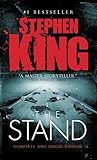
The Stand — Stephen King ⭐⭐⭐⭐½
A military superflu kills 99% of humanity. The survivors gradually sort themselves into two camps: those drawn toward Mother Abagail, a 108-year-old woman in Nebraska who speaks for God, and those drawn toward Randall Flagg, the Dark Man, who is gathering a different kind of community in Las Vegas. Good versus evil at the scale of the apocalypse.
The Stand is King’s most ambitious novel — an attempt to write an American Lord of the Rings, a post-plague epic in which the entire moral architecture of civilization has to be rebuilt from scratch. At 1,100 pages in the uncut edition, it is also his most sprawling. The opening sequence, as the plague spreads and civilization collapses, is some of the most gripping writing King has done.
Best for: Readers who want apocalyptic horror with genuine scale and a large, memorable cast.
Carrie — Stephen King ⭐⭐⭐⭐
King’s debut, written in 1973, remains one of his most precise. Carrie White is a socially isolated high school girl with an abusive religious fanatic for a mother and a gift for telekinesis she has never understood. When her classmates humiliate her publicly at prom, the gift becomes a weapon.
Carrie is a short novel — almost a novella — and its brevity is part of its power. King tells the story partly through faux documentary sources (newspaper accounts, a retrospective book, a Senate investigation) that frame the carnage as something that really happened. As a study of adolescent cruelty and the violence it can precipitate, it has not dated.
Best for: King completists and readers who want a fast, tightly constructed entry point.
The Dark Tower: The Gunslinger — Stephen King ⭐⭐⭐⭐
The spine of the entire King universe. Roland Deschain — the last gunslinger in a world that has “moved on” — pursues the Man in Black across an endless desert. What begins as a post-apocalyptic Western gradually reveals itself as a multidimensional quest connecting every other book King has written.
The Gunslinger is the smallest and most austere of the eight-volume Dark Tower series — a deliberately mythic opening that prioritises atmosphere over explanation. It is the key to understanding King’s work as a connected whole: characters, locations, and events from The Shining, It, Pet Sematary, and a dozen other King novels intersect in this series.
Best for: King readers who want to understand how everything connects. Read The Shining and It first.
The Green Mile — Stephen King ⭐⭐⭐⭐½
Death Row, Cold Mountain Penitentiary, 1932. Paul Edgecombe, a corrections officer, oversees the execution of John Coffey — a man convicted of murdering two children — who appears to possess miraculous healing abilities. Originally published as a six-part serial novel, The Green Mile is King at his warmest and most tragic: a supernatural story in which the horror is not a monster but an institution, and the miracle is wasted by the system that destroys it.
The novel raised questions about capital punishment with more moral force than most issue fiction, by approaching those questions through the logic of a ghost story. One of King’s most emotionally affecting works.
Best for: Readers who want King without the extremes of horror — a supernatural drama more than a fright machine.
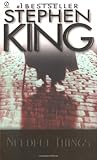
Needful Things — Stephen King ⭐⭐⭐⭐
Leland Gaunt opens a curio shop in Castle Rock, Maine — “Needful Things” — and each resident finds, upon entering, the one object they desire most. The price is always affordable. The additional price is always a small, seemingly harmless prank played on a neighbor. The pranks escalate. Castle Rock, King’s fictional Maine town that appears across a dozen novels, tears itself apart.
Needful Things was marketed as Castle Rock’s “final chapter” — King’s farewell to his most visited fictional location. It works as a parable about desire, scarcity, and how communities destroy themselves, and as a horror novel that earns its apocalyptic ending.
Best for: Readers familiar with King’s Castle Rock stories (particularly The Dead Zone and Cujo).
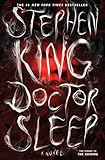
Doctor Sleep — Stephen King ⭐⭐⭐⭐
Forty years after the Overlook, Danny Torrance is a middle-aged man fighting his father’s alcoholism and residual trauma. He finds purpose working in a hospice, using his Shining to comfort the dying — until he connects with Abra Stone, a teenage girl with extraordinary psychic gifts, who has attracted the attention of the True Knot, a group of quasi-immortal beings who feed on the psychic energy of children.
Doctor Sleep is less terrifying than The Shining but more emotionally resolved: a novel about what recovery actually looks like, about carrying your father’s worst qualities and choosing not to become him. It is a worthy sequel that has its own distinct purposes.
Best for: Readers who loved The Shining and want to know what Danny became.
Pre-King Classics: The Gothic Foundation
Dracula — Bram Stoker ⭐⭐⭐⭐⭐
Published in 1897, told entirely in epistolary form — diaries, letters, newspaper clippings, a ship’s log — Dracula invented the modern vampire and most of the horror novel’s structural conventions. Jonathan Harker travels to Transylvania to assist a Transylvanian nobleman with a real estate transaction in England and discovers, slowly, terribly, what his client is.
Stoker’s formal choice (assembling the story from documents, as if it were evidence of something that really happened) creates a documentary dread that has never been surpassed. The horror accumulates through what each document omits or cannot yet understand. At 125 years old, it remains genuinely frightening.
Best for: Readers who want the original — and who appreciate that the original earned its status.
The Turn of the Screw — Henry James ⭐⭐⭐⭐½
An unnamed governess arrives at a remote English country house to care for two children, Miles and Flora, and gradually becomes convinced that the house is haunted by the ghosts of two dead former servants — and that the children can see the ghosts and are corrupted by them. Or: a psychologically unstable woman projects her own repressed sexuality onto two innocent children and destroys them.
Henry James built the ambiguity deliberately. You cannot resolve it. The Turn of the Screw is the originating text of psychological horror — the horror that lives inside the question of whether the threat is real or whether the narrator is the threat — and it has never been equalled in that specific register.
Best for: Readers who prefer psychological to supernatural horror; literary fiction readers approaching the genre for the first time.
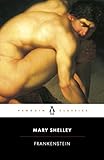
Frankenstein — Mary Shelley ⭐⭐⭐⭐⭐
Published anonymously in 1818 by a nineteen-year-old writer, Frankenstein is the founding document of both horror and science fiction. Victor Frankenstein creates life from dead matter and then, horrified by what he has made, abandons his creation — setting in motion a tragedy that explores what it means to make something, to be responsible for what you make, and what it costs a created being to exist without love or community.
Shelley’s monster is not the mute, bolt-necked figure of the film adaptations. He is eloquent, reasoning, and consumed by grief at his own condition. The horror in Frankenstein is not the monster’s violence but the clarity with which he understands his situation and the indifference with which Frankenstein meets it. Two hundred years on, it remains more intelligent and more moving than almost anything written in its tradition.
Best for: Literary readers; readers who want to understand where the genre began.
Something Wicked This Way Comes — Ray Bradbury ⭐⭐⭐⭐½
A dark carnival arrives in a small Midwestern town just before Halloween, run by the sinister Mr. Dark — a man whose body is covered in tattoos representing the souls he has collected. Two thirteen-year-old boys, James Nightshade and William Halloway, are drawn into its mysteries and must resist its temptations with the help of Will’s father, the town librarian.
Bradbury writes horror as poetry: the prose is dense, rhythmic, and haunted by the passage of time. Something Wicked This Way Comes is a novel about the fear at the centre of childhood — the fear of what growing up costs — and the carnival is its perfect metaphor. This is the rare horror novel that is genuinely beautiful as well as genuinely frightening.
Best for: Readers who want atmosphere and literary language; a perfect companion to the King titles on this list.
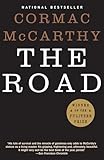
The Road — Cormac McCarthy ⭐⭐⭐⭐⭐
A man and his young son walk south through a post-apocalyptic America, carrying everything they own in a shopping cart and trying to stay alive. McCarthy does not name the catastrophe, the characters, or the year. What he gives you is the texture of that world — ash-grey, stripped of everything, populated by people who have become either prey or predators — and the relationship between father and son at its centre, which is the last good thing in a world that has run out of good things.
The Road is horror of a particular kind: not supernatural, but existential. The fear it generates comes from its absolute refusal to look away from what human civilisation might become — and from the question of whether love is enough to justify continuing. McCarthy won the Pulitzer Prize for it in 2007. It is not a comfortable book and it was not meant to be.
Best for: Literary fiction readers; readers who want horror that operates through bleakness and emotional devastation rather than monsters.
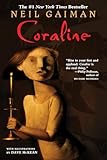
Coraline — Neil Gaiman ⭐⭐⭐⭐½
Coraline Jones discovers a small door in her new house that leads to an identical flat occupied by her “Other Mother” — a version of her real mother with buttons sewn where her eyes should be, who provides everything Coraline’s real parents are too distracted to give her. The Other Mother wants Coraline to stay. All she has to do is let her sew buttons over her eyes.
Gaiman wrote Coraline for children, but it is not gentle. The Other Mother is one of the great monsters in contemporary horror — specifically because she is constructed from a child’s fantasy of perfect parental attention, twisted just enough to reveal its horror. At 160 pages, it is one of the most efficient horror texts on this list. Adults who read it as children report that the dread is permanent.
Best for: Readers new to horror; literary readers who want economy and precision over length.
Modern Literary Horror: The New Uncanny
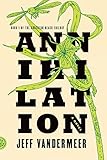
Annihilation — Jeff VanderMeer ⭐⭐⭐⭐½
Area X: a stretch of wilderness somewhere on the American coast that was cut off from civilization by an environmental catastrophe of unknown origin. The Southern Reach organisation has sent eleven expeditions in; most have ended badly. The twelfth expedition consists of four women — a biologist, an anthropologist, a surveyor, a psychologist — who discover a tunnel, a lighthouse, and something that cannot be classified.
VanderMeer writes in a register of deliberate, accumulating wrongness: nothing is immediately explainable, everything is slightly off in ways that resist articulation. Annihilation is the most formally precise horror novel of the 21st century — unsettling in a way that lingers long after the specific images have faded. The disorientation is the point.
Best for: Literary fiction readers; readers who want horror that operates through atmosphere and ambiguity rather than jump-scares.
Mexican Gothic — Silvia Moreno-Garcia ⭐⭐⭐⭐½
1950s Mexico. Noemí Taboada, a glamorous socialite and aspiring anthropologist, travels to the remote estate of High Place in the Mexican highlands to check on her recently married cousin, who has been sending disturbing letters. The Doyle family who own the estate — English colonial émigrés with a eugenic history — are deeply strange, and the house itself seems to dream.
Moreno-Garcia draws on Shirley Jackson, on mid-century Hollywood horror, and on the specific history of British colonial extraction in Latin America to produce a horror novel that earns the word “gothic” in both its literary and its architectural senses. The fungal horror that emerges in the novel’s third act is among the most original monster conceits in recent genre fiction.
Best for: Readers who want their horror atmospheric, feminist, and historically grounded; a perfect gateway novel between literary fiction and genre horror.
Psychological vs. Supernatural: Know Which Type You Want
The novels on this list split roughly along this axis. Knowing which you prefer will save you from picking up the wrong book:
| If you prefer… | Read these… |
|---|---|
| Supernatural horror (ghosts, monsters, entities) | The Shining, It, Dracula, The Stand |
| Psychological horror (the threat may be internal) | Misery, The Turn of the Screw, Mexican Gothic |
| Uncanny horror (neither fully explained) | Annihilation, Carrie, Pet Sematary |
| Horror with warmth and emotional depth | The Green Mile, Doctor Sleep, Something Wicked This Way Comes |
| Horror as literary fiction | Frankenstein, The Road, Mexican Gothic |
The best horror novels often refuse to stay in one category. The Shining is supernatural (the ghosts are real) and psychological (Jack’s collapse would have happened anyway). Pet Sematary is supernatural (the ground genuinely brings back the dead) and grief-driven. The classification is useful for entry points, not for full description.
What Makes Horror Literary vs. Pulp
The question is not whether blood is spilled — literary horror can be extremely violent — but whether the violence means something. Pulp horror generates shock through transgression: the more extreme the imagery, the more successful the effect. Literary horror uses transgression purposively: the shock points toward something the novel is trying to understand.
Every book on this list has a subject beyond its premise. Pet Sematary is about grief and the impossibility of acceptance. Misery is about addiction. The Turn of the Screw is about the unreliability of perception. Mexican Gothic is about colonial extraction and the bodies it produces. Annihilation is about the terror of losing the self.
That is the test. Not whether a novel has a monster, but whether the monster is doing real work.
Affiliate disclosure: Amazon links are affiliate links. We may earn a commission at no extra cost to you. This does not affect our editorial judgements — we only recommend books we believe in.
Frequently Asked Questions
What is the scariest horror book ever written?
The Haunting of Hill House by Shirley Jackson is most consistently described as the scariest novel ever written by authors and critics who work in the genre. It does not rely on violence or gore but on a creeping psychological dread that builds across every page. The Shining by Stephen King is the most widely read horror novel and similarly terrifying.
What Stephen King book should I start with?
The best Stephen King starting points are The Shining for psychological horror, It for epic horror with strong character work, or Misery for suspense with minimal supernatural elements. Carrie is the shortest and most contained King novel and works as a clean introduction to his style.
What horror books are not too graphic or violent?
The best horror novels that avoid graphic content include The Haunting of Hill House by Shirley Jackson, Something Wicked This Way Comes by Ray Bradbury, and Coraline by Neil Gaiman. These rely on atmosphere, dread, and psychological unease rather than explicit violence.
What is the best horror novel for someone who does not normally read horror?
The best gateway horror novels for non-horror readers are The Haunting of Hill House by Shirley Jackson, Coraline by Neil Gaiman, and Mexican Gothic by Silvia Moreno-Garcia. All three are considered literary as well as genre fiction and are more focused on atmosphere than on graphic scares.