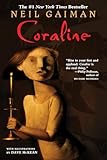
Editors Reads Verdict
Coraline is a masterpiece of children's dark fantasy that works equally well for adults — a story about the seductiveness of the life you wish you had versus the imperfect life that is actually yours. Gaiman distils fairy-tale dread into its purest form in a book that is short, brilliant, and genuinely frightening.
What We Loved
- The Other Mother is one of children's literature's most genuinely terrifying villains
- The book is perfectly paced — short enough that the horror never outstays its welcome
- Coraline herself is brave, intelligent, and psychologically believable
- The fairy-tale logic is applied with rigorous consistency throughout
Minor Drawbacks
- The brevity means some plot elements resolve with fairy-tale speed rather than earned narrative weight
- Readers looking for elaborate world-building will find the Other world deliberately thin
Key Takeaways
- → What we wish for often conceals what we secretly fear — the perfect parent who wants to possess you completely
- → Bravery is not the absence of fear but the decision to act despite being terrified
- → The ordinary and imperfect is more valuable than the perfect and false
- → Fairy-tale logic has its own morality — attention to rules and patterns is a form of survival
| Author | Neil Gaiman |
|---|---|
| Publisher | HarperCollins |
| Pages | 162 |
| Published | July 2, 2002 |
| Language | English |
| Genre | Fantasy, Fiction |
| Difficulty | Beginner |
| Best For | Readers of all ages who enjoy dark fairy tales, psychological horror, and stories about brave children in terrifying situations; Gaiman fans and fans of literary horror. |
How Coraline Compares
Coraline at a glance against 3 similar books readers weigh alongside it.
| Book | Author | Rating | Best for |
|---|---|---|---|
| Coraline (this book) | Neil Gaiman | ★ 4.4 | Readers of all ages who enjoy dark fairy tales, psychological horror, and |
| American Gods | Neil Gaiman | ★ 4.5 | Fantasy readers with an interest in mythology, American culture, and literary |
| Piranesi | Susanna Clarke | ★ 4.4 | Fantasy readers |
| The House in the Cerulean Sea | TJ Klune | ★ 4.5 | Readers seeking comfort fantasy without condescension, LGBTQ+ readers wanting |
The Perfect World That Wants to Own You
Coraline begins with the particular boredom of a child who has just moved to a new house. Coraline Jones is curious, determined, and overlooked by parents too busy with their own work to give her the attention she craves. Then she finds a small door in the drawing room wall — a door that, on first inspection, leads only to a brick wall. But on a rainy afternoon, it leads somewhere else.
The Other world Coraline finds through the door is her world improved: the Other Mother cooks the meals Coraline actually wants, the Other Father plays with her and sings her songs, and everything is brighter, more attentive, more abundant. The only difference is small and terrible: the Other Mother and Other Father have buttons where their eyes should be. And the Other Mother wants Coraline to stay — to sew button eyes into Coraline’s own head and become her child forever.
The Other Mother as Fairy-Tale Monster
The Other Mother — the Beldam — is one of Gaiman’s finest creations and one of children’s literature’s genuinely frightening villains. She is terrifying not because she is violent (though she is capable of violence) but because she is a perfect expression of a particular kind of love gone wrong: the love that is really appetite, the care that is really control. She makes a world that is designed precisely to capture the specific child in front of her, which means her monstrousness is personal in a way that generic monsters cannot achieve.
Gaiman uses her to explore something that children feel long before they can name it: the difference between someone who loves you and someone who wants to have you. The Other Mother loves Coraline the way a collector loves a specimen — with obsessive, possessive attention that has nothing to do with Coraline’s own flourishing.
Coraline’s Courage and the Logic of Fairy Tales
What makes Coraline endure is that its protagonist earns her victory through attention, intelligence, and genuine bravery rather than luck or magical rescue. Coraline navigates the Other world by understanding its rules — the fairy-tale logic that governs what can and cannot be done — and using that logic against her captor. She is frightened throughout. She acts anyway. This is the only model of courage worth teaching.
The novel is structured with the precision of a folk tale: things come in threes, promises must be kept, names have power. Gaiman does not treat these conventions as limitations but as formal constraints that generate genuine narrative tension. When Coraline makes a bargain with the Other Mother, both the reader and Coraline know that the terms will matter exactly as stated.
A Short Book That Does Everything
At 162 pages, Coraline demonstrates that length is not correlated with ambition or effect. The brevity is a feature: every scene advances the dread, every detail is load-bearing, and the ending arrives at exactly the moment the emotional work is complete. Gaiman has called it the book he is most proud of, and it is easy to understand why — it is a story that has found its ideal form.
Our rating: 4.4/5
Reading Guides
Dave McKean and the Illustrated Edition
The original 2002 HarperCollins edition of Coraline featured illustrations by Dave McKean, whose surreal, digitally manipulated images — unsettling in a completely different register from the text — established the book’s visual identity. McKean, who had been Gaiman’s long-term collaborator on Sandman and The Books of Magic, brought his characteristic technique of collage, photography, and digital manipulation to produce images that feel more like the residue of nightmares than conventional children’s book illustration.
Gaiman has said that he wrote Coraline for his eldest daughter Holly, who was six when he started it. He wanted to write a book that would tell her something true about the world while being genuinely entertaining — a book that acknowledged that danger is real, that bravery is necessary, and that the ordinary world, with its imperfect parents and its limitations, is more valuable than any perfect substitute.
The Henry Selick Film
The 2009 stop-motion animated film, directed by Henry Selick (who also directed The Nightmare Before Christmas), is one of the most successful adaptations of a Gaiman text. Selick’s visual approach — the meticulous stop-motion technique, the contrast between the grey ordinariness of Coraline’s real world and the saturated, slightly-wrong colour of the Other world — is precisely right for the material. The film introduced the story to a wider audience and brought Gaiman’s name to a generation of filmgoers who had not read the novel.
Gaiman was involved in the production and has praised the adaptation, noting that Selick understood the essential emotional dynamic: the story is not primarily about the horror but about a child’s decision, made in full knowledge of what she is giving up, to return to the imperfect life that is actually hers.
The Novel’s Formal Precision
At 162 pages, Coraline is a masterclass in formal economy. The structure is that of a folktale — the three-fold structure, the terms of the bargain, the final confrontation — applied with absolute rigour. Every detail that appears early in the novel returns when it is needed. The cat, who accompanies Coraline but will not cross over for her, functions as a boundary marker for what magic can and cannot do. The hand, the button eyes, the names of things — all carry exactly the weight Gaiman assigns them, and none is wasted.
Gaiman has called Coraline the book he is most proud of, and the reason is legible in its construction: it is a story that has found the precise form it requires and filled that form without remainder. There is no excess and no lack. That degree of formal rightness is among the rarest achievements in literary fiction, and it is accomplished here in 162 pages written for a child.
Frequently Asked Questions
What is "Coraline" about?
A girl discovers a secret door in her new home that leads to an Other world with an Other Mother who seems perfect — but wants to keep Coraline forever.
Who should read "Coraline"?
Readers of all ages who enjoy dark fairy tales, psychological horror, and stories about brave children in terrifying situations; Gaiman fans and fans of literary horror.
What are the key takeaways from "Coraline"?
What we wish for often conceals what we secretly fear — the perfect parent who wants to possess you completely Bravery is not the absence of fear but the decision to act despite being terrified The ordinary and imperfect is more valuable than the perfect and false Fairy-tale logic has its own morality — attention to rules and patterns is a form of survival
Is "Coraline" worth reading?
Coraline is a masterpiece of children's dark fantasy that works equally well for adults — a story about the seductiveness of the life you wish you had versus the imperfect life that is actually yours. Gaiman distils fairy-tale dread into its purest form in a book that is short, brilliant, and genuinely frightening.
Ready to Read Coraline?
Check the current price on Amazon.
Check Price on Amazon (paid link)Prices and availability are subject to change. See Amazon for current price.
Review last updated: