Where to Start with Neil Gaiman: A Reading Guide
Where to start with Neil Gaiman — whether to begin with American Gods, Good Omens, Coraline, or The Graveyard Book. A complete reading guide to Gaiman's novels.
Neil Gaiman (born 1960) is the most widely beloved fantasy novelist of his generation — a British writer who came to literary fiction from comics (the Sandman series) and who has made mythology, folklore, and the intersection of the mundane with the magical the defining characteristics of his work. His novels — American Gods, Coraline, Neverwhere, The Graveyard Book — are accessible to adult and young adult readers alike, and his ability to find the mythological dimension of ordinary American and British life is his most distinctive quality.
Where to Start
For Adult Readers: American Gods (2001)
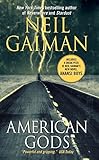
The best first Gaiman for adult readers — his most fully realised novel and his most substantial meditation on myth, America, and belief. Shadow’s journey across America with Mr. Wednesday is simultaneously a road novel, a mythological fantasy, and an account of what happens to gods when the people who believed in them stop doing so. Gaiman’s America — roadside attractions, small diners, old motels, the hidden geography of a country built by immigrants from everywhere — is as fully realised as any fictional landscape in contemporary American fiction. The tenth anniversary edition contains additional material; both versions are excellent.
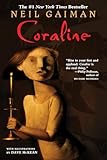
For Younger or Shorter Readers: Coraline (2002)
The best Gaiman for readers who want something shorter, tighter, and darker. Coraline’s Other World — more beautiful, more attentive, more satisfying than her real world — is Gaiman’s most disturbing fantasy: a seduction that is also a trap, a mother who loves too much and demands everything in return. The novel is under 200 pages and can be read in an afternoon; its horror (genuinely dark, not child-safe) is produced by implication and atmosphere rather than explicit violence. One of the finest horror-for-children texts in English.
Good Omens by Terry Pratchett and Neil Gaiman (1990)
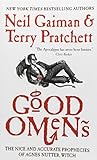
The funniest Gaiman and one of the finest comic fantasies in English. Aziraphale (an angel) and Crowley (a demon), who have spent six thousand years on Earth and have grown rather fond of it, attempt to prevent the Apocalypse that has been scheduled to begin with the birth of the Antichrist — who has unfortunately been misplaced and grown up as an ordinary eleven-year-old boy in a small English village. The novel is essentially a comedy about civilisation’s value and the absurdity of apocalyptic thinking, written with enormous wit and warmth. The Amazon Prime adaptation is excellent and faithful.
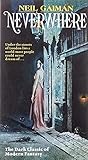
Neverwhere (1996)
Gaiman’s London Underground fantasy — the novel that established his adult voice before American Gods. Richard Mayhew, a London businessman, helps a wounded girl named Door and finds himself transported into London Below, an underworld beneath the city’s streets populated by the figures of London’s history and mythology. The novel is tightly plotted and immediately accessible; London Below is Gaiman’s most playful and most distinctly British fantasy creation. Particularly enjoyable for readers who know London.
The Graveyard Book (2008)
Gaiman’s most complete young adult novel — a retelling of The Jungle Book in which the child Nobody Owens is raised in a graveyard by its ghosts after his family is murdered. The novel follows Bod (as he is called) through his childhood, his education by the dead, and his eventual confrontation with the man who killed his family. It is Gaiman’s most directly emotional novel and his most optimistic; the graveyard community is loving and richly characterised. Won the Newbery Medal.
Anansi Boys (2005)
The companion novel to American Gods — set in the same world but very different in tone. Fat Charlie Nancy discovers after his father’s death that his father was Anansi (the spider trickster god from West African mythology) and that he has a brother (Spider) he never knew about, whose arrival upends his quiet London life. The novel is Gaiman’s most purely comic — lighter than American Gods, faster, and specifically concerned with the West African trickster tradition and the stories we tell about our families. Can be read without having read American Gods.
Why American Gods Is the Ideal First Book
For a reader new to Neil Gaiman, American Gods is the ideal first book for adult readers because it is among his most acclaimed and substantial novels and a fine expression of his distinctive gifts, the mythic imagination, the inventive storytelling, and the blending of fantasy, myth, and Americana. American Gods follows a man drawn into a coming conflict between the old gods brought to America by immigrants and the new gods of technology and media, in a rich, strange, and ambitious novel. As an entry point it is ideal for adult readers, for it is one of his most celebrated novels and a perfect example of his mythic, inventive, ambitious fiction. It welcomes the newcomer with its mythic imagination, its inventive story, and its rich strangeness, drawing the reader into his distinctive vision. It is among his major works and a fine representation of his gifts, so the new reader encounters Gaiman at his most characteristic. For the newcomer, then, American Gods is the natural and ideal starting point.
What to Expect as a New Reader
As a new reader, you can expect American Gods to be a rich, strange, and ambitious work of mythic fantasy. You can expect a mythic imagination, for Gaiman draws on myth, legend, and folklore from around the world. You can expect an inventive story, for the novel follows a man drawn into a coming conflict between old gods and new. You can expect a blending of fantasy, myth, and Americana, for the novel is a strange, mythic road trip across America. You can expect a rich, atmospheric, and ambitious narrative. You can expect engagement with belief, identity, and what America is. You can expect strangeness, darkness, and wonder. You should be prepared for mature content and a sprawling, ambitious novel. Expect, in short, a rich, strange, and ambitious work of mythic fantasy, a superb introduction to Gaiman’s gifts.
Going Deeper After Your First Book
Once American Gods has introduced you to Gaiman’s gifts, the reader who wishes to go deeper can explore his wide and varied body of work, which spans novels, graphic novels, and stories for adults and children, all marked by his mythic imagination and inventive storytelling. His acclaimed novels include his atmospheric London fantasy, his fairy-tale-inflected romance, and his short, perfect novel of childhood and memory, while his celebrated Sandman graphic novels are a landmark of the form, and his beloved children’s books and his short stories reveal the full range of his imagination. Reading these after American Gods deepens your appreciation of Gaiman’s distinctive gifts, the mythic imagination, the inventive storytelling, and the blending of fantasy and myth. His characteristic imagination runs through his work. Building your reading journey through Gaiman is a matter of following his imagination from American Gods into his other novels, his graphic novels, and his stories. The reader who begins here will find one of the most imaginative and beloved storytellers of our time to follow.
Reading Neil Gaiman
Gaiman’s central quality is warmth — his fiction has a genuine love for its characters and for the mythological traditions it draws on, which prevents the darkness of his plots from becoming oppressive. His prose is clear and rhythmically confident, drawn from his comics background and from a deep reading of English fairy tale and folklore. The best approach is to begin with the shortest and most accessible work in your preferred form (Coraline for dark children’s fiction, American Gods for adult fantasy, Good Omens for comedy) and proceed according to taste.
Frequently Asked Questions
Where should I start with Neil Gaiman?
American Gods (2001) is the best starting point for adult readers — a novel in which the old gods brought to America by immigrant worshippers are now neglected and dying, forced into mundane American lives, and are threatened by the new gods of media, technology, and celebrity. It is Gaiman's most ambitious and most fully realised novel, drawing on Norse, Egyptian, African, and American mythologies in a road-trip narrative across the American midwest. Coraline is the best starting point for younger readers or those who want something shorter; Good Omens for those who prefer comedy.
What is American Gods about?
American Gods (2001) follows Shadow Moon, recently released from prison, who is recruited as a bodyguard by the mysterious Mr. Wednesday — who turns out to be Odin — as he travels across America gathering the old gods (Anansi, Czernobog, Ananke, Bilquis, and many others) for a coming war against the new gods of the modern world. The novel is simultaneously a mythological fantasy, a road novel about America's hidden geography, and a meditation on what gods actually are and what happens when people stop believing in them. Gaiman's most fully realised long work.
What is Coraline about?
Coraline (2002) is a short, dark novella for children that works equally well for adults — a story in which Coraline Jones, bored in her new house, discovers a hidden door leading to an 'Other World' that mirrors her home except that everything is better, her 'Other Mother' is more attentive, and the food is delicious. The Other Mother, who wants to sew buttons over Coraline's eyes and keep her forever, is one of the most genuinely frightening antagonists in children's fiction; the novel is Gaiman's tightest and most formally controlled work.
Is Good Omens by Neil Gaiman or Terry Pratchett?
Good Omens (1990) is a collaboration between Neil Gaiman and Terry Pratchett — both fully involved in writing it, though the division of labour has been described differently at different times by both authors. The novel's comic sensibility owes much to Pratchett (particularly his Discworld comedy style), while the mythological imagination and some of the darker elements are more characteristically Gaiman. The collaboration is seamless and the novel is one of the funniest and most affectionate accounts of the Apocalypse ever written. The Amazon Prime television adaptation is excellent and closely based on the novel.