Neil Gaiman Books in Order: Complete Bibliography & Best Starting Points
Neil Gaiman has written novels, short story collections, children's books, and graphic novels across five decades. This guide covers his complete prose bibliography, the best books to start with, and how to navigate his enormous output.
Neil Gaiman occupies a rare position in contemporary literature: he is one of the few writers who has produced genuinely excellent work across almost every narrative form he has attempted. His Sandman graphic novel series reshaped what was possible in comics. His novels — American Gods, Neverwhere, Coraline — are modern fantasy classics. His children’s books win awards and disturb adults. His co-authorship with Terry Pratchett produced Good Omens, one of the funniest novels of the 1990s. He has written poetry, screenplays, short stories, and mythology retellings, and most of it is very good.
The challenge for new readers is navigating the volume and variety of his output. This guide focuses on his prose fiction and provides a clear path through the work.
Neil Gaiman’s Major Novels in Order
| # | Title | Year | Note |
|---|---|---|---|
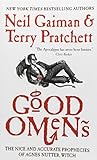
| 1 | Good Omens | 1990 | Co-written with Terry Pratchett; comic apocalypse |
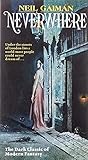
| 2 | Neverwhere | 1996 | London Below; adapted from BBC TV series |
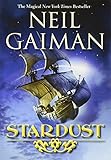
| 3 | Stardust | 1999 | Fairy tale for adults; illustrated edition available |
| 4 | American Gods | 2001 | Hugo, Nebula, Bram Stoker Awards; HBO series |
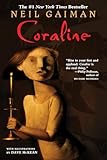
| 5 | Coraline | 2002 | Carnegie Medal; Laika stop-motion film |
| 6 | Anansi Boys | 2005 | American Gods companion; Spider’s story |
| 7 | The Graveyard Book | 2008 | Carnegie Medal + Newbery Medal; both major awards |
| 8 | Norse Mythology | 2017 | Retelling of Norse myths from Odin to Ragnarök |
| 9 | Norse Mythology | 2017 |
Where to Start
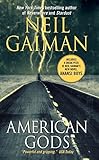
American Gods (2001)
His masterpiece, and the novel that best represents what he can do at full length. Shadow Moon is released from prison the day his wife dies, and is recruited by the mysterious Mr. Wednesday — Odin in modern American disguise — to fight in a war between the old gods brought to America by immigrants and the new gods of technology and media who are replacing them.
The novel is road-trip America filtered through mythology: truck stops, roadside attractions, motels, small towns — all shown as places where the divine and the dispossessed accumulate. It is large and sometimes meandering, and it earns every page. The Author’s Preferred Text (extended edition) is worth reading if you have time.
Good Omens (1990)
Gaiman’s collaboration with Terry Pratchett is the most immediately enjoyable book either of them wrote — the comic energy of Pratchett and the mythological depth of Gaiman producing something funnier than Gaiman would have written alone and more cosmically resonant than Pratchett would have written alone.
The plot: an angel (Aziraphale) and a demon (Crowley) who have lived on Earth since the Garden of Eden have both rather grown to like the place and would prefer the apocalypse not to happen. Unfortunately, the Antichrist has been born and misplaced. The novel has the warmth of a British comedy and the scope of a theological argument.
The BBC/Amazon adaptation is excellent. The book is better.
Coraline (2002)
The most concentrated demonstration of what makes Gaiman distinctive: a fairy-tale structure taken with complete seriousness, filtered through a sensibility that finds genuine menace in domestic comfort. At under 200 pages it reads in an afternoon, and it is the best starting point for readers who want a short introduction to his work.
The “other mother” behind the button door is one of the most effectively uncanny creations in contemporary children’s literature. The fact that she is frightening not despite her apparent generosity but because of it — she gives Coraline everything she wants, and this is what makes her monstrous — is a classically Gaimanesque inversion of expectation.
The Rest of the Prose Fiction
Neverwhere (1996)
Richard Mayhew is an ordinary Londoner who helps an injured girl from London Below — the city beneath the city, inhabited by the people who have fallen through the cracks — and finds himself cut off from his ordinary life and pulled into her world. Neverwhere is the least polished of Gaiman’s major novels (it was novelised from a BBC TV series rather than conceived as a novel) but its premise — the hidden, medieval London beneath the modern one — is one of his best ideas, and the characters, including the assassins Croup and Vandemar, are among his most memorable.
Stardust (1999)
A fairy story in the classical sense: a young man promises a fallen star to a girl in his village and crosses the magical wall that separates his village from the kingdom of Faerie to retrieve it. Stardust is Gaiman’s most consciously traditional fantasy — it reads like a Perrault tale extended to novel length, and it works because it takes the conventions of fairy story entirely seriously rather than ironising them. The illustrated edition (with Charles Vess’s artwork) is the preferred version.
Anansi Boys (2005)
A companion to American Gods rather than a sequel — it shares the world of old gods surviving in modern life but is self-contained and tonally quite different. Where American Gods is dark and melancholy, Anansi Boys is funny: Fat Charlie Nancy discovers after his father’s death that his father was Anansi, the West African spider-trickster god, and that he has a brother who inherited all the power. The novel has more in common with a comic caper than with American Gods, and is deliberately so.
The Graveyard Book (1981)
The novel in which a toddler escapes the murder of his family and is taken in and raised by the inhabitants of the graveyard behind his house — the dead, who teach him the skills they can offer: Fading, Dreamwalking, and Freedom of the Graveyard. The book is structured as a series of linked episodes covering Bod’s childhood, each complete in itself. It won both the Carnegie Medal and the Newbery Medal — the only book to have won both the UK and US children’s book awards.
Norse Mythology (2017)
Gaiman’s retelling of the Norse myths — from the creation of the world and the nine realms through the escapades of Thor, Loki, and Odin to the catastrophe of Ragnarök. Told in clear, contemporary prose while remaining faithful to the Prose Edda and the Eddaic poems, it is the best available popular retelling of Norse mythology and an excellent starting point for readers interested in the mythological material that runs through all of his fiction.
Reading Order Recommendations
Adult reader, new to Gaiman: American Gods → Good Omens → Coraline → Anansi Boys.
Want something short first: Coraline → American Gods → Good Omens.
Interested in mythology: Norse Mythology → American Gods → Stardust.
Graphic novels: The Sandman Vol. 1: Preludes and Nocturnes — this is the essential work of Gaiman’s career, and nothing else in the canon quite replaces it.
Frequently Asked Questions
What is the best Neil Gaiman book to start with?
American Gods is the most ambitious and most acclaimed of his novels and a natural starting point for adult readers. Good Omens (co-written with Terry Pratchett) is the most immediately funny and accessible. Coraline is the best starting point if you want something short — it reads in an afternoon and demonstrates his gift for uncanny horror in its most concentrated form. For his mythology work, Norse Mythology is the easiest entry point.
Do Neil Gaiman's novels need to be read in order?
Most of his novels are standalone. The main exception is Anansi Boys, which is set in the same world as American Gods and features a character from that novel — reading American Gods first is recommended but not essential. The Stormlight Archive-like connected universe does not apply here; each Gaiman novel builds its own world.
Is American Gods or Good Omens better?
They are doing very different things. American Gods is a serious, sometimes dark novel about mythology, identity, and America. Good Omens is a comic novel about the apocalypse, co-written with Terry Pratchett, and is primarily very funny. Both are excellent. If you want the deeper reading experience, American Gods. If you want to be entertained for a weekend, Good Omens.
What is Coraline about, and is it children's or adult fiction?
Coraline is about a girl who discovers a secret door in her new house that leads to an 'other world' — identical to her own but populated by button-eyed doubles of her parents who seem much more attentive and loving. It is published as a children's book but frightens many adults more than children. Gaiman has said he wrote it to process fears rather than for any specific age group, and the novella works as horror for readers of all ages. The Neil Jordan-produced stop-motion film adaptation is excellent.
Should I read the Sandman graphic novels?
If you have any interest in comics, yes — The Sandman is widely considered the finest long-form comic series in the medium and has influenced generations of writers. It follows Dream (Morpheus), one of the seven Endless, and over 75 issues covers mythology, history, Shakespeare, and the nature of stories themselves. You do not need to have read Gaiman's prose work first. The Netflix adaptation (2022–) is a faithful and high-quality introduction if you prefer to watch before reading.