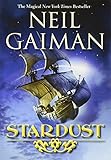
Editors Reads Verdict
Stardust is Gaiman's love letter to the fairy-tale tradition — a romance and an adventure that wears its literary ancestry openly while adding the wit and melancholy that are distinctly his own. It is the most purely delightful of his novels, written with a storyteller's confidence and a romantic's ache.
What We Loved
- The fairy-tale voice is perfectly sustained — warm, knowing, and lightly ironic throughout
- Yvaine the star is a far more interesting character than the protagonist who comes to find her
- The world of Faerie is inventive and menacing in equal measure
- The love story develops with genuine emotional movement
Minor Drawbacks
- Tristran is a more passive protagonist than Gaiman's best — events happen to him more than he makes them happen
- The plot's multiple villain threads can feel crowded in the book's shorter format
Key Takeaways
- → What we pursue in quest of love often transforms us into someone better than who we started as
- → The fairy-tale world has its own ethics — cruelty is possible but beauty and mercy are the stronger forces
- → Stars, seen from below, are objects of desire; seen up close, they are people with inconvenient interiority
- → The wall between the ordinary and the magical is thinner than it appears and the crossing changes you permanently
| Author | Neil Gaiman |
|---|---|
| Publisher | HarperCollins |
| Pages | 248 |
| Published | April 27, 1999 |
| Language | English |
| Genre | Fantasy, Fiction |
| Difficulty | Beginner |
| Best For | Readers who love romantic fairy tales and literary fantasy; fans of Gaiman's mythology-inflected fiction; readers who enjoyed the 2007 film adaptation and want the source material. |
How Stardust Compares
Stardust at a glance against 3 similar books readers weigh alongside it.
| Book | Author | Rating | Best for |
|---|---|---|---|
| Stardust (this book) | Neil Gaiman | ★ 4.3 | Readers who love romantic fairy tales and literary fantasy |
| American Gods | Neil Gaiman | ★ 4.5 | Fantasy readers with an interest in mythology, American culture, and literary |
| Good Omens | Terry Pratchett & Neil Gaiman | ★ 4.6 | Fans of Pratchett, Gaiman, or British comedy who want a genuinely funny fantasy |
| Neverwhere | Neil Gaiman | ★ 4.3 | Fantasy readers who enjoy urban mythology and dark fairy tales |
The Village at the Edge of the World
Stardust opens in the English village of Wall, so named for the ancient stone wall that runs along its edge, separating England from the kingdom of Faerie. Once every nine years the villagers open the gap in the wall for a market; otherwise, the crossing is forbidden. Tristran Thorn — half-human, half-Faerie, though he does not know it — crosses the wall on a foolish promise to a girl who does not love him: he will bring her the fallen star they both saw streak across the sky and land in the meadows beyond.
The fallen star turns out to be a young woman named Yvaine, who has her own feelings about being claimed and carried across a magical country by a besotted young man she did not ask for. Gaiman sets up the premise as a conventional quest — boy pursues star for girl — and then spends the rest of the book dismantling it, as the quest reveals itself to be about what Tristran actually needs rather than what he thought he wanted.
Yvaine and the Pleasures of Inversion
Yvaine is the novel’s true heart. She is sharp-tongued, bone-achingly lonely, and radiant in ways that are both literal (she glows) and emotional, and her relationship with Tristran develops from mutual irritation through reluctant alliance to genuine love in a way that is far more convincing than most literary romances manage. Gaiman’s great narrative skill in Stardust is letting the love story happen almost by accident — neither character is pursuing it, and both are caught off-guard when it arrives.
The world of Faerie that Tristran and Yvaine must traverse is populated with witches seeking the star’s heart for its power, princes competing for a throne through fratricide, and creatures from every corner of the fairy-tale tradition. Gaiman deploys them with the assurance of a storyteller who knows the genre’s grammar well enough to bend it without breaking it.
The Fairy-Tale Voice
What distinguishes Stardust from Gaiman’s other novels is its narrative voice: warm, confident, slightly archaic, and aware of its own artifice in the way the best oral storytelling is. The book announces itself as a tale and proceeds accordingly — characters are introduced with the directness of folk narrative, coincidences are accepted as the world’s natural logic, and magic is treated as simply the way things work on the Faerie side of the wall.
This voice is a departure from the darker registers of American Gods and Neverwhere, and it suits the material perfectly. Stardust is about romance and transformation and the way the world beyond the ordinary is the world where you discover who you actually are — and it tells that story with exactly the lightness and warmth that kind of story requires.
A Novel-Length Fairy Tale That Earns Its Ending
The climax, in which multiple narrative threads converge and Tristran must finally make a real choice rather than simply pursue his original errand, is deeply satisfying in the way that a well-constructed fairy tale always is: inevitable, surprising, and emotionally correct. The ending Gaiman gives Tristran and Yvaine is one of the most quietly beautiful in contemporary fantasy.
Our rating: 4.3/5
The Charles Vess Illustrated Edition
Stardust was originally published in 1998 as an illustrated novel, with paintings by Charles Vess. This edition — four volumes published by DC Comics under their Vertigo imprint — presented the text alongside full-colour illustrations that gave the fairy-tale world of Faerie its visual vocabulary. The unillustrated prose novel published by Avon in 1999 is more widely known, but readers who can find the Vess edition will find that the paintings are genuinely integral to the work rather than decorative additions. Vess’s visual language — pre-Raphaelite in influence, deeply coloured, attentive to the specific textures of an English rural landscape bleeding into something older — suits the novel exactly.
Gaiman and Vess had previously collaborated on A Midsummer Night’s Dream, the issue of Sandman that won the World Fantasy Award for Best Short Story in 1991 — the first comic to win that award. Their collaboration on Stardust extended a creative partnership rooted in a shared understanding of fairy-tale visual tradition.
The 2007 Film
A film adaptation directed by Matthew Vaughn was released in 2007, with Charlie Cox as Tristran, Claire Danes as Yvaine, and Michelle Pfeiffer as the witch-queen Lamia. The film was a substantial departure from the novel in tone — warmer, more conventionally adventurous, with Robert De Niro in a pivotal role Gaiman invented for the adaptation — but captured the essential romance of the premise. It was a moderate commercial success and is warmly regarded by many readers of the novel.
Fairy-Tale Grammar and Literary Antecedents
Gaiman has spoken extensively about the literary tradition Stardust draws on: Victorian fairy tales (George MacDonald’s The Princess and the Goblin and Phantastes in particular), pre-Raphaelite visual culture, and the specific English folk tradition of stories about the boundary between the human world and Faerie. The book wears its influences openly and affectionately, in the manner of a writer who has absorbed a tradition so deeply that working within it feels natural rather than derivative.
The fairy-tale voice Gaiman adopts — addressing the reader directly, organizing the narrative with the confident simplicity of oral storytelling, accepting the coincidences and formal conventions of the genre as the world’s natural logic — is a distinct register from the darker voices of American Gods or the cinematic voice of Neverwhere. It demonstrates the range of Gaiman’s stylistic capability: the same writer who can sustain the mythological grandeur of Shadow Moon’s journey across America can also sustain the warmth of a story that simply wants to be, in the end, a fairy tale that earns its happy ending.
Stardust remains one of the most purely enjoyable novels Gaiman has written, and the love story at its centre — between the reluctant star and the young man who comes to understand what he actually wanted — is among his most convincing.
Frequently Asked Questions
What is "Stardust" about?
Young Tristran crosses the wall separating his English village from the magical kingdom of Faerie to retrieve a fallen star for the girl he loves — only to find the star is a person with her own ideas about being retrieved.
Who should read "Stardust"?
Readers who love romantic fairy tales and literary fantasy; fans of Gaiman's mythology-inflected fiction; readers who enjoyed the 2007 film adaptation and want the source material.
What are the key takeaways from "Stardust"?
What we pursue in quest of love often transforms us into someone better than who we started as The fairy-tale world has its own ethics — cruelty is possible but beauty and mercy are the stronger forces Stars, seen from below, are objects of desire; seen up close, they are people with inconvenient interiority The wall between the ordinary and the magical is thinner than it appears and the crossing changes you permanently
Is "Stardust" worth reading?
Stardust is Gaiman's love letter to the fairy-tale tradition — a romance and an adventure that wears its literary ancestry openly while adding the wit and melancholy that are distinctly his own. It is the most purely delightful of his novels, written with a storyteller's confidence and a romantic's ache.
Ready to Read Stardust?
Check the current price on Amazon.
Check Price on Amazon (paid link)Prices and availability are subject to change. See Amazon for current price.
Review last updated: