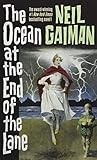
Editors Reads Verdict
The Ocean at the End of the Lane is Gaiman's most personal novel — a meditation on childhood, memory, and the way the world's underlying strangeness is most visible to children who have not yet learned to stop perceiving it. Brief, devastating, and exact.
What We Loved
- The seven-year-old narrator's voice is one of the most convincing in contemporary fiction
- The mythology Gaiman builds around the Hempstock women is allusive and genuinely mysterious
- The emotional truth of childhood helplessness is rendered with unusual precision and courage
- The frame narrative adds a layer of melancholy that elevates the whole
Minor Drawbacks
- At 181 pages, some readers will want more — the ending comes before the emotional implications are fully explored
- The supernatural threat is somewhat less developed than the human horror that surrounds it
Key Takeaways
- → Children perceive the world's strangeness accurately — the process of growing up is partly the process of learning not to
- → Adults are not in control — they are frightened people managing situations that exceed them
- → Memory is not a record but a selection; what we forget may be what would break us if we remembered
- → The oldest things in the world are not gods but something older and stranger — presences that predate the categories we use to understand existence
| Author | Neil Gaiman |
|---|---|
| Publisher | William Morrow |
| Pages | 181 |
| Published | June 18, 2013 |
| Language | English |
| Genre | Fantasy, Fiction |
| Difficulty | Beginner |
| Best For | Adult readers who loved fantasy as children; Gaiman fans looking for his most emotionally mature work; readers interested in novels about memory, loss, and the experience of childhood. |
How The Ocean at the End of the Lane Compares
The Ocean at the End of the Lane at a glance against 3 similar books readers weigh alongside it.
| Book | Author | Rating | Best for |
|---|---|---|---|
| The Ocean at the End of the Lane (this book) | Neil Gaiman | ★ 4.4 | Adult readers who loved fantasy as children |
| American Gods | Neil Gaiman | ★ 4.5 | Fantasy readers with an interest in mythology, American culture, and literary |
| Coraline | Neil Gaiman | ★ 4.4 | Readers of all ages who enjoy dark fairy tales, psychological horror, and |
| Neverwhere | Neil Gaiman | ★ 4.3 | Fantasy readers who enjoy urban mythology and dark fairy tales |
The Summer at the End of Everything
The Ocean at the End of the Lane opens with a frame: an unnamed middle-aged man returns to his childhood village for a funeral and finds himself, by instinct, driving to the farm at the end of his old lane. He sits by the duck pond that Lettie Hempstock, as a child, insisted was an ocean. And then he remembers.
What he remembers is a summer when he was seven years old. A lodger at his family’s house drove their car to the Hempstocks’ field and took his own life, and the death opened something — a crack in the ordinary world through which a creature called an urge, a hunger, a flea from a different universe entered the world in the body of the Monktons’ new nanny. The novel that follows is at once a fairy-tale adventure and the most precise account Gaiman has written of what it actually feels like to be a small child in a world run by adults who are not, despite appearances, in control of anything.
The Hempstock Women and the Oldest Magic
The three Hempstock women — Lettie, her mother, and her grandmother — are the novel’s mythological centre. They are ancient in the way that precedes categorisation: older than gods, older than names, present at the beginning of things and still tending their farm and their ocean at the end of the lane. Gaiman never explains them, which is exactly right. They are one of his great imaginative achievements — figures who feel genuinely numinous rather than simply supernatural.
Lettie, who appears to be eleven, becomes the seven-year-old protagonist’s guide and protector and the novel’s emotional anchor. Her relationship with the narrator is precisely observed: the slightly formal care of someone far older presenting themselves as a child’s peer, the generosity of allowing the boy to believe he is more capable than he is, and the absolute seriousness with which she takes his fear.
Childhood Helplessness and Adult Monstrousness
The novel’s most uncomfortable achievement is its portrayal of the creature Ursula Monkton, who takes up residence in the narrator’s household as a nanny and proceeds to manipulate his parents with terrible efficiency. The boy knows what she is. No adult believes him. His powerlessness — to be believed, to be protected, to be heard — is rendered with a fidelity to childhood experience that is genuinely painful to read.
Gaiman is not interested in villainising the boy’s parents. They are recognisably ordinary people susceptible to manipulation, tired and distracted in the ways that parents of small children always are. The horror is not malice but the structural condition of being seven in a world where adults control the narrative.
Memory as Mercy
The frame device — the man sitting by the pond, slowly remembering — transforms the novel’s meaning. We understand from early on that the events he remembers were not retained. The Hempstocks gave him the mercy of forgetting, and he only remembers while he is sitting by the ocean. The question of what would happen if he did not forget — if he carried the full knowledge of what occurred that summer into his adult life — is left open, and the openness is the point.
Our rating: 4.4/5
A Novel Written by Accident
The Ocean at the End of the Lane began as a short story. Gaiman started writing it to tell his wife Amanda Palmer what his childhood had been like, and found that it grew beyond any short form. The novel that resulted is his most personal work — not autobiographical in the sense of documented fact, but emotionally autobiographical in the sense that the seven-year-old narrator’s experience of the world, its helplessness and its capacity for wonder, is drawn directly from Gaiman’s own childhood memories.
Gaiman grew up in Sussex, in an old farmhouse. There was a family at the end of the lane. There was a pond. The specific geography and atmosphere of the novel — the quality of English rural childhood in the 1960s, the particular loneliness of a bookish child who reads at the dinner table and does not have easy access to his parents’ world — is rendered with the precision that only genuine memory makes possible.
The Carnegie Medal
The Ocean at the End of the Lane won the Carnegie Medal in 2013, voted by the readers of the CILIP Carnegie Medal — specifically, by children’s librarians voting for the book they most wanted children to read. The award is typically given to children’s or young adult books; Gaiman’s novel is an adult novel about childhood, and its selection was notable as an acknowledgment that the emotional territory of the book belongs to both categories.
The Carnegie recognition pointed to something the novel achieves that adult literary fiction rarely attempts: a complete reentry into the consciousness of a seven-year-old, rendered without sentimentality, without the retrospective irony that adult fiction typically imposes on childhood memory, and without simplification of the child’s actual moral and emotional sophistication.
The Three Hempstock Women as Myth
The Hempstock women — Lettie, her mother, and Old Mrs. Hempstock — are Gaiman’s most fully realized mythological creation outside the Sandman universe. They are ancient in a way that precedes all theological categories: they were present at the beginning of the universe and may have made it, or portions of it. They tend their farm, their ocean, their kitten, and the fraying edge of reality with equal domestic matter-of-factness.
Old Mrs. Hempstock’s knowledge — which encompasses cosmological fact delivered in the tone of someone explaining how to make jam — is one of the novel’s great comic and mythological achievements. She knows things that gods do not know, and she knows them the way a very old woman knows how the seasons work: not as revelation but as accumulated observation. The Hempstocks are a reminder that Gaiman’s mythological imagination is not merely decorative — when he creates beings that exceed the categories of existing mythology, the best of them carry genuine numinous weight.
Frequently Asked Questions
What is "The Ocean at the End of the Lane" about?
A middle-aged man returns to his childhood home and remembers an extraordinary summer when he was seven, a magical neighbor girl, and a darkness that threatened to consume the world.
Who should read "The Ocean at the End of the Lane"?
Adult readers who loved fantasy as children; Gaiman fans looking for his most emotionally mature work; readers interested in novels about memory, loss, and the experience of childhood.
What are the key takeaways from "The Ocean at the End of the Lane"?
Children perceive the world's strangeness accurately — the process of growing up is partly the process of learning not to Adults are not in control — they are frightened people managing situations that exceed them Memory is not a record but a selection; what we forget may be what would break us if we remembered The oldest things in the world are not gods but something older and stranger — presences that predate the categories we use to understand existence
Is "The Ocean at the End of the Lane" worth reading?
The Ocean at the End of the Lane is Gaiman's most personal novel — a meditation on childhood, memory, and the way the world's underlying strangeness is most visible to children who have not yet learned to stop perceiving it. Brief, devastating, and exact.
Ready to Read The Ocean at the End of the Lane?
Check the current price on Amazon.
Check Price on Amazon (paid link)Prices and availability are subject to change. See Amazon for current price.
Review last updated: