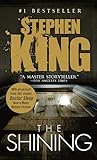
Editors Reads Verdict
The Shining endures not because of its haunted hotel but because of the psychological precision with which King renders a man's deterioration — the alcoholic's self-deception, the father's guilt, the artist's grandiosity. The horror is the marriage and family made monstrous by addiction and isolation, with a genuinely supernatural layer on top.
What We Loved
- Jack Torrance is one of horror fiction's most psychologically complex antagonists
- The Overlook Hotel is rendered as a genuinely architectural evil — every room mapped and meaningful
- Danny's psychic gift is handled with remarkable care for a child's perspective
- The alcoholism narrative is honest and non-sensationalized
Minor Drawbacks
- The pacing in the novel's first third is deliberately slow and tests patience
- The supernatural elements occasionally feel less frightening than the purely psychological ones
- The ending is more melodramatic than the measured horror of the buildup
Key Takeaways
- → The most terrifying horror often comes from watching a person we understand make choices we see coming
- → Addiction does not make a person a villain but it can make them capable of villainous things
- → Isolated environments amplify whatever is already present in a family's dynamics
- → Children's intuitions about adult dysfunction are often more accurate than adults realize
- → Places accumulate the emotional residue of what has happened within them
| Author | Stephen King |
|---|---|
| Publisher | Anchor Books |
| Pages | 688 |
| Published | January 28, 1977 |
| Language | English |
| Genre | Horror, Psychological Thriller, Fiction |
| Difficulty | Intermediate |
| Best For | Horror fans and general literary readers interested in psychological fiction; anyone who wants to understand why Stephen King became the defining voice of American horror. |
How The Shining Compares
The Shining at a glance against 3 similar books readers weigh alongside it.
| Book | Author | Rating | Best for |
|---|---|---|---|
| The Shining (this book) | Stephen King | ★ 4.5 | Horror fans and general literary readers interested in psychological fiction |
| It | Stephen King | ★ 4.4 | Horror readers willing to commit to an epic-length novel |
| Misery | Stephen King | ★ 4.4 | Horror and thriller readers |
| The Stand | Stephen King | ★ 4.5 | King fans willing to commit to an epic |
More Than a Haunted House Story
By 1977, Stephen King had published Carrie and Salem’s Lot, but The Shining was the novel that revealed the full scope of his psychological ambitions. The book is set in the Overlook Hotel, a grand Colorado mountain resort closed for the winter, where Jack Torrance has taken a caretaker position — accompanied by his wife Wendy and five-year-old son Danny — hoping the solitude will let him finish a play and rebuild a career derailed by drinking.
What follows is the most sustained and rigorous portrait of alcoholic deterioration in horror fiction. King, who was himself drinking heavily while writing the book and has acknowledged that Jack Torrance contains more autobiography than he was comfortable admitting at the time, renders the specific interior logic of addiction: the self-justification, the grandiosity, the way every failure becomes someone else’s fault, the slow transformation of love into resentment into something that wants to do harm.
The Hotel as Amplifier
The Overlook’s evil is real — King never retreats to ambiguity — but it works by amplifying what Jack already contains rather than introducing entirely foreign impulses. The ghosts, the hedge animals, the gold ballroom that reopens each night are genuinely supernatural, but their power is proportional to what they find to work with. A man without Jack’s vulnerabilities, the novel implies, might survive the winter intact.
This is King’s most important structural insight: the hotel doesn’t create the monster. It merely provides the conditions for what was always potential to become actual.
Danny and the Shining
Danny Torrance, gifted with psychic sensitivity he calls the shining, is among King’s most convincingly rendered child characters. His perspective — alert to adult anxieties he can sense but not fully interpret, navigating a love for his father alongside a terror of what his father is becoming — gives the novel its most emotionally harrowing material. The scenes where Danny encounters the hotel’s more overtly supernatural elements are frightening; the scenes where he watches his father with simultaneous love and fear are devastating.
Kubrick’s celebrated film adaptation is a masterpiece of a different kind, but it is a largely cold, aesthetic achievement where King’s novel is warm and anguished — closer to the experience of watching someone you love destroy themselves than to an exercise in cinematic dread.
Our rating: 4.5/5 — One of the most psychologically honest novels in American horror, using the supernatural to illuminate the all-too-real horror of a family coming apart from within.
Reading Guides
- Books Like The Shining
- Stephen King Books in Order: The Complete Reading Guide (2026)
- 18 Best Horror Books of All Time: Novels That Will Keep You Up at Night
- The Shining vs IT: Which Stephen King Novel to Read First?
Publication History
The Shining was published by Doubleday in January 1977, King’s third novel. It arrived eighteen months after Salem’s Lot and confirmed that King was not a one-book phenomenon — a question that attaches briefly to every successful debut novelist — but a writer of sustained and developing ambition. The novel debuted strongly on the bestseller lists and has remained continuously in print for nearly five decades, consistently cited as one of the defining horror novels of the twentieth century.
King was twenty-eight when he wrote The Shining, and he has acknowledged that the novel’s most psychologically complex element — Jack Torrance’s alcoholism and its effect on his family — drew directly on his own relationship with alcohol and his awareness of what it was doing to him. The autobiographical dimension was not fully public at the time of publication; King acknowledged his alcoholism and his recovery only in the 1980s, and the self-portrait embedded in Jack Torrance became more visible retrospectively.
The Kubrick Film
Stanley Kubrick’s 1980 film adaptation, starring Jack Nicholson as Jack Torrance and Shelley Duvall as Wendy, is one of the most discussed horror films in cinema history and has, for many viewers, become synonymous with the novel it adapts. King’s famous dislike of the adaptation — expressed in numerous interviews and specifically in his foreword to the 1997 television miniseries — has generated considerable critical attention.
King’s primary objections to Kubrick’s film are aesthetic and psychological: Nicholson’s Jack, already clearly unstable in the film’s opening scenes, removes the tragedy of deterioration that gives the novel its horror. Shelley Duvall’s Wendy is rendered passive and almost comically helpless rather than as a complicated woman struggling to manage an impossible situation. The film is, in King’s reading, a technically brilliant exercise that misunderstands its own source material.
Critical consensus has generally declined to adjudicate this dispute, noting instead that Kubrick made a masterpiece and that King wrote one, and that they are different masterpieces with different concerns.
The 1997 Television Miniseries
The television miniseries adaptation of The Shining, which King wrote himself and which aired on ABC in 1997 starring Steven Weber and Rebecca De Mornay, was intended as a corrective to the Kubrick film — more faithful to King’s novel and more interested in the psychological deterioration King considered the story’s core. The miniseries received generally positive critical reviews for its fidelity to the source material and Weber’s performance, which was praised as a more nuanced rendering of Jack’s decline than Nicholson’s.
King has described the miniseries as the adaptation he always wanted while acknowledging that Kubrick’s film is a superior cinematic achievement. Both have devoted advocates.
Doctor Sleep and the Legacy
The 2013 sequel Doctor Sleep and its 2019 film adaptation — directed by Mike Flanagan and starring Ewan McGregor as adult Danny Torrance — returned King’s best-known character to the center of new work. The film adaptation of Doctor Sleep is unusual in navigating between King’s novel and Kubrick’s film design (rather than King’s original descriptions), using the Overlook’s visual iconography that audiences associate with Kubrick. King has expressed qualified approval of the Doctor Sleep film while noting the creative challenges of building a sequel to a film adaptation of a novel its author disliked.
Cultural Legacy
The Shining has become one of the most analyzed horror novels in American literature, generating academic attention from perspectives ranging from psychoanalytic criticism to feminist theory to architectural analysis. Room 237, the Overlook’s floor plan, the hedge maze, the twins in the corridor, REDRUM — these images have entered American cultural memory at a depth that very few horror novels achieve. The novel’s legacy is inseparable from Kubrick’s imagery, a situation King has had to make peace with while insisting on the distinction between his work and the film’s.
Frequently Asked Questions
What is "The Shining" about?
A recovering alcoholic writer takes a winter caretaker job at a remote Colorado hotel where the building's evil history begins to consume his sanity and endanger his family.
Who should read "The Shining"?
Horror fans and general literary readers interested in psychological fiction; anyone who wants to understand why Stephen King became the defining voice of American horror.
What are the key takeaways from "The Shining"?
The most terrifying horror often comes from watching a person we understand make choices we see coming Addiction does not make a person a villain but it can make them capable of villainous things Isolated environments amplify whatever is already present in a family's dynamics Children's intuitions about adult dysfunction are often more accurate than adults realize Places accumulate the emotional residue of what has happened within them
Is "The Shining" worth reading?
The Shining endures not because of its haunted hotel but because of the psychological precision with which King renders a man's deterioration — the alcoholic's self-deception, the father's guilt, the artist's grandiosity. The horror is the marriage and family made monstrous by addiction and isolation, with a genuinely supernatural layer on top.
Ready to Read The Shining?
Check the current price on Amazon.
Check Price on Amazon (paid link)Prices and availability are subject to change. See Amazon for current price.
Review last updated: