Stephen King is an American author whose prodigious output — including The Shining, It, Misery, and Carrie — has made him the defining figure in modern horror fiction.
Stephen King has published over sixty novels and nearly two hundred short stories since Carrie appeared in 1974, making him not merely prolific but sustainably prolific — maintaining a readership across five decades and multiple generations. His subject is broadly fear: fear of the dark, of the monster, of disease, of time, of isolation, of the violence that ordinary people are capable of. But what distinguishes his best work from genre routine is his understanding of character and community. King’s protagonists feel like real people because they are located in specific social worlds — small-town Maine, working-class families, professional lives — and the horror he introduces is effective precisely because it threatens something the reader has come to care about.
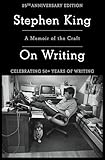
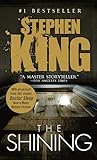
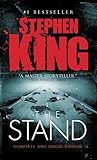
Carrie (1974), The Shining (1977), The Stand (1978), It (1986), and Misery (1987) are the core of his canonical achievement, each demonstrating different facets of his range. The Shining is a genuinely terrifying psychological horror novel about alcoholism, family violence, and spiritual malevolence. It is his most sustained and ambitious creation: a thousand-page novel about a group of children confronting an ancient evil in Derry, Maine, that works both as coming-of-age story and cosmic horror. Misery, the most tightly constructed of his major novels, is as much a meditation on authorship and the relationship between writer and reader as it is a thriller. On Writing (2000), part memoir and part craft manual, is one of the best books about the writing process by any author.
King’s weaknesses are real: he can be too long, his endings have disappointed many readers (the It ending is the canonical example), and his enormous output includes books that feel underprepared. His critical reputation long lagged behind his popularity, though the National Book Award for Distinguished Contribution (2003) represented a meaningful institutional recognition. For readers approaching him for the first time, The Shining, Misery, or Different Seasons (a collection of novellas including the stories that became Stand by Me and The Shawshank Redemption) are excellent starting points.
The Range Beyond Horror
Although King is universally known as the master of modern horror, his catalogue is far broader than the label suggests, and readers who avoid him on the assumption that he writes only scary stories miss much of his best work. He has written crime fiction, fantasy, science fiction, and straight literary drama, and some of his most admired books contain no supernatural element at all. The novellas collected in Different Seasons — which gave us the films Stand by Me and The Shawshank Redemption — are tender, humane studies of friendship, hope, and the loss of innocence, while 11/22/63 is an ambitious time-travel novel built around the Kennedy assassination. This versatility, sustained across decades, is part of what separates King from the genre writers he is often grouped with.
The Dark Tower and a Connected Universe
Running beneath much of King’s fiction is The Dark Tower, the eight-book magnum opus he worked on for more than thirty years, blending fantasy, Western, and horror into a single sprawling mythology. Many of his standalone novels quietly connect to this central saga, and recurring Maine settings such as Castle Rock and Derry give his body of work the feel of a unified fictional universe. For dedicated readers, tracing these connections becomes a pleasure in itself, turning dozens of separate books into one vast, interlocking world that rewards long-term immersion.
A Master of Character and Place
What ultimately distinguishes King is not the scares but the writing of people and places. His protagonists are ordinary Americans — schoolteachers, writers, children, recovering alcoholics — rendered with such specificity that the reader is fully invested before the horror arrives. His evocation of small-town Maine, of working-class life, and of childhood is among the most convincing in popular fiction, and his ear for dialogue and pop-culture texture grounds even his most outlandish premises in a recognisable world. The terror works because the reality is so solid.
Why He Endures
King’s staying power rests on this combination of accessibility, productivity, and genuine craft. He is a natural storyteller who writes to be read, and his books pull readers through hundreds of pages with an ease that conceals real skill. Critics who once dismissed him as a mere entertainer have increasingly acknowledged his contribution to American letters, and his influence on subsequent generations of writers and filmmakers is immense. For new readers, the wisest approach is to start with a single acknowledged classic and let his connected universe draw you deeper at its own pace.
A Pop-Cultural Institution
Beyond the page, King has become one of the most adapted authors in history, his stories supplying the source material for a remarkable number of acclaimed and iconic films and television series. Adaptations such as The Shawshank Redemption, Stand by Me, Misery, The Green Mile, Carrie, and It have carried his stories to audiences far beyond his readership, and a steady stream of new adaptations keeps his work continuously in the cultural conversation. This cross-media ubiquity has made King not just a novelist but a permanent fixture of popular culture, his name synonymous with American horror and storytelling itself. His generosity toward emerging writers, his outspoken public voice, and his candid reflections on craft and recovery have further cemented his status as an elder statesman of American letters whose influence shows no sign of fading.
Deeper Cuts
Devoted readers should not overlook Firestarter, The Institute, Cujo, The Dead Zone, Salem’s Lot, Under the Dome, and 11/22/63.
Reading Guides