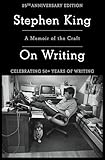
Editors Reads Verdict
On Writing is the rare writing book that earns its advice through autobiography — King doesn't tell you how to write in the abstract but shows you how he has lived with writing for half a century. The memoir sections are as good as anything he has written in fiction.
What We Loved
- The autobiography contextualizes the craft advice in lived experience rather than abstract principle
- King's voice is as entertaining and direct here as in his fiction
- The advice on reading, vocabulary, and storytelling is genuinely useful regardless of genre
- The account of his recovery from a near-fatal accident is among the book's most powerful passages
Minor Drawbacks
- Some of King's advice reflects his specific working method rather than universal principles
- The dismissal of plotting over discovery won't suit all writers
- Shorter than readers expecting a comprehensive craft manual
Key Takeaways
- → Reading widely and voraciously is the single most important preparation for writing
- → First drafts are for the writer; subsequent drafts are for the reader
- → Story emerges from situation rather than being constructed from plot outlines
- → The toolbox metaphor: vocabulary, grammar, style form the basic tools of the trade
- → Writing regularly, without waiting for inspiration, is the professional writer's primary discipline
| Author | Stephen King |
|---|---|
| Publisher | Scribner |
| Pages | 288 |
| Published | October 3, 2000 |
| Language | English |
| Genre | Non-Fiction, Memoir, Writing Craft |
| Difficulty | Beginner |
| Best For | Writers at any stage; readers curious about the craft of fiction; anyone interested in King's life and how his experiences shaped his work. |
How On Writing: A Memoir of the Craft Compares
On Writing: A Memoir of the Craft at a glance against 3 similar books readers weigh alongside it.
| Book | Author | Rating | Best for |
|---|---|---|---|
| On Writing: A Memoir of the Craft (this book) | Stephen King | ★ 4.8 | Writers at any stage |
| Big Magic | Elizabeth Gilbert | ★ 4.2 | Creative people wrestling with fear, perfectionism, or the belief that they |
| Bird by Bird | Anne Lamott | ★ 4.5 | Writers of all levels seeking permission and practical guidance, and anyone who |
| The War of Art | Steven Pressfield | ★ 4.4 | Writers, artists, entrepreneurs, and anyone who chronically starts creative |
The Best Writing Book Ever Written About Being a Writer
Stephen King began drafting On Writing in the late 1990s, completed a first section, and then was struck by a van while walking along a Maine road in June 1999 — an accident that shattered his hip, leg, and knee and nearly killed him. He completed the book during his rehabilitation, and that biographical frame — a writer’s near-death and the act of writing through recovery — gives the book a weight that no purely instructional manual could achieve.
The book is structured in three parts: a memoir (“C.V.”) that traces King’s life from early childhood through the accident; a craft section (“On Writing”) that lays out his core principles; and a coda that describes the rehabilitation and the book’s completion. The memoir sections are not throat-clearing before the real content — they are the real content, establishing King’s authority through specificity of experience rather than credentialed expertise.
The Autobiography as Craft Instruction
King’s childhood and adolescent memories of writing — the rejection slips pinned to a nail in the wall, the early horror stories, the school newspaper, the first professional sales — are among the most entertaining origin stories in literary memoir. But they also serve a purpose: they demonstrate that writing is not the product of inspiration or talent alone but of practice, failure, persistence, and an insatiable appetite for reading.
His account of addiction — the alcoholic and cocaine-fueled years of the 1980s, when he was producing at extraordinary rates and can barely remember the composition of some of his most successful books — is unflinching and illuminating about the relationship between compulsion and creativity.
The Craft Section
King’s actual writing advice is organized around a toolbox metaphor: vocabulary and grammar form the basic instruments, style and usage the intermediate tools, and the larger questions of narrative and character the advanced equipment. He is persuasive on the importance of reading, the necessity of honest dialogue, and the preference for specificity over abstraction.
His most discussed recommendation — against outlining, in favor of following the logic of an unfolding situation — reflects his own method but is presented with enough self-awareness that writers who work differently can extract the underlying principle.
Our rating: 4.8/5 — One of the finest books about writing ever published, earning its advice through autobiography and earning its autobiography through one of American literature’s most compelling careers.
Reading Guides
Publication History and Context
On Writing was published by Scribner in October 2000 and received among the most uniformly positive reviews of King’s career — critics who had sometimes been ambivalent about his fiction responded with enthusiasm to a book that addressed them in the register of literary memoir rather than popular genre. The New York Times, The New Yorker, and the major literary review publications all ran substantial positive pieces, positioning the book as an important contribution to the literature of craft alongside William Strunk and E.B. White’s The Elements of Style and Anne Lamott’s Bird by Bird.
The book’s origin is inseparable from King’s 1999 accident. He had completed the memoir sections and was working on the craft sections when he was struck by a minivan driven by Bryan Smith on a rural Maine road in June 1999. The accident left him with a shattered hip, multiple broken bones, and a lung injury, and required multiple surgeries and an extended rehabilitation. He completed On Writing during his recovery, walking a few steps further each day and writing as a form of rehabilitation — an autobiographical loop that the book itself describes, making the account of its own completion part of its subject matter.
The Memoir Sections
King’s memoir is not a conventional literary autobiography. It proceeds by anecdote rather than chronology, assembling a composite portrait of a life spent in service to writing without making that life sound either exceptional or romantic. The stories of his childhood — an older brother’s pranks, the early horror stories he typed in imitation of comics, the first professional sale of a short story while still in high school — establish that King was not a prodigy so much as a practitioner: someone who wrote constantly and without expectation of audience from a very young age.
The sections on his addiction years in the 1980s are among the most candid addiction memoirs any major American writer has produced. King was, by his own account, drunk and cocaine-dependent during the composition of several of his most commercially successful novels, including Cujo and Pet Sematary, and can barely remember writing them. He has expressed complicated feelings about this period — the compulsion produced work, but the work may have suffered, and the relationship between addiction and creativity is not one he endorses or romanticizes.
The Craft Advice
The central craft section of On Writing has influenced a generation of fiction writers across genres. King’s toolbox metaphor — vocabulary and grammar as basic tools, style as intermediate equipment, the harder questions of character and story as the advanced instruments — is one of the clearest and most practical frameworks for thinking about writing skill that any practitioner has articulated. His insistence on reading as the primary preparation for writing, on the importance of honest dialogue, on the preference for strong verbs over adverbs, and on the discipline of regular daily writing have been cited by professional writers in interviews across the two decades since publication.
His most debated recommendation — against plotting in favor of discovering stories through the act of writing them — reflects his own method genuinely but requires qualification for writers whose process is different. King acknowledges as much, but the strength of his argument for the discovery method has convinced many writers whose default instinct was to outline first.
Awards and Recognition
On Writing won the Bram Stoker Award for non-fiction in 2000. It has appeared on virtually every list of recommended books for writers since its publication and continues to sell steadily more than two decades after release. The book’s durability reflects both the quality of its craft advice and the accessibility of King’s voice — he writes about writing the way he writes about horror: directly, specifically, and with evident enjoyment of the act.
King received the National Book Foundation Medal for Distinguished Contribution to American Letters in 2003, recognition that On Writing had materially assisted by demonstrating his serious engagement with the literary culture he was sometimes accused of having no interest in.
Frequently Asked Questions
What is "On Writing: A Memoir of the Craft" about?
Part memoir, part writing guide, Stephen King reflects on his life, his near-fatal accident, and the craft principles that have made him one of the most productive writers in American literature.
Who should read "On Writing: A Memoir of the Craft"?
Writers at any stage; readers curious about the craft of fiction; anyone interested in King's life and how his experiences shaped his work.
What are the key takeaways from "On Writing: A Memoir of the Craft"?
Reading widely and voraciously is the single most important preparation for writing First drafts are for the writer; subsequent drafts are for the reader Story emerges from situation rather than being constructed from plot outlines The toolbox metaphor: vocabulary, grammar, style form the basic tools of the trade Writing regularly, without waiting for inspiration, is the professional writer's primary discipline
Is "On Writing: A Memoir of the Craft" worth reading?
On Writing is the rare writing book that earns its advice through autobiography — King doesn't tell you how to write in the abstract but shows you how he has lived with writing for half a century. The memoir sections are as good as anything he has written in fiction.
Ready to Read On Writing: A Memoir of the Craft?
Check the current price on Amazon.
Check Price on Amazon (paid link)Prices and availability are subject to change. See Amazon for current price.
Review last updated: