Best Books on Writing: Essential Reading for Writers
The best books on writing — from On Writing and Bird by Bird to The War of Art and Big Magic. Essential craft books for fiction writers, essayists, and anyone who writes.
By Lena Fischer
Books on writing divide into two kinds: craft books (concerned with technique — how to construct a scene, how to develop a character, how to revise) and books on the psychology of creative work (concerned with why it is so hard to do the work at all). Both are useful; neither is sufficient without the other. The list below includes the best of each type.
Craft and Memoir Combined
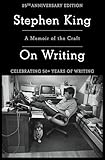
On Writing — Stephen King (2000)
The best overall book on writing — half memoir, half practical guide, all honest. King’s account of his reading life, his early failures, his addiction and recovery, and the accident in 1999 that nearly killed him is as compelling as any of his fiction. His craft advice is direct, grounded in practice rather than theory, and refreshingly anti-pretentious: read widely, write every day, don’t use adverbs if you can avoid it, trust your reader, and revise. Useful for writers of any genre and for readers who are simply interested in how one writer’s mind works.
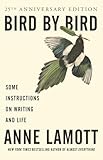
Bird by Bird — Anne Lamott (1994)
The most emotionally honest book on writing — Lamott takes seriously the anxiety and self-doubt that accompany creative work and offers practical strategies for getting through them. Her concept of the “shitty first draft” — the permission to write badly before you can write well — has freed more writers from paralysis than any other single idea in writing pedagogy. Warmer than King’s book, more focused on the emotional rather than technical dimensions of the work.
The Psychology of Creative Work
The War of Art — Steven Pressfield (2002)
The most useful short book on the psychology of creative work. Pressfield’s argument is simple: the primary obstacle to creative work is Resistance — the force that manifests as procrastination, perfectionism, rationalisations, and every other strategy the mind employs to avoid doing the thing. The solution is equally simple: show up and do the work anyway, every day, like a professional. The book is under 200 pages, structured in very short chapters, and has been cited by writers, artists, and entrepreneurs as transformative.
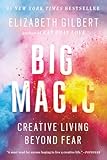
Big Magic — Elizabeth Gilbert (2015)
Gilbert’s argument — that ideas exist as entities that seek human collaboration, and that the creative life requires a willingness to pursue curiosity over fear — is more metaphorical than Pressfield’s but addresses the same underlying resistance. The book is best for writers and creatives who are more blocked by fear and perfectionism than by straightforward procrastination, and who respond better to encouragement than to the military metaphor of Pressfield’s approach.
The Craft of Creativity
The Creative Act: A Way of Being — Rick Rubin (2023)
The music producer Rick Rubin’s meditation on creativity — less a how-to guide than a series of observations about what creative work requires: attention, openness, willingness to let go of control, the ability to trust the process rather than the outcome. The book is beautifully designed and written in aphoristic sections. It is not specifically about writing but about the creative disposition generally, and is particularly useful for writers who are stuck not on how to do the work but on how to be in relationship with it.
Craft Versus Resistance: Two Different Problems
The single most useful insight for anyone assembling a writing library is that books on writing address two fundamentally different problems, and confusing them leads readers to the wrong book for their actual difficulty. The first problem is craft: how to construct a scene, develop a character, control point of view, build a sentence, revise a draft into something better. The second problem is resistance — the psychological and emotional struggle of getting yourself to do the work at all, of overcoming the procrastination, fear, perfectionism, and self-doubt that keep the page blank. These are genuinely separate difficulties, and the same writer can be expert at one while crippled by the other. There are technically accomplished writers who cannot finish anything because resistance defeats them, and there are disciplined daily writers who produce reams of competent but uncrafted prose. This list deliberately spans both categories. King and Lamott offer craft wisdom wrapped in the lived experience of working writers; Pressfield and Gilbert address resistance directly, the former through the metaphor of war and professional discipline, the latter through curiosity and the easing of fear; Rubin operates at the level of creative disposition itself. The practical lesson is to diagnose your own obstacle honestly before reaching for a book. If you know what to write but cannot make yourself write it, no amount of craft instruction will help, and you need Pressfield or Gilbert. If you write constantly but sense your work lacks technique, the encouragement books will only enable the problem, and you need King or Lamott. The best-equipped writer reads in both registers.
The Best Writing Advice Is Universal
A striking feature of the finest books on writing is how thoroughly their wisdom transcends writing itself, applying to virtually any creative or sustained endeavor — which is why this list draws a readership far beyond aspiring novelists. The core principles these books arrive at, often independently, turn out to be principles for doing meaningful work of any kind. Show up consistently rather than waiting for inspiration; give yourself permission to do it badly at first, since the “shitty first draft” is the only path to a good final one; separate the act of creation from the act of judgment, because trying to write and edit simultaneously paralyzes both; treat the work as a professional rather than an amateur, meaning you do it whether or not you feel like it; and cultivate the willingness to revise, since almost nothing good is achieved in a single pass. These ideas, developed by writers for writers, are precisely the disciplines that musicians, entrepreneurs, scientists, and artists of every kind must master, which is why Pressfield’s The War of Art and Rubin’s The Creative Act are read as widely outside the writing world as within it. The universality is not a dilution of the advice but a sign of its depth: the obstacles to finishing a novel are the same obstacles that stand before any difficult, self-directed, long-term creative project, and the writers who have thought hardest about overcoming them have produced wisdom of unexpectedly broad application.
Read About Writing, Then Write
A necessary caution belongs on any list of books about writing, and the best authors on this list are the first to insist on it: reading about writing is not writing, and the two can become quietly opposed. There is a seductive trap in the genre, in which the aspiring writer accumulates craft books, creativity manifestos, and author memoirs as a sophisticated form of the very procrastination those books warn against — feeling productive, even virtuous, while never actually facing the blank page. Every writer on this list would tell you the same thing: their books are meant to be metabolized and then set aside, not substituted for the work. King is explicit that the only way to learn to write is to read enormously and write constantly; the book is a supplement to that practice, not a replacement for it. The genuine value of these books, then, lies in what they send you back to the desk with — a technique to try, a permission that loosens a block, a renewed conviction that the struggle is normal and surmountable. Used well, a great book on writing is a tool and a tonic: it sharpens craft, dissolves resistance, and returns you to your own work with more skill and more nerve. Used poorly, it becomes one more thing to read instead of writing. The wise reader takes what is useful from these excellent books, then closes them and begins.
Reading Order
Start practical: On Writing → Bird by Bird → The War of Art.
For resistance: The War of Art → Big Magic → On Writing.
For creative philosophy: The Creative Act → Bird by Bird → On Writing.
Frequently Asked Questions
What is the best book on writing?
On Writing by Stephen King is the best overall book on writing craft — a combination of memoir and practical advice that is honest about how writing actually works, written with the authority of someone who has been one of the most commercially successful writers in history. Bird by Bird by Anne Lamott is the most emotionally honest — it takes seriously the anxiety, self-doubt, and resistance that every writer experiences and offers practical strategies for getting through them. The War of Art by Steven Pressfield is the most useful book on the psychological obstacles to creative work.
What is On Writing by Stephen King about?
On Writing (2000) by Stephen King is two books in one: a memoir of King's life as a writer (his childhood reading, his early failures, his alcohol and drug addiction and recovery) and a practical guide to writing fiction (vocabulary, grammar, the toolbox metaphor, how to revise, the importance of reading widely). King's advice is specific and grounded in his own experience — he does not theorise about writing; he describes what he does and why. The memoir sections are as interesting as the craft sections, and the book works for readers who have no intention of writing fiction.
What is Bird by Bird about?
Bird by Bird (1994) by Anne Lamott takes its title from advice Lamott's father gave her brother when he was overwhelmed by a school project on birds due the next day: just take it bird by bird. The book is about managing the anxiety of writing — specifically, how to start when the task feels overwhelming, how to tolerate the shitty first draft (Lamott's term), how to find the story you actually have to tell rather than the one you think you should tell. It is warmer and funnier than most writing books and particularly useful for writers who are paralysed by perfectionism.
What is The War of Art about?
The War of Art (2002) by Steven Pressfield argues that the primary obstacle to creative work is what he calls Resistance — a generalised force that manifests as procrastination, self-doubt, rationalisations, and every other strategy the mind employs to avoid doing the work. Pressfield argues that Resistance is universal (every creative person feels it) and that the only strategy that works is to show up and do the work anyway, every day, like a professional rather than an amateur. The book is short (under 200 pages), structured in very short sections, and has been cited by many writers and creative professionals as the most useful book they have read about creative work.