Best Books About Writing: Essential Reading List for Writers
The best books about writing — from On Writing and Bird by Bird to The War of Art and Big Magic. Craft guides, creative encouragement, and the practical wisdom every writer needs.
By Lena Fischer
Every writer who has written about writing has produced their own version of the same advice: read constantly, write regularly, cut what isn’t necessary, ignore the inner critic until the draft is done, then edit mercilessly. The specific formulations vary; the underlying truth doesn’t.
What distinguishes the best books about writing from the generic is the angle of approach: the memoir that shows how a writer actually developed, the specific exercise that unlocks something that was blocked, the philosophical argument about why creative work matters. The books below are the ones that have actually helped writers — not inspired them to want to write, which is the lesser gift, but enabled them to do it.
The Essential Books
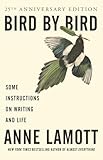
Bird by Bird — Anne Lamott (1994)
The most widely loved book about writing. Lamott is funny, honest about the depression and self-doubt that writing involves, and organised around practical wisdom rather than inspirational abstraction. Her central advice: take it “bird by bird” — one small section at a time — when the whole seems impossible. Her chapter on the “shitty first draft” (give yourself permission to write badly on the first pass, because bad first drafts are the raw material of good final drafts) has helped more writers through the psychological barrier of beginning than any other single piece of advice.
The book is half craft advice and half memoir, and neither half suffers from the other’s presence. Essential.
The War of Art — Steven Pressfield (2002)
Not a craft book but a philosophical one: an analysis of what prevents creative work (Resistance) and how to overcome it. Pressfield’s argument is that Resistance is universal, predictable, and intelligible — it operates most powerfully against the work that matters most, which is how you identify what you should be doing. The professional overcomes Resistance not by eliminating it (it never goes away) but by showing up and doing the work anyway.
Short, intense, and organised as a sequence of short observations rather than chapters. Read it quickly; the effect is cumulative.
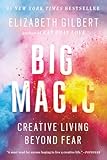
Big Magic — Elizabeth Gilbert (2015)
Gilbert’s book is about creative living rather than craft technique: the argument that ideas are looking for human partners, that creativity is a transaction between the human and the mysterious, and that the worst thing you can do is wait until conditions are perfect to begin. Less specific than Lamott but more encouraging for writers who are stuck at the level of permission — who have not yet given themselves the right to try.
For many writers, Big Magic is the book that unlocks the beginning; Bird by Bird is the book that gets them through the middle.
Craft and Technique
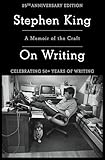
On Writing — Stephen King (2000)
The most acclaimed book about fiction craft by a working novelist. The first half is memoir — King’s difficult childhood, his years of rejection, his alcohol and drug problems that threatened to derail his career, and his recovery. The second half is craft: read constantly, write every day, cut the adverbs, trust your reader, and never use a passive voice when an active one is available. The advice is Strunk-and-White basic, but King’s authority as a writer who has produced millions of words gives it credibility that a writing teacher’s advice might lack.
Famously: “If you don’t have time to read, you don’t have the time (or the tools) to write. Simple as that.”
The Elements of Style — William Strunk and E.B. White (1959)
Under 100 pages, first published in 1918, and still the most authoritative guide to English prose style available. Strunk’s rules — omit needless words, prefer the specific to the general, use the active voice — are not negotiable in the sense that violating them always weakens prose. The rules can be broken with intention; the writers who break them best are those who know them most thoroughly.
Required reading for anyone who writes in English.
Memoir and the Writer’s Life
A Moveable Feast — Ernest Hemingway (1964)
Hemingway’s memoir of Paris in the 1920s — his friendships with Fitzgerald, Gertrude Stein, Ezra Pound, and others — is the most literary of the writer’s-life memoirs. It is also not reliable biography (Hemingway wrote it late in life with old grudges and old self-mythologisations intact). But as a description of how a writer develops — the specific habits, the attention to craft, the economy of means that he was teaching himself — it is without equal.
Becoming a Writer — Dorothea Brande (1934)
The oldest book on this list, and among the most useful. Brande’s insight — that the writer needs to establish a relationship between two different kinds of consciousness, the unconscious generative mind that produces raw material and the critical conscious mind that shapes it — anticipated modern psychology of creativity by decades. Her practical exercises (writing immediately upon waking, committing to a specific time and place and quantity of writing) remain as useful as anything published since.
Craft Versus Inspiration
A central and enduring debate runs through the literature about writing, and engaging with it is essential to understanding what these books offer: the question of whether writing is fundamentally a matter of craft, of learnable technique and disciplined skill, or of inspiration, of talent, genius, and the mysterious gift that cannot be taught. The books about writing tend to position themselves, explicitly or implicitly, along this spectrum between craft and inspiration, and the debate between these views illuminates the nature of writing and of the guidance these books offer. On one side stands the emphasis on craft, the view that writing is fundamentally a skill that can be learned, developed, and mastered through study, practice, and the application of technique, and that the aspiring writer can genuinely improve through understanding and effort. The books in this tradition offer practical instruction in the techniques and skills of writing, treating it as a craft that can be taught and learned. On the other side stands the emphasis on inspiration, the view that writing depends ultimately on talent, genius, and a mysterious creative gift that cannot be taught or learned, and that technique, however useful, cannot supply what only native ability and inspiration can provide. The truth, as the best books about writing recognize, lies in the combination of both, for writing demands both craft and inspiration, both learnable technique and native talent, both disciplined skill and creative gift. The aspiring writer can genuinely improve through the mastery of craft, but craft alone cannot produce great writing without the spark of talent and inspiration, and the best books about writing acknowledge this combination, offering instruction in the craft that can be taught while recognizing the role of the inspiration that cannot. Engaging with this debate between craft and inspiration is essential to understanding what the books about writing offer, illuminating the nature of writing as a combination of learnable craft and native gift, and clarifying both the value and the limits of the instruction these books provide.
The Writing Life
Many of the best books about writing are concerned not merely with the techniques of the craft but with the writing life itself, with the discipline, persistence, solitude, rejection, and devotion that the writing life demands, and this honest portrayal of what it actually means to live as a writer is among the most valuable things these books offer. To write seriously is to undertake not merely an activity but a way of life, and the best books about writing illuminate the realities of this life, the demands and difficulties that the aspiring writer must be prepared to face. There is the matter of discipline, the daily devotion to the work that serious writing requires, the necessity of showing up and writing even when inspiration is absent and the work is hard. There is the matter of persistence, the long perseverance through difficulty, failure, and rejection that the writing life demands, the refusal to give up in the face of the obstacles and discouragements that every writer faces. There is the matter of solitude, the long hours alone with the work that writing requires, the isolation that is the writer’s necessary condition. And there is the matter of rejection, the repeated experience of failure and rejection that nearly every writer must endure, and the resilience required to persist in its face. The best books about writing portray these realities of the writing life honestly, illuminating the discipline, persistence, solitude, and rejection that the life demands, and preparing the aspiring writer for what it actually means to live as a writer. This honest portrayal of the writing life is among the most valuable things these books offer, for it reveals that writing is not merely a matter of technique or inspiration but a demanding way of life, requiring discipline, persistence, and devotion, and the aspiring writer is well served by understanding these realities before undertaking the writing life. The best books about writing illuminate not merely the craft but the life, offering an honest portrayal of the discipline, persistence, solitude, and rejection that the writing life demands, and preparing the aspiring writer for the realities of living as a writer.
Reading as a Writer
A profound lesson that runs through the literature about writing is that learning to write well is inseparable from learning to read well, that the aspiring writer must learn to read as a writer, attending to the craft and technique of the works they read and learning from the achievements of the masters, and this transformation of reading into a means of learning the craft is among the most valuable things these books teach. The books about writing repeatedly emphasize that reading is essential to writing, that the writer learns the craft not only through their own practice but through the careful, attentive reading of the works of others, and that learning to read as a writer is a crucial part of learning to write. To read as a writer is to read differently than the ordinary reader, attending not only to the content and pleasure of a work but to its craft and technique, to how it achieves its effects, to the choices the writer made and the methods they employed. The aspiring writer who reads in this way learns from the achievements of the masters, studying how great writing is made, absorbing the techniques and possibilities of the craft, and developing the understanding and skill that careful, attentive reading can provide. This reading as a writer transforms the activity of reading into a means of learning the craft, making every book read a potential teacher, every work a source of instruction in the possibilities and techniques of writing. The best books about writing emphasize this lesson, teaching the aspiring writer to read as a writer, to attend to the craft and technique of the works they read, and to learn from the achievements of the masters. This transformation of reading into a means of learning the craft is among the most valuable things these books teach, for it reveals that the aspiring writer’s education proceeds not only through their own practice but through the careful, attentive reading of the works of others, and that learning to read as a writer is inseparable from learning to write well. To read as a writer, attending to the craft and learning from the masters, is among the most important skills the aspiring writer can develop, and the best books about writing teach this skill, transforming reading into a means of mastering the craft of writing.
Reading Order
Start here: Bird by Bird → The War of Art. These two books address the two main problems: how to do the work and how to overcome the resistance to doing it.
Add craft: On Writing → The Elements of Style.
For creative philosophy: Big Magic → Bird by Bird.
The library: Becoming a Writer → Bird by Bird → The War of Art → On Writing → Big Magic → A Moveable Feast. This is a comprehensive writing education in six books.
Frequently Asked Questions
What is the best book about writing for beginners?
Bird by Bird by Anne Lamott is the most widely recommended for beginners — it is funny, honest about the difficulty and the self-doubt that writing involves, and organised around practical advice (the 'shitty first draft,' the 'one-inch picture frame,' the importance of just getting words down). On Writing by Stephen King is almost as widely recommended and covers both craft and King's own experience of developing as a writer. Both are essential.
Is On Writing by Stephen King good even if you don't read Stephen King?
Yes — On Writing is widely considered one of the best books about the craft of fiction regardless of genre. The first half is a memoir of King's development as a writer; the second is practical craft advice (read constantly, write with the door closed for the first draft, cut everything that isn't necessary). The advice applies to any kind of fiction, and the memoir is unexpectedly moving. It is the best single book about the experience of being a writer.
What is The War of Art about?
The War of Art by Steven Pressfield is about Resistance — Pressfield's term for the internal force that prevents creative work: the procrastination, the self-doubt, the distraction, the internal voice that argues you're not good enough or it's not the right time or you should do something more practical. Pressfield argues that Resistance is universal, that it operates most powerfully against the work that matters most to you, and that the professional creative's task is to identify and overcome it. Short, intense, and for many writers, revelatory.
What books about writing are best for fiction writers specifically?
Bird by Bird by Anne Lamott is the most practically useful for fiction writers. On Writing by Stephen King covers both fiction craft and the discipline of writing. Story by Robert McKee (more oriented toward screenwriting but foundational for narrative structure in any medium) and The Elements of Story by Francis Forde are strong for plot and structure. For the psychological and creative dimension of fiction writing rather than craft technique, Big Magic by Elizabeth Gilbert and The War of Art by Pressfield are essential.