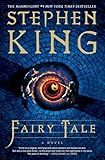
Editors Reads Verdict
Fairy Tale is Stephen King at his most openly playful and indebted to the genre fiction he grew up loving — a big, generous portal fantasy that earns every one of its 600 pages and reminds you why King remains the defining popular novelist of his generation.
What We Loved
- King's most openly joyful book in years — a genuine love letter to fantasy
- The portal world is richly imagined and develops its mythology with care
- Charlie Reade is an immediately likeable and well-developed protagonist
- The second half builds to a genuinely thrilling and emotionally satisfying climax
Minor Drawbacks
- The first 150 pages are a slow-burn setup that some readers will find too deliberate
- The fairy-tale world draws heavily on recognisable archetypes
- At 608 pages it's not for readers who prefer lean, fast fiction
Key Takeaways
- → King wears his fantasy influences — Tolkien, Grimm, Baum — openly and lovingly here
- → Coming-of-age and portal fantasy have been intertwined since The Wizard of Oz
- → Grief and responsibility are the emotional engines beneath the adventure
- → The best fairy tales contain genuine darkness alongside wonder
- → King's storytelling instincts remain as sure as ever in his late career
| Author | Stephen King |
|---|---|
| Publisher | Scribner |
| Pages | 608 |
| Published | September 6, 2022 |
| Language | English |
| Genre | Fantasy, Horror |
| Difficulty | Beginner |
| Best For | Stephen King fans and fantasy readers looking for a generous, big-hearted portal fantasy — particularly those with a fondness for classic fairy-tale archetypes. |
How Fairy Tale Compares
Fairy Tale at a glance against 3 similar books readers weigh alongside it.
| Book | Author | Rating | Best for |
|---|---|---|---|
| Fairy Tale (this book) | Stephen King | ★ 4.2 | Stephen King fans and fantasy readers looking for a generous, big-hearted |
| Needful Things | Stephen King | ★ 4.2 | Stephen King fans who enjoy his small-town horror and Castle Rock mythology, |
| The Dark Tower: The Gunslinger | Stephen King | ★ 4.3 | Stephen King fans ready for his most ambitious work, fantasy readers who enjoy |
| The Outsider | Stephen King | ★ 4.3 | Stephen King fans and readers who enjoy crime thrillers willing to accept a |
The Master Returns to Basics
In an interview promoting Fairy Tale, Stephen King said he wanted to write a book for the pleasure of it — not for a message or a theme or a market, but because he had a story he loved and wanted to tell. That generosity of spirit is palpable on every page.
Charlie Reade is seventeen, the son of a recovering alcoholic father, when he befriends the elderly and reclusive Mr. Bowditch next door. When Bowditch dies, Charlie inherits his property — including a mysterious shed at the back of the garden and a golden cricket that chirps in response to questions. Inside the shed is a spiral staircase leading to another world.
The Setup and the World
King takes his time getting Charlie to Empis, the fairy-tale kingdom beneath the shed. The first 150 pages are a careful, character-driven setup: Charlie’s relationship with his father, the grief over his mother, his friendship with Bowditch. It is slower than King’s most propulsive thrillers, but the investment pays off. When Charlie descends the steps, you go with him.
Empis is a classic fairy-tale landscape — a kingdom under a curse, a dark lord, enslaved people, magical creatures — but King populates it with enough specific detail and genuine invention to make it feel lived-in. The mythology around the kingdom’s corruption is especially well-developed.
The Second Half
The novel transforms in its second half into something more overtly adventurous. King knows his genre history — Grimm, Perrault, Baum, Tolkien — and is not shy about drawing on it. But the emotional weight of Charlie’s journey, and the stakes he is fighting for, give the familiar architecture genuine feeling. The final act is thrilling and surprisingly moving.
A Gift from a Master
Fairy Tale is the work of a writer with nothing to prove, writing purely for love. For long-time King readers, that makes it one of the more purely enjoyable novels of his late career.
Our rating: 4.2/5 — Generous, joyful, and carefully crafted: a love letter to fairy tale from the master of popular fiction.
Reading Guides
Publication History
Fairy Tale was published by Scribner in September 2022 and debuted at number one on the New York Times bestseller list — confirmation that King’s commercial position remained extraordinary even in his mid-seventies. The novel received warm reviews that consistently noted its tonal shift from King’s recent horror and crime fiction, with most critics identifying it as his most openly genre-playful work since the later volumes of the Dark Tower series. King promoted the novel as a deliberate return to the pleasure of storytelling for its own sake, and that spirit of generous invention is palpable throughout.
King’s Relationship with Fantasy
Fairy Tale represents King’s most sustained engagement with portal fantasy, a genre he has approached obliquely throughout his career. The Dark Tower series, begun in 1970 and completed in 2004, is epic fantasy with horror and Western elements; the early short story “The Lawnmower Man” (1978) draws on mythological tradition; Insomnia (1994) involves a partially realized secondary world. But Fairy Tale is King’s first novel to commit fully to the portal fantasy structure — an ordinary protagonist from our world who enters and must navigate a fully realized secondary world — without embedding it in a horror framework.
The novel wears its influences openly. King has named J.R.R. Tolkien, the Brothers Grimm, Charles Perrault, and L. Frank Baum as presiding spirits. The world of Empis draws on the visual tradition of classic illustrated fairy tales: a kingdom under a dark curse, enslaved people working beneath their captors, magical creatures both benevolent and threatening. The debt to recognizable archetypes is intentional and acknowledged.
Charlie Reade and the Coming-of-Age Frame
King’s use of a teenage protagonist situates Fairy Tale in his most familiar emotional territory — the child or adolescent who must navigate adult-scale horrors with the resources available to someone who is not yet an adult. Charlie Reade shares qualities with Bill Denbrough, Jake Chambers, and Luke Ellis: he is observant, emotionally honest, and capable of a directness that adults trained in social performance have lost.
The backstory King provides — Charlie’s recovering-alcoholic father, the early death of his mother, the responsibility he felt for the family’s stability during his father’s worst period — gives the portal fantasy a psychological grounding that distinguishes it from lighter examples of the genre. Charlie’s entry into Empis is not escapism; it is an extension of the same protective instincts he developed at home, applied to a scale he could not have anticipated.
The World of Empis
King takes considerable care in developing the world of Empis and its mythology. The curse that afflicts the kingdom — rendering its people progressively monstrous over generations — is developed with internal consistency. The social structure beneath the curse, including the enslaved population who labor for the kingdom’s new rulers, provides a political dimension that prevents Empis from being purely a nostalgic fantasy landscape.
The creature mythology is among the novel’s most successful elements: King populates the journey with entities that feel genuinely new while drawing on familiar fairy-tale precedents. The grey men, the transformed servants, the creature in the pit — each has specific characteristics that King develops beyond their initial appearances.
Reception and Legacy
Critical reception was generally strong, with reviewers across multiple outlets noting the unusual quality of generosity and pleasure in the novel’s prose. Some critics found the pace of the first act slow and the fairy-tale archetypes overfamiliar; others argued that the deliberate establishment of those archetypes was precisely what gave the later subversions their force.
Fairy Tale represents King at a specific late-career moment: a writer with nothing to prove and a genuine desire to return to the kinds of stories that drew him to fiction in the first place. For long-time readers, this makes it one of the more purely enjoyable novels in his bibliography — not his most ambitious or his most psychologically demanding, but possibly the one written with the most evident affection for the act of storytelling itself.
Frequently Asked Questions
What is "Fairy Tale" about?
A teenage boy inherits a shed that contains a portal to a dark fairy-tale kingdom, and must enter it to save a world he barely understands.
Who should read "Fairy Tale"?
Stephen King fans and fantasy readers looking for a generous, big-hearted portal fantasy — particularly those with a fondness for classic fairy-tale archetypes.
What are the key takeaways from "Fairy Tale"?
King wears his fantasy influences — Tolkien, Grimm, Baum — openly and lovingly here Coming-of-age and portal fantasy have been intertwined since The Wizard of Oz Grief and responsibility are the emotional engines beneath the adventure The best fairy tales contain genuine darkness alongside wonder King's storytelling instincts remain as sure as ever in his late career
Is "Fairy Tale" worth reading?
Fairy Tale is Stephen King at his most openly playful and indebted to the genre fiction he grew up loving — a big, generous portal fantasy that earns every one of its 600 pages and reminds you why King remains the defining popular novelist of his generation.
Ready to Read Fairy Tale?
Check the current price on Amazon.
Check Price on Amazon (paid link)Prices and availability are subject to change. See Amazon for current price.
Review last updated: