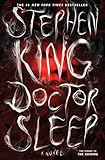
Editors Reads Verdict
Doctor Sleep is a more emotionally satisfying book than its legend suggests — less a sequel to the horror of the Overlook and more a recovery narrative about what it means to survive a monstrous childhood and build a life on the other side of it. King's own sobriety informs every page of Danny's journey, giving the novel an earned tenderness beneath its genre trappings.
What We Loved
- Danny Torrance's adult life as a struggling alcoholic is rendered with King's characteristic psychological precision
- Abra Stone is a genuinely compelling new protagonist with her own distinct personality
- The recovery narrative gives the book emotional stakes beyond standard horror
- The True Knot are memorably creepy antagonists with a fully developed internal logic
Minor Drawbacks
- The True Knot are more interesting in concept than execution — their menace diminishes as the book progresses
- The climax relies heavily on Overlook nostalgia rather than building its own momentum
- Some readers will find the recovery-narrative arc too neat
Key Takeaways
- → Recovery from trauma is not a single event but a lifelong practice
- → The children of damaged parents must actively choose not to repeat inherited patterns
- → Psychic gifts, like all gifts, can become burdens without community and guidance
- → The most useful thing a survivor can do is turn their experience into service for others
- → The Overlook's evil was real but Danny's father's alcoholism was the more personal horror
| Author | Stephen King |
|---|---|
| Publisher | Scribner |
| Pages | 531 |
| Published | September 24, 2013 |
| Language | English |
| Genre | Horror, Fiction |
| Difficulty | Intermediate |
| Best For | Fans of The Shining looking for closure, readers interested in addiction and recovery narratives with supernatural elements, and Stephen King completists. |
How Doctor Sleep Compares
Doctor Sleep at a glance against 3 similar books readers weigh alongside it.
| Book | Author | Rating | Best for |
|---|---|---|---|
| Doctor Sleep (this book) | Stephen King | ★ 4.2 | Fans of The Shining looking for closure, readers interested in addiction and |
| Carrie | Stephen King | ★ 4.2 | Stephen King completists, horror fans interested in social and psychological |
| It | Stephen King | ★ 4.4 | Horror readers willing to commit to an epic-length novel |
| Misery | Stephen King | ★ 4.4 | Horror and thriller readers |
The Long Shadow of the Overlook
Thirty-six years after The Shining, Stephen King returned to Danny Torrance — and to the themes of addiction and inherited trauma that made the original novel so personally charged. Doctor Sleep opens with Danny as a directionless adult, following his father’s alcoholic trajectory with the grim inevitability of someone who has never been given tools to break a cycle.
The setup is elegant: Danny finds stability in a small New Hampshire town, working as a hospice aide where his shining allows him to ease dying patients’ final moments (hence the title). Into this fragile equilibrium comes Abra Stone, a teenager with psychic powers that dwarf his own, who is being hunted by the True Knot — a tribe of near-immortal beings who feed on the psychic essence, the “steam,” of shining children.
A Recovery Narrative in Horror Clothes
King has spoken openly about writing this book partly as a reflection on his own sobriety, and the recovery narrative is the novel’s beating heart. The early chapters, following Danny through rock-bottom and AA and the slow construction of a stable life, are among King’s finest recent writing. The specificity of the meeting rooms, the sponsor relationships, the daily maintenance of not drinking — this is not genre furniture but hard-won knowledge.
The emotional center of Doctor Sleep is less “will Danny defeat the bad guys” than “will Danny become a different kind of man than his father.” That question gives every scene weight.
Abra Stone and the Passing of the Torch
Abra is a worthy successor to young Danny — brash, powerful, and occasionally reckless in ways that contrast meaningfully with Danny’s hard-won caution. Their relationship, which develops from wary psychic contact to something like mentorship, is the book’s most successful human element.
The True Knot, led by the charismatic and chilling Rose the Hat, are a strong villain concept — aging supernaturals masquerading as RV-camping retirees, feeding on children’s suffering. They’re at their most frightening in the novel’s first half; the climax, which inevitably revisits the ruins of the Overlook, leans more on nostalgia than earned dread.
Verdict
Doctor Sleep is not the equal of The Shining — but it was never trying to be. It is instead a story about survival, about what the children of horror do with what was done to them, and about whether damage is destiny. On those terms, it largely succeeds.
Our rating: 4.2/5 — A generous, emotionally intelligent horror novel that works best as a recovery narrative and succeeds on those terms even when its genre machinery creaks.
Reading Guides
- Stephen King Books in Order: The Complete Reading Guide (2026)
- 18 Best Horror Books of All Time: Novels That Will Keep You Up at Night
- The Shining vs IT: Which Stephen King Novel to Read First?
Publication History
Doctor Sleep was published by Scribner in September 2013, thirty-six years after The Shining. The novel won the Bram Stoker Award for Best Novel in 2013, King’s fourth time winning that honor from the Horror Writers Association. It debuted at number one on the New York Times bestseller list, confirming that the return to Danny Torrance attracted both King’s regular readership and the large audience for whom The Shining was a formative horror experience.
King has written about the decision to return to Danny Torrance as driven partly by curiosity about what the traumatized child of The Shining would become, and partly by his own experience of sobriety. In the thirty-six years between the two novels, King had entered recovery from alcohol and cocaine addiction, developed a sustained practice of sobriety, and found that the Alcoholics Anonymous framework and community had given him both a subject and a perspective that were unavailable to him when he wrote The Shining at the height of his drinking.
The 2019 Film
The film adaptation of Doctor Sleep, directed by Mike Flanagan and released in November 2019, starred Ewan McGregor as adult Danny Torrance and Rebecca Ferguson as Rose the Hat, with Kyliegh Curran as Abra Stone. The film made a decision that complicated its relationship to both source texts: rather than using King’s descriptions of the Overlook Hotel from his novel, it adopted the visual design of Kubrick’s 1980 film for the scenes set at the Overlook’s ruins.
This decision — essentially building a sequel to King’s novel on the visual foundations of the Kubrick film King famously disliked — required negotiation with King, who gave his approval while noting the unusual creative compromise involved. The film received strong critical reviews, with Ferguson’s performance as Rose the Hat attracting particular praise, and performed respectably at the box office while being somewhat overshadowed by the enormous success of the It films (2017, 2019).
Recovery as Subject
King’s sobriety is inseparable from Doctor Sleep’s emotional architecture. Danny Torrance’s arc — from directionless alcoholic in his thirties through rock bottom, AA meetings, and the slow construction of a stable hospice-aide life — is written from inside knowledge rather than observed from outside. The specificity of the meeting rooms, the sponsor relationships, the daily practice of not drinking, the awareness of the precise shape of the craving — these details reflect King’s own experience in ways that give the novel’s recovery narrative an unusual authenticity within the horror genre.
The argument the novel makes about recovery — that it is not a single transformative event but a lifelong practice, that the children of alcoholics must actively choose not to repeat inherited patterns, that the most useful thing a survivor can do is turn their experience into service for others — is consistent with King’s public statements about his own sobriety and its relationship to his life and work.
The True Knot
The True Knot — near-immortal beings who feed on the psychic essence of shining children, who travel the United States in RVs disguised as retirees — is one of King’s more inventive antagonist concepts. Their ecological logic (they must harvest steam to survive, and children who shine produce the most steam) gives them a rationality that purely malevolent villains lack, and their internal social structure — including the tension between Rose the Hat’s leadership and the needs of the group she sustains — is developed with enough specificity to make them more than functional obstacles.
The True Knot’s decline across the novel — as Abra Stone’s resistance proves more effective than anticipated and their numbers dwindle — is handled with a care that gives them genuine tragic dimension: creatures whose terrible methods of survival are inseparable from the condition of their being.
Frequently Asked Questions
What is "Doctor Sleep" about?
A middle-aged Danny Torrance, now a hospice worker battling alcoholism, must protect a young girl with extraordinary psychic powers from a tribe of psychic vampires.
Who should read "Doctor Sleep"?
Fans of The Shining looking for closure, readers interested in addiction and recovery narratives with supernatural elements, and Stephen King completists.
What are the key takeaways from "Doctor Sleep"?
Recovery from trauma is not a single event but a lifelong practice The children of damaged parents must actively choose not to repeat inherited patterns Psychic gifts, like all gifts, can become burdens without community and guidance The most useful thing a survivor can do is turn their experience into service for others The Overlook's evil was real but Danny's father's alcoholism was the more personal horror
Is "Doctor Sleep" worth reading?
Doctor Sleep is a more emotionally satisfying book than its legend suggests — less a sequel to the horror of the Overlook and more a recovery narrative about what it means to survive a monstrous childhood and build a life on the other side of it. King's own sobriety informs every page of Danny's journey, giving the novel an earned tenderness beneath its genre trappings.
Ready to Read Doctor Sleep?
Check the current price on Amazon.
Check Price on Amazon (paid link)Prices and availability are subject to change. See Amazon for current price.
Review last updated: