Best Books About Mental Health: 12 Essential Reads for Understanding the Mind
Whether you're navigating your own mental health or trying to understand someone else's, these 12 books — a mix of nonfiction, memoir, and literary fiction — offer genuine insight.
By Lena Fischer
There are two ways that books approach mental health, and both are necessary. Nonfiction — clinical research, memoir, social critique — can explain what is happening neurologically and culturally, giving language and framework to experiences that often feel formless and private. Fiction and memoir, on the other hand, can capture the interior texture of mental illness in ways that data cannot: the precise quality of a depressive episode, the specific intrusions of OCD, the way trauma reshapes a person’s relationship to their own body.
A reader navigating depression, anxiety, trauma, or addiction will likely need both kinds. The scientific understanding grounds the experience in something external and explicable; the literary rendering confirms that what they’re experiencing is real, has been experienced before, and has been survived.
This list covers both. It spans clinical research, cultural critique, therapist memoir, Buddhist philosophy, literary fiction, and young adult novels. The content warnings below are not perfunctory — some of this material is genuinely intense, and readers should have the information they need to approach it at the right moment.
A note before starting: reading about mental health is a valuable complement to professional support, not a replacement for it. If you’re in crisis, please reach out to a mental health professional or crisis line.
Scientific Understanding
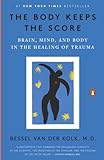
1. The Body Keeps the Score — Bessel van der Kolk ⭐⭐⭐⭐⭐
The most influential mental health book published in the last twenty years, and arguably the most important. Van der Kolk’s synthesis of four decades of clinical research explains why trauma is not primarily stored in explicit memory — where talk therapy can access it — but in the body itself, as patterns of nervous system activation that reshape perception, relationships, and physical health long after the original event.
The book covers EMDR, yoga, theatre, and neurofeedback as trauma treatments alongside more conventional approaches. It’s dense with case histories and clinical detail, but written accessibly enough for a non-specialist audience. Anyone affected by trauma — their own or someone they love — will find this book transformative.
➡ Full review → | Buy on Amazon →
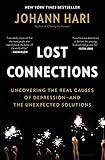
2. Lost Connections — Johann Hari ⭐⭐⭐⭐
Hari’s counter-narrative to the chemical imbalance theory of depression is controversial in some clinical circles but supported by substantial evidence: depression and anxiety are not primarily disorders of brain chemistry, Hari argues, but responses to disconnection — from meaningful work, from community, from nature, from a sense of future. The DSM’s rise in antidepressant prescriptions treats a symptom while leaving the causes intact.
Lost Connections is a polemic, and it is not anti-medication (Hari is clear that antidepressants help some people, and that the situation is complex). It is an argument for treating the social determinants of mental health as seriously as the neurological ones.
3. Dopamine Nation — Anna Lembke ⭐⭐⭐⭐⭐
Stanford addiction psychiatrist Anna Lembke uses the neuroscience of dopamine to explain why the modern world — its phones, its food, its pornography, its social media — has created an epidemic of compulsive behaviour that looks like addiction even when it doesn’t involve drugs. The brain’s pain-pleasure balance, she argues, is the mechanism through which almost all overconsumption, avoidance, and self-medication operates.
Lembke frames this with patient case studies that are specific enough to be literary while being clinically rigorous. The dopamine framework she provides is one of the most practically useful conceptual tools a person can have for understanding their own relationship to pleasure and avoidance.
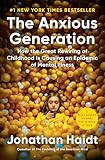
4. The Anxious Generation — Jonathan Haidt ⭐⭐⭐⭐
Social psychologist Jonathan Haidt’s investigation into the adolescent mental health crisis that began around 2012 — the year smartphones became widespread among teenagers — is the most debated popular psychology book of recent years. Haidt argues that the transition from a “play-based childhood” to a “phone-based childhood” has produced measurable increases in anxiety, depression, and self-harm, particularly among teenage girls.
Haidt’s thesis has both strong supporters and serious critics among researchers. Read it alongside the critiques, not instead of them. But his data on teen mental health trends is solid, and the questions he raises about smartphone design, social media algorithms, and parenting norms are urgent regardless of the precise causal mechanism.
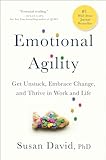
5. Emotional Agility — Susan David ⭐⭐⭐⭐
Harvard Medical School psychologist Susan David’s central argument is that the goal of emotional wellbeing is not to think positively or suppress negative emotions — both of which, the research shows, tend to amplify the emotions they’re trying to manage — but to develop what she calls emotional agility: the capacity to observe your feelings without being controlled by them, and to act in alignment with your values rather than your moods.
Practical, evidence-grounded, and more nuanced than most popular self-help psychology. The distinction between getting “hooked” by emotions and being able to observe them as data is immediately applicable.
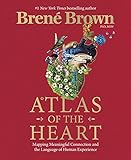
6. Atlas of the Heart — Brené Brown ⭐⭐⭐⭐
Brené Brown’s most ambitious book: a taxonomy of 87 emotions and experiences, with careful attention to the distinctions that matter. What’s the difference between grief and sadness? Between shame and guilt? Between anxiety and worry? Brown argues that emotional literacy — having precise language for what you’re experiencing — is a prerequisite for emotional health, because you can’t process what you can’t name.
The book is less narrative-driven than Brown’s earlier work (Daring Greatly, Braving the Wilderness), reading more like a beautifully designed reference text. For anyone who finds themselves using “fine” as a catch-all response to the full range of human experience, this is an essential corrective.
Memoir & Therapeutic Encounter
7. Maybe You Should Talk to Someone — Lori Gottlieb ⭐⭐⭐⭐⭐
Therapist Lori Gottlieb enters therapy herself after a personal crisis and writes about both sides of the couch simultaneously: her own work with her therapist, and her parallel work with four patients at different stages of their lives. The result is the most readable account of what psychotherapy actually does — and doesn’t do — written for a general audience.
Gottlieb is funny, self-implicating, and rigorous about the limits of her own insight. She makes visible the mechanics of the therapeutic relationship — the transference, the resistance, the moments of genuine breakthrough — without losing the human particularity of any of her subjects. Highly recommended for anyone considering therapy, currently in therapy, or curious about the process.
8. When Things Fall Apart — Pema Chödrön ⭐⭐⭐⭐⭐
American Buddhist nun Pema Chödrön’s approach to difficulty is the inverse of most Western self-help: rather than strategies for feeling better, she offers a framework for staying fully present with pain. The Buddhist concept of “groundlessness” — the fundamental impermanence and uncertainty of existence — is, Chödrön argues, not a problem to be solved but the ground from which genuine compassion and wisdom can grow.
When Things Fall Apart is not clinical mental health reading, but its framework for relating to difficult emotions — particularly anxiety, grief, and fear — is practically useful in ways that transcend its religious context. It works best for readers who are already comfortable with meditation or mindfulness.
Fiction That Captures the Interior Experience
9. The Bell Jar — Sylvia Plath ⭐⭐⭐⭐⭐
Sylvia Plath’s semi-autobiographical novel remains, sixty years after publication, the most precise literary account of a depressive episode ever written. Esther Greenwood’s breakdown — beginning with numbness and escalating through suicide attempts and institutionalisation — is rendered with the kind of specificity that only first-hand experience produces. The bell jar metaphor, describing the airless isolation of depression, has become the genre’s defining image.
The Bell Jar is not a hopeful book, but it is a clarifying one. For readers who have experienced depression and never found language for it, and for those who have never experienced it and want to understand what it actually feels like from inside, there is nothing quite like it.
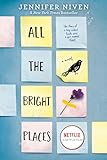
10. All the Bright Places — Jennifer Niven ⭐⭐⭐⭐
Content warning: this novel deals with depression, suicide, and suicide methods in detail.
Violet and Finch meet on a school ledge, both contemplating jumping. What follows is a love story that refuses the convention of love as cure: Finch’s depression and Violet’s grief have their own logic, and Niven does not let the relationship’s warmth override the reality of mental illness. When the novel ends where it must, it is devastating and, for many young readers, the first time their experience has been rendered accurately in fiction.
All the Bright Places is most important as a YA novel: it is the book many teenagers encounter at the moment they most need to see their experience named. Recommended alongside — not instead of — adult support and professional resources.
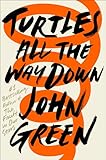
11. Turtles All the Way Down — John Green ⭐⭐⭐⭐⭐
John Green’s most personal novel, written about and through his own experience of OCD. Aza Holmes is sixteen, funny, and unable to stop the spiral of intrusive thoughts about contamination and infection that tighten around her regardless of her efforts to interrupt them. Green renders the specific phenomenology of OCD — the involuntary nature of intrusive thoughts, the rituals that temporarily relieve but ultimately reinforce anxiety — with a precision that distinguishes it sharply from popular misrepresentations of the condition.
Where All the Bright Places centres a depressive trajectory, Turtles All the Way Down centres management and ongoing coexistence with a condition that doesn’t resolve. Both are essential.
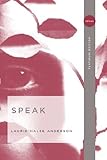
12. Speak — Laurie Halse Anderson ⭐⭐⭐⭐⭐
Content warning: this novel deals with sexual assault and its aftermath.
Melinda Sordino begins ninth grade having called the police at a summer party — and having told no one why. The resulting social ostracism, and her deepening silence, is Anderson’s portrait of a trauma survivor’s withdrawal from language itself: the way assault can make speech feel impossible, even when it is most needed. Speak is written in Melinda’s voice, which grows more fragmented and then more recovered as the novel progresses.
Published in 1999 and still widely read, Speak remains one of the most important YA novels ever written — both for survivors of assault and for readers trying to understand why a person might choose silence over speaking.
Mental Health Reading as Practice, Not Prescription
Reading about mental health can do several things: provide language for experiences that felt private and nameless; reduce the shame of recognising a pattern in yourself or someone you love; offer evidence that recovery is possible; and build empathy for experiences very different from your own.
What it cannot do is replace a therapeutic relationship, medical assessment, or crisis support. The books on this list are genuinely useful resources — several of them (van der Kolk, Gottlieb, David) are used in clinical contexts. But they are companions to professional support, not substitutes for it.
If you’re uncertain where to start: The Body Keeps the Score if trauma is your primary concern; Maybe You Should Talk to Someone if you’re considering or already in therapy; Turtles All the Way Down or The Bell Jar if you’re looking for fiction that renders interior experience accurately. Let the reading lead where it needs to.
Mental Health Books by Type
| Type | Best Book |
|---|---|
| Trauma & the body | The Body Keeps the Score |
| Depression’s social causes | Lost Connections |
| Therapy from both sides | Maybe You Should Talk to Someone |
| Addiction & dopamine | Dopamine Nation |
| Emotional intelligence | Emotional Agility |
| Teen mental health | The Anxious Generation |
| Buddhist approach | When Things Fall Apart |
| Depression (fiction) | The Bell Jar |
| OCD (fiction) | Turtles All the Way Down |
For the Best Psychology Books
For the definitive guide to psychology — from cognitive science to social psychology and behavioural economics — see our Best Psychology Books list.
Affiliate disclosure: Book links are Amazon affiliate links. We earn a small commission at no extra cost to you.
Frequently Asked Questions
What are the best books for understanding mental health?
The Body Keeps the Score by Bessel van der Kolk is widely considered the most important book on trauma and mental health. Maybe You Should Talk to Someone by Lori Gottlieb and Lost Connections by Johann Hari are among the most accessible and compassionate books for general readers.
What books help with anxiety and depression?
Feeling Good by David Burns is a clinically validated workbook for depression based on cognitive behavioural therapy. Lost Connections by Johann Hari examines the social causes of anxiety and depression with rigorous reporting. When Things Fall Apart by Pema Chodron offers a contemplative approach grounded in Buddhist psychology.
What should I read to understand therapy and how it works?
Maybe You Should Talk to Someone by Lori Gottlieb gives the best account of what therapy actually looks like from inside the room, told from the perspective of a therapist who also becomes a patient. The Body Keeps the Score explains what trauma does to the brain and body and how different therapies address it.
Are self-help books effective for mental health?
Self-help books can be effective as a supplement to professional care, particularly books based on cognitive behavioural therapy research like Feeling Good by David Burns. They are most useful for mild to moderate symptoms, building general awareness, and preparing for or extending the work done in therapy.