Best Books About Anxiety and Depression: Honest Reads That Actually Help
The best books about anxiety and depression — memoirs, clinical guides, and literary accounts chosen for honesty rather than false comfort. Books that validate the experience rather than rushing past it.
By Lena Fischer

Books cannot treat anxiety or depression. Professional support — therapy, medication, medical assessment — is essential for clinical conditions, and no reading list is a substitute for it.
What reading can do is less and more than treatment: it can reduce the isolation that accompanies mental illness (the knowledge that this has happened to others, that it has been thought about carefully, that it is neither shameful nor unique), and it can provide frameworks for understanding what is happening that are more accurate than the self-criticisms the conditions typically generate.
The books listed here have been selected for honesty — they do not promise quick recovery, they do not minimise the difficulty of the conditions they describe, and they do not attribute complex phenomena to simple causes.
Memoirs of the Experience
Reasons to Stay Alive — Matt Haig (2015)
Matt Haig’s account of his experience with severe depression and panic attacks in his twenties is the most widely read mental health memoir of recent years. It is honest about the depth of the experience — the specific terror of panic attacks, the impossibility of explaining depression to people who have not had it — and about the fact that recovery was possible without being quick or linear.
The book’s most important quality is its resistance to false comfort: Haig does not claim to have cured himself, does not attribute his recovery to a single intervention, and does not suggest the experience was ultimately good for him. He survived it, and the book is an account of how.
Maybe You Should Talk to Someone — Lori Gottlieb (2019)
Gottlieb is a therapist who, after a painful breakup, finds herself in therapy for the first time. The memoir alternates between her experience as a patient and her work with four patients whose cases she follows over the course of a year. The result is the most honest and most illuminating account available of what therapy actually does — how it works, how slow it is, how it changes the things that need to be changed rather than the things the patient thinks need to be changed.
For readers who are skeptical about therapy, or uncertain whether it would help them, or simply curious about what happens in a therapist’s office, there is nothing better.
The Science and the Social Context
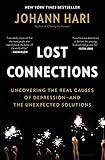
Lost Connections — Johann Hari (2018)
Hari’s argument is challenging and important: depression and anxiety are primarily social problems — rooted in disconnection from meaningful work, from other people, from status and respect, from the natural world, from a hopeful future — and the dominant medical model (the serotonin deficiency hypothesis and its pharmaceutical treatments) is at best partial and at worst misleading. The book is meticulously researched and acknowledges its own limitations (Hari is a journalist, not a scientist) but presents a rigorous challenge to the standard story.
Not a dismissal of medication — Hari is clear that antidepressants help many people — but an argument that medication is insufficient when the underlying social conditions are not addressed.
The Body Keeps the Score — Bessel van der Kolk (2014)
Van der Kolk spent decades as a psychiatrist studying trauma — how it is encoded in the body, how it manifests as both psychological and physical symptoms, and what kinds of treatment actually work. The Body Keeps the Score is the most important account available of why talk therapy alone is often insufficient for trauma-related anxiety and depression, and what approaches (EMDR, somatic therapy, yoga, theatre) address the body’s stored responses directly.
For readers whose anxiety or depression is connected to traumatic experience — including the low-level chronic stress of ongoing difficult circumstances — this is the most important book on the list.
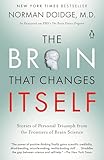
The Brain That Changes Itself — Norman Doidge (2007)
Neuroplasticity — the brain’s capacity to change its structure and function in response to experience — has become better understood over the last three decades, and Doidge’s book is the most accessible account of what this means for mental health conditions. The evidence that the brain can form new connections, that patterns of thought and behaviour can be changed at a neural level, is the scientific foundation for understanding why treatment — both psychological and pharmacological — can work. The book does not oversimplify: neuroplasticity has limits and timelines.
Breaking the Silence
One of the most important functions that the literature of anxiety and depression performs, and a significant part of its value, is the breaking of the silence and stigma that have long surrounded mental illness — the bringing into open and honest discussion of experiences that have too often been hidden, shamed, and suffered in isolation. Mental illness has historically been shrouded in silence and stigma, treated as a source of shame to be concealed rather than an illness to be acknowledged and addressed, and this silence has compounded the suffering of those afflicted, isolating them, shaming them, and preventing the open discussion and understanding that might offer help and relief. The literature of anxiety and depression breaks this silence, bringing the experience of mental illness into open and honest discussion, giving voice to suffering that has too often been hidden, and challenging the stigma that has surrounded these conditions. This breaking of the silence is profoundly valuable, for it counters the isolation and shame that compound the suffering of mental illness, assures those afflicted that they are not alone and need not be ashamed, and fosters the open understanding and discussion on which help and healing depend. By speaking openly and honestly about the experience of anxiety and depression, the literature normalizes these conditions, removes the shame and silence that have surrounded them, and creates a climate in which mental illness can be acknowledged, discussed, and addressed rather than hidden and suffered in isolation. This function of breaking the silence and challenging the stigma is among the most important contributions of the literature of anxiety and depression, for it transforms the experience of mental illness from a hidden and shameful secret into an openly acknowledged and discussed reality, countering the isolation and shame of the afflicted and fostering the understanding and openness that help and healing require. In breaking the silence around mental illness, the literature performs a function of the greatest human value, easing the isolation of the afflicted and advancing the open understanding on which a humane response to mental suffering depends.
The Power of Being Understood
For those who suffer from anxiety and depression, the literature on these conditions offers a profound and healing gift: the experience of being understood, of finding their often isolating and incommunicable suffering accurately described and deeply understood in writing, and of discovering that they are not alone in an experience that can feel uniquely isolating. Anxiety and depression are afflictions that can feel profoundly isolating and incommunicable, for the sufferer often struggles to convey the nature of their experience to those who have not shared it, and may feel that no one truly understands the particular quality of their suffering. The literature of anxiety and depression counters this isolation directly, for in finding their experience accurately described and deeply understood in writing, in encountering the precise articulation of feelings they had thought incommunicable, the sufferer discovers that their experience is shared and understood, that others have known the same affliction and have given it voice, and that they are not alone in their suffering. This experience of being understood offers a genuine and healing consolation, for it counters the isolation of mental illness, assures the sufferer that their experience is real and shared, and provides the relief of recognition that comes from finding one’s own suffering accurately described and deeply understood. There is real power in this being understood, for the isolation of feeling that no one comprehends one’s suffering is among the cruelest features of mental illness, and the discovery, through literature, that one’s experience is shared and understood breaks this isolation and offers the consolation of recognition and companionship. The literature of anxiety and depression thus offers, to those who suffer these conditions, the healing gift of being understood, the relief of finding their isolating and incommunicable suffering accurately described and deeply comprehended, and the consolation of discovering that they are not alone in an experience that can feel uniquely isolating. This power of being understood is among the most valuable gifts the literature offers, providing to the afflicted the healing consolation of recognition and the relief of finding their suffering understood.
Memoir, Science, and the Whole Picture
The literature of anxiety and depression encompasses distinct approaches to these conditions — the intimate personal testimony of memoir, the explanatory understanding of science and psychology, and the practical guidance of self-help — and a full understanding of mental illness benefits from engaging with all these approaches, each of which illuminates a different dimension of a complex reality. The memoirs of anxiety and depression offer the intimate, first-person testimony of those who have suffered these conditions, conveying the lived experience of mental illness from the inside with a vividness and intimacy that no other approach can match, and providing the understanding that comes from inhabiting another’s experience of the affliction. The scientific and psychological literature offers a different and complementary form of understanding, explaining the nature, causes, and mechanisms of anxiety and depression, situating the conditions within the framework of scientific and psychological knowledge, and providing the explanatory understanding that the personal testimony of memoir cannot offer. And the practical, self-help literature offers guidance for managing and recovering from these conditions, providing strategies, techniques, and approaches for coping with and overcoming anxiety and depression. Each of these approaches illuminates a different dimension of mental illness, the lived experience, the explanatory understanding, and the practical management, and a full understanding benefits from engaging with all of them, combining the intimate testimony of memoir, the explanatory depth of science, and the practical guidance of self-help into a comprehensive understanding of a complex reality. The reader seeking to understand anxiety and depression, whether for themselves or for others, is well served by engaging with this full range of approaches, for each offers something the others cannot, and together they compose a fuller picture of mental illness than any single approach provides. The combination of memoir, science, and practical guidance offers the whole picture of anxiety and depression, illuminating the lived experience, the underlying mechanisms, and the practical management of these conditions, and providing the comprehensive understanding that a complex and multifaceted reality demands.
When to Read What
If you are currently experiencing depression: Reasons to Stay Alive — for validation and the knowledge that others have been here and come through.
If you are trying to understand why you feel the way you do: Lost Connections — for a social and scientific framework.
If depression or anxiety follows trauma: The Body Keeps the Score — for understanding the body’s role in storing and sustaining trauma responses.
If you are considering therapy: Maybe You Should Talk to Someone — for the most honest account of what therapy actually involves.
Note: These books are reading companions, not treatment. If you are in crisis, contact a crisis line or emergency services. If you are experiencing ongoing symptoms, seek professional assessment.
Frequently Asked Questions
What is the best book to read if you have depression?
Reasons to Stay Alive by Matt Haig is the most widely recommended book for people currently experiencing depression — not because it offers clinical solutions but because it offers the validation of a first-person account of recovery that is honest about both the difficulty and the possibility of improvement. Lost Connections by Johann Hari is the most intellectually challenging — it argues that depression is primarily a social problem (disconnection from meaningful work, relationships, and community) rather than a brain chemistry deficiency. Both are valuable for different reasons.
What is the best book about anxiety?
The Body Keeps the Score by Bessel van der Kolk is the most important book available on how anxiety, trauma, and stress are stored in the body and what that means for treatment. It is demanding — van der Kolk is a psychiatrist writing about clinical research — but more readable than its scientific subject matter suggests. For anxiety specifically (rather than trauma), Maybe You Should Talk to Someone by Lori Gottlieb is an accessible and moving account of what therapy actually does, written by a therapist who also goes to therapy.
Are self-help books about mental health actually useful?
Some are. The most useful books about mental health are those that describe the experience of the condition accurately (validating what the reader is going through), explain the relevant science honestly (without oversimplifying), and propose approaches that are evidence-based. Books that promise quick fixes, that attribute depression entirely to thoughts (ignoring biology and social conditions), or that substitute spiritual comfort for clinical understanding should be treated with scepticism. Therapist guidance alongside reading is recommended for anyone dealing with clinical anxiety or depression.
What is the difference between sadness and depression?
Sadness is a normal emotional response to difficult events — it is time-limited, responsive to circumstances, and accompanied by the ability to feel other emotions. Clinical depression is persistent, not necessarily tied to external events, accompanied by a loss of the capacity to feel pleasure (anhedonia), changes in sleep and appetite, and cognitive distortions that are difficult to interrupt. The Body Keeps the Score and Lost Connections both discuss this distinction in depth. A professional diagnosis is necessary for anyone unsure whether they are experiencing grief/sadness or clinical depression.