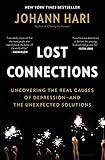
Editors Reads Verdict
Hari's comprehensive argument that depression is primarily a social phenomenon rather than a chemical imbalance is provocative, well-researched, and ultimately hopeful. One of the most important books about mental health of recent decades.
What We Loved
- Synthesises a wide range of evidence questioning the chemical imbalance model of depression
- The nine disconnections framework offers a comprehensive and actionable map of risk factors
- Written with personal honesty about Hari's own experience with depression and medication
- The social prescribing and community solutions are practically important
Minor Drawbacks
- Hari's previous credibility issues mean his reporting requires independent verification
- The anti-medication argument may be taken too literally by readers who benefit from it
- Some critics find the causal claims overstated
Key Takeaways
- → Depression and anxiety are often responses to life circumstances, not brain malfunctions
- → The chemical imbalance model of depression lacks robust scientific support
- → Nine disconnections from meaningful work, nature, future, childhood trauma, status, belonging, purpose, respect, and hope drive most depression
- → Social and environmental solutions — not just pharmaceutical ones — are evidence-based treatments
- → Reconnection to community, meaning, and nature is a credible antidepressant
| Author | Johann Hari |
|---|---|
| Publisher | Bloomsbury USA |
| Pages | 336 |
| Published | January 23, 2018 |
| Language | English |
| Genre | Psychology, Health, Society |
| Difficulty | Beginner |
| Best For | Anyone experiencing or supporting someone with depression or anxiety, and anyone interested in the social determinants of mental health. |
How Lost Connections Compares
Lost Connections at a glance against 3 similar books readers weigh alongside it.
| Book | Author | Rating | Best for |
|---|---|---|---|
| Lost Connections (this book) | Johann Hari | ★ 4.4 | Anyone experiencing or supporting someone with depression or anxiety, and |
| Dopamine Nation | Anna Lembke | ★ 4.4 | Anyone dealing with compulsive behaviours — social media, food, substances, |
| The Body Keeps the Score | Bessel van der Kolk | ★ 4.7 | Therapists, counsellors, trauma survivors and those who love them, anyone |
| The Power of Now | Eckhart Tolle | ★ 4.6 | Anyone struggling with anxiety, overthinking, or searching for a practical |
Rethinking the Roots of Depression
Johann Hari spent years taking antidepressants, experienced temporary improvement, and relapsed multiple times. After another crisis, he began three years of research into the scientific literature on depression — and found that the story he had been told about his own condition was far more complicated than “a chemical imbalance in your brain that medication corrects.”
Lost Connections is his attempt to share what he found and to make the case for a fundamentally different understanding of depression and anxiety.
The Chemical Imbalance Myth
The book opens with a careful examination of the serotonin hypothesis — the idea, widely communicated by pharmaceutical marketing, that depression is caused by a deficit of serotonin in the brain. Hari documents the accumulating scientific evidence that this model is oversimplified at best and misleading at worst: many depressed people don’t have low serotonin, many people with low serotonin aren’t depressed, and the mechanism by which antidepressants produce their effects (where they do) is not primarily the rebalancing of serotonin.
This is not an argument that antidepressants don’t work — for many people they do provide important relief. It is an argument that the reductive biological explanation has crowded out understanding of the social, psychological, and environmental causes of the condition.
Nine Disconnections
Hari identifies nine causes of depression and anxiety, organised around the concept of disconnection. Disconnection from meaningful work. From other people. From meaningful values. From childhood trauma recognition. From status and respect. From the natural world. From a hopeful or secure future. From intrinsic purpose. From belonging.
This framework is both more complex and more empowering than the chemical imbalance model. It points toward a range of interventions — including social prescribing, community building, work redesign, and trauma processing — that have evidence bases but receive far less attention than pharmaceutical approaches.
The Prescriptions
The book’s second half examines solutions that range from individual (therapy focused on real-life problems, not just symptom management) to social (community-based interventions, cooperative workplaces, social prescribing by GPs) to political (addressing the economic and social conditions that generate widespread disconnection).
These prescriptions are more expansive and less immediately actionable than the standard treatment conversation, which is partly a strength and partly a limitation.
Final Verdict
Lost Connections challenges one of the most pervasive medical narratives of our time with evidence, empathy, and genuine intellectual courage. Its message — that the roots of depression are social and environmental as well as biological — is both important and hopeful.
Our rating: 4.4/5 — A paradigm-shifting book about mental health that deserves wide attention. Read critically, apply thoughtfully, and share with anyone navigating depression.
A Provocative Rethinking of Depression
Johann Hari’s central claim is deliberately provocative: that the dominant story about depression and anxiety — that they are caused primarily by a chemical imbalance in the brain, to be corrected primarily by medication — is incomplete, and that much of our suffering is better understood as a response to the ways modern life disconnects us from things human beings need. Hari proposes that depression and anxiety often signal genuine deprivations — of meaningful work, of community, of values beyond consumption, of connection to nature and to a hopeful future — rather than simply a malfunction to be medicated away. It is an argument designed to shift the conversation from the individual brain to the conditions of modern life.
Connection as the Cure
From this diagnosis follows the book’s prescription, captured in its title: that recovery often lies in restoring lost connections — to other people, to meaningful work, to purpose, to the natural world. Hari gathers research and interviews to argue for social and communal responses to mental distress alongside, not instead of, conventional treatment, and he tells the story partly through his own long experience with depression and antidepressants. The personal thread gives the book emotional force and makes its argument feel lived rather than merely theoretical.
A Book to Read Critically
An honest recommendation must note the debates around it. Hari is a compelling storyteller, and the book has been criticised by some experts for overstating its case against the biological model and for selectively marshalling evidence, while Hari’s own journalistic history has drawn scrutiny. The careful reader should treat Lost Connections as a provocative, valuable corrective rather than a settled account — and certainly not as a reason to stop prescribed treatment without medical advice. Depression is genuinely complex, with biological, psychological, and social dimensions, and the book’s insistence on the social ones is its contribution, not the whole truth.
Why It Resonated
Despite the caveats, Lost Connections struck a deep chord because it gave language to a widely felt intuition — that modern life itself, with its isolation, insecurity, and loss of meaning, plays a real role in the rise of anxiety and depression. Read alongside, rather than against, mainstream understanding and professional care, it offers a humane and hopeful widening of the conversation, and a reminder that the things that heal us are often found in connection rather than in isolation. It remains one of the most discussed popular books on mental health of recent years.
Reading Guides
- 15 Books Like Daring Greatly to Read Next
- 15 Books Like The Body Keeps the Score to Read Next
- 15 Books Like The Subtle Art of Not Giving a F*ck
- 12 Best Psychology Books of All Time (Expert Ranked)
- Best Books About Mental Health: 12 Essential Reads for Understanding the Mind
- 15 Best Books to Read When Anxious
Frequently Asked Questions
What is "Lost Connections" about?
A journalist investigates the real causes of depression and anxiety — and finds they have far more to do with how we live than with brain chemistry.
Who should read "Lost Connections"?
Anyone experiencing or supporting someone with depression or anxiety, and anyone interested in the social determinants of mental health.
What are the key takeaways from "Lost Connections"?
Depression and anxiety are often responses to life circumstances, not brain malfunctions The chemical imbalance model of depression lacks robust scientific support Nine disconnections from meaningful work, nature, future, childhood trauma, status, belonging, purpose, respect, and hope drive most depression Social and environmental solutions — not just pharmaceutical ones — are evidence-based treatments Reconnection to community, meaning, and nature is a credible antidepressant
Is "Lost Connections" worth reading?
Hari's comprehensive argument that depression is primarily a social phenomenon rather than a chemical imbalance is provocative, well-researched, and ultimately hopeful. One of the most important books about mental health of recent decades.
Ready to Read Lost Connections?
Check the current price on Amazon.
Check Price on Amazon (paid link)Prices and availability are subject to change. See Amazon for current price.
Review last updated: