Best Books About Grief: Memoirs, Novels, and Guides That Actually Help
The best books about grief and loss — memoirs that capture what it really feels like, novels that render loss with precision, and guides that offer genuine frameworks rather than empty comfort.
By Lena Fischer

Books cannot fix grief. Nothing does, and any book that promises to do so should be treated with suspicion. What the best books about loss offer instead is something different and, in its own way, more valuable: the knowledge that what you are experiencing has been experienced before, has been thought about with care, and has been written about with the kind of honesty that most of the people around you cannot manage.
The books listed here have been selected for that quality — not comfort, which is cheap, but honesty, which is the only thing that actually helps.
The Essential Books
The Year of Magical Thinking — Joan Didion (2005)
The masterpiece of grief literature in English. Joan Didion’s husband, the writer John Gregory Dunne, died of a heart attack at the dinner table in December 2003. Their daughter was in a coma in a hospital five blocks away. The book Didion wrote in the year that followed is one of the most extraordinary acts of literary self-examination in the language.
What makes it essential is not its comfort — it offers very little — but its precision. Didion is a journalist by training and a novelist by vocation, and she brings both capacities to the experience of grief: the journalist’s insistence on accurate observation, the novelist’s understanding that the truth of emotional experience requires narrative form. The “magical thinking” of the title refers to the irrational belief that the dead will return if only you do not give away their shoes, do not fully accept what has happened. Didion does not pretend this belief is irrational in practice, only in theory.
Winner of the National Book Award. Essential.
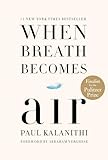
When Breath Becomes Air — Paul Kalanithi (2016)
Paul Kalanithi was a neurosurgeon at Stanford nearing the end of his residency when he was diagnosed with stage IV lung cancer at thirty-six. He died before finishing the book. His wife Lucy completed it. What he left behind is an account of the confrontation between a man who had spent his career with mortality as a professional reality and the experience of mortality as a personal one.
The book is not primarily about grief (it is written by the person dying, not the person left behind), but it is the most precise and most moving account in recent literature of what facing death does to a person’s understanding of what mattered. For readers who have lost someone to cancer, or who are facing terminal diagnosis, there is nothing better.
Memoir and Personal Accounts
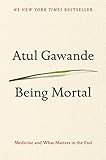
Being Mortal — Atul Gawande (2014)
Not a grief memoir but the most important book about dying in contemporary non-fiction. Gawande is a surgeon who argues, with case studies and statistics, that modern medicine fails dying patients by treating death as a medical failure to be delayed rather than a natural event to be managed with dignity and intention. Being Mortal is a book about what we get wrong about end-of-life care, and reading it changes how you think about what is possible when someone you love is dying.
It is also simply one of the best pieces of non-fiction writing of the past decade.
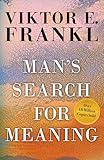
Man’s Search for Meaning — Viktor Frankl (1946)
Viktor Frankl was a Viennese psychiatrist who survived four concentration camps, including Auschwitz. Man’s Search for Meaning is the account of that experience filtered through Frankl’s development of logotherapy — the idea that the primary human drive is not pleasure or power but meaning, and that meaning can be found even in suffering that cannot be avoided.
It is a different kind of grief book — less about the experience of specific loss and more about the framework within which any loss can be borne. Many readers return to it again and again at different moments of difficulty.
Novels That Deal With Grief Honestly
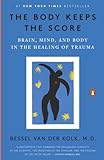
The Body Keeps the Score — Bessel van der Kolk (2014)
Technically non-fiction — a landmark work of trauma research by a psychiatrist who has spent decades studying how trauma is encoded in the body. For readers whose grief is entangled with trauma — sudden death, violence, suicide, accident — The Body Keeps the Score is the most important book available. It explains why grief that follows traumatic loss often feels different from grief that follows expected loss, and what the difference means for recovery.
Van der Kolk is a clear writer and a compassionate one, and the book is more readable than its clinical subject matter suggests.
Shorter Books for Difficult Moments
Some grief reading has to be done in increments. The following books work in short sittings:
-
A Grief Observed by C.S. Lewis — Lewis kept a journal after his wife’s death from cancer. Published under a pseudonym, it is one of the most raw and honest accounts of faith tested by loss in Western literature. Under 100 pages.
-
Option B by Sheryl Sandberg and Adam Grant — Sandberg’s husband died suddenly in 2015. This book, co-written with psychologist Adam Grant, combines memoir with research on resilience. More structured and less literary than Didion, but more practically oriented.
-
The Year of Magical Thinking (again) — Short enough to read in an afternoon and worth returning to.
When to Read What
Immediately after a loss: The Year of Magical Thinking or When Breath Becomes Air — not for advice but for the validation that comes from knowing someone else has been here.
When you need a framework: Man’s Search for Meaning or Being Mortal — these provide ways of thinking about loss that are more durable than comfort.
When grief has become something more difficult: The Body Keeps the Score — for understanding what trauma does to the grieving body, and what that requires.
When you want fiction: Look for novels that deal with anticipated death and survival honestly — The Fault in Our Stars, Never Let Me Go, Me Before You — rather than books that resolve grief neatly. Neat resolution does not ring true when you are living through the real thing.
Frequently Asked Questions
What is the best book for someone who has lost a loved one?
The Year of Magical Thinking by Joan Didion is the most honest and most acclaimed memoir of grief ever written — it documents the year following her husband's sudden death with the precision of a writer who cannot stop analysing even the thing she cannot bear. When Breath Becomes Air by Paul Kalanithi is the best book for those who have lost someone to illness, or who are facing terminal diagnosis themselves. Both are short enough to read in a sitting and devastating in the best possible sense.
Are there grief books that are actually useful rather than just comforting?
Being Mortal by Atul Gawande is the most practically useful book about death and dying — it deals with how medicine fails dying patients by prioritising survival over quality of life, and argues for a different kind of conversation about end-of-life care. On Grief and Grieving by Elisabeth Kübler-Ross and David Kessler codifies the five stages of grief while acknowledging that they are not linear. Man's Search for Meaning by Viktor Frankl provides a philosophical framework that many grieving readers find unexpectedly stabilising.
Can novels help with grief?
Yes — for many readers, fiction processes grief better than self-help because it renders the experience of loss from the inside rather than describing it from the outside. A Grief Observed by C.S. Lewis (technically a journal rather than a novel) is the most raw and honest account of grief in the literary tradition. The Year of Magical Thinking is also closer to memoir-as-literature than to self-help. Novels that deal with loss honestly — Never Let Me Go, A Little Life, The Lovely Bones — can offer the same processing of grief through narrative immersion.
What books are recommended for children dealing with loss?
For young children, The Invisible String by Patrice Karst uses the metaphor of an invisible connection to help children understand that love continues after death or separation. Lifetimes by Bryan Mellonie explains death naturally and gently for young children. For older children and teenagers, The Fault in Our Stars by John Green and Me Before You by Jojo Moyes deal with anticipatory grief and terminal illness in ways that are emotionally honest without being traumatising.
What is the difference between grief and depression, and are there books about that?
Grief and clinical depression share symptoms but differ in cause and treatment. The Body Keeps the Score by Bessel van der Kolk is the most important book on how trauma — including the trauma of loss — is stored in the body and manifests as both psychological and physical symptoms. It's Not OK to Not Be OK by Megan Devine is a more recent popular guide that explicitly validates grief without rushing the griever toward resolution. A therapist is recommended when grief becomes persistent depression, but these books provide vocabulary for understanding the difference.