Best Books About Grief: What to Read When You're Grieving
The best books about grief — what to read when you've lost someone. From The Year of Magical Thinking to A Grief Observed, the most honest and helpful books about loss.
By Lena Fischer

Books about grief cannot take grief away. The best of them offer something different: the experience of being accompanied — the knowledge that someone else has been here, has found words for what resists language, and has survived it. What follows is a guide to the books that readers who are grieving have found most honest, most useful, and most companionable.
The Year of Magical Thinking by Joan Didion (2005)
The most important contemporary book about grief — and the most honest. Joan Didion’s account of the year following the sudden death of her husband, John Gregory Dunne (who died of a heart attack while they were having dinner), is clinical, precise, and devastating. The ‘magical thinking’ of the title — the belief that if she kept his shoes, he might still need them; the inability to give away his coats — is Didion’s account of how grief actually works: not as a rational process but as a state in which the mind generates irrational protections against the unbearable. Winner of the National Book Award.
Best for: Anyone who has experienced sudden loss; anyone who wants grief described with precision rather than consolation.
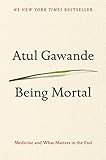
Being Mortal by Atul Gawande (2014)
The best book about dying from the perspective of medicine — and one of the most important books about how modern healthcare approaches death and old age. Gawande, a surgeon, examines how hospitals and nursing homes have transformed dying into a medical problem rather than a human experience, and argues for the importance of understanding what dying people actually want rather than extending life at any cost. The book is not a grief book in the conventional sense — it is about the context in which most deaths occur — but it is deeply humane and helps both the dying and those who love them understand what is happening and what choices exist.
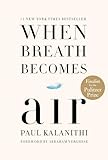
When Breath Becomes Air by Paul Kalanithi (2016)
A neurosurgeon’s memoir of dying — written in the months before Kalanithi’s death from lung cancer, completed by his wife Lucy after his death. The book is simultaneously a meditation on what brain surgery reveals about the relationship between body and selfhood, an account of how a young man of exceptional ability and promise faces his own death, and a record of what the effort to live fully while dying actually looks like. Kalanithi’s prose is lucid and beautiful; his questions about meaning, mortality, and what makes a life worth living are answered with extraordinary intellectual honesty.
The Bell Jar by Sylvia Plath (1963)
Not strictly a book about grief — it is a novel about depression and mental breakdown — but it has been a companion to readers experiencing the isolation and despair of grief for sixty years. Esther Greenwood’s experience of breakdown, hospitalisation, and treatment in 1950s America is written with the combination of black humour and psychological precision that makes Plath’s autobiographical fiction both harrowing and oddly companionable. Many readers have found the book useful not because it offers hope but because it describes, with extraordinary accuracy, experiences they have been told they cannot describe.
A Grief Observed by C.S. Lewis (1961)
C.S. Lewis wrote A Grief Observed as a journal following the death of his wife, and published it, at first, under a pseudonym, fearing what readers would make of his anger and doubt. It remains one of the most honest books ever written about bereavement, remarkable above all for its candor about the religious dimensions of grief. Lewis, the famous Christian apologist, finds that grief makes God feel absent, a door locked from the inside, and he refuses to pretend otherwise. The short book is the most personal and spiritually searching of his works, and for many grieving readers, especially those wrestling with faith, it offers a companionship that more consoling books cannot.
What Reading Offers the Grieving
Books about grief cannot take grief away, and the best of them do not pretend to. What they offer instead is companionship, the profound relief of discovering that someone else has felt exactly what you are feeling and has found language for it. Grief is isolating; it can make the most universal of experiences feel utterly solitary, and it can make its own strange symptoms, the irrational beliefs, the sudden anger, the moments of forgetting, feel shameful or abnormal. The honest books about grief counter this isolation. They provide a vocabulary for what resists description, they validate experiences that grief makes feel wrong, and they bear witness to the fact that this can be survived. The books gathered here, from Didion’s clear-eyed honesty to Lewis’s spiritual searching, offer not comfort in the sense of making grief easier, but the deeper comfort of company. There is no single right book for grief, and no right order in which to read; the book that helps is simply the one whose honesty matches your own experience, met at the moment you are ready for it. Some readers want the clinical precision of Didion, others the spiritual struggle of Lewis, others the perspective of those who write from the edge of their own mortality. For the grieving reader, that company, in whatever form speaks to you, can matter more than any consolation.
Reading Through Grief
The most useful books about grief are not the books that offer comfort in the sense of reassurance — that everything will be fine, that grief follows a predictable course, that there are stages. The most useful are the books that describe grief accurately: its irrationality, its physical weight, its moments of unexpected absence, and its capacity to transform ordinary objects into unbearable ones. Didion, Lewis, and Kalanithi are the writers who have most honestly described what grief actually is. They cannot make it easier; they can make it less lonely.
Frequently Asked Questions
What is the best book to read when grieving?
Joan Didion's The Year of Magical Thinking (2005) is the most widely praised book about grief in contemporary literature — an account of the year following her husband's sudden death that is simultaneously personal and universal, clinical and devastating. It is the best book about grief not because it offers comfort but because it is honest: it describes grief as it actually is, rather than as we are told it should be. C.S. Lewis's A Grief Observed (1961) is the best book for readers who want a shorter, more explicitly spiritual account of grief; Being Mortal by Atul Gawande for those who want to understand the medical and human context of dying.
Does reading about grief help when you're grieving?
Reading about grief can help in specific ways: it reduces isolation (the knowledge that someone else has felt exactly this, and has found language for it), it provides a vocabulary for experiences that resist ordinary description, and it validates experiences that grief can make feel shameful or abnormal (the irrational beliefs, the sudden anger, the moments of forgetting). Books about grief cannot provide comfort in the sense of making grief easier; the best of them provide company. Didion's The Year of Magical Thinking is the most honest about this distinction.
What is A Grief Observed by C.S. Lewis about?
A Grief Observed (1961) is C.S. Lewis's journal of grief following the death of his wife Joy Davidman from cancer — published under a pseudonym, initially, because Lewis feared what readers would think of his anger at God. The book is remarkable for its honesty about the religious dimensions of grief: Lewis, a famous Christian apologist, finds that grief makes God feel absent, locked out, silent. The short book (under 100 pages) is the most personal and most spiritually honest of Lewis's works, and remains one of the most widely read books about bereavement.
What is When Breath Becomes Air about?
When Breath Becomes Air (2016) is the memoir of Paul Kalanithi, a neurosurgeon who was diagnosed with stage IV lung cancer at 36, at the peak of his career. Written in the months before his death, the book is his account of his work as a neurosurgeon (the relationship between brain and selfhood, the deaths he has witnessed), his diagnosis, and his attempt to understand what makes life meaningful when it is ending. It is not primarily a book about grief — it is written from the perspective of the dying person rather than those left behind — but it is one of the most important accounts of mortality in recent years.