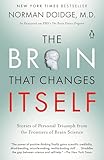
Editors Reads Verdict
Doidge's accessible survey of neuroplasticity research transformed public understanding of the brain's capacity for change. The patient stories are remarkable and the science is presented with unusual clarity.
What We Loved
- The case studies are extraordinary and vividly told
- Made neuroplasticity accessible to millions of readers before it became widely known
- Covers a remarkable range of conditions and applications
- The implications for rehabilitation, education, and mental health are significant
Minor Drawbacks
- Some claims are more speculative than the confident narrative tone suggests
- The later chapters move into more contested territory
- A psychiatrist's perspective occasionally crowds out neuroscience rigour
Key Takeaways
- → Neuroplasticity: the brain can reorganise itself by forming new neural connections throughout life
- → Use it or lose it — the brain constantly rewires based on what you actually do and think
- → Stroke recovery, learning disabilities, and obsessive-compulsive disorder have all been improved by neuroplasticity-based therapies
- → The sensory and motor areas of the cortex can be repurposed when their usual inputs are removed
- → Mental activities and imagined movements produce measurable structural changes in the brain
| Author | Norman Doidge |
|---|---|
| Publisher | Penguin Books |
| Pages | 448 |
| Published | March 15, 2007 |
| Language | English |
| Genre | Science, Neuroscience, Psychology |
| Difficulty | Beginner |
| Best For | Anyone interested in the brain's capacity for change — patients, carers, educators, and anyone curious about the frontiers of neuroscience. |
How The Brain That Changes Itself Compares
The Brain That Changes Itself at a glance against 3 similar books readers weigh alongside it.
| Book | Author | Rating | Best for |
|---|---|---|---|
| The Brain That Changes Itself (this book) | Norman Doidge | ★ 4.5 | Anyone interested in the brain's capacity for change — patients, carers, |
| Behave | Robert M. Sapolsky | ★ 4.6 | Intellectually ambitious readers interested in the biological foundations of |
| Lost Connections | Johann Hari | ★ 4.4 | Anyone experiencing or supporting someone with depression or anxiety, and |
| The Body Keeps the Score | Bessel van der Kolk | ★ 4.7 | Therapists, counsellors, trauma survivors and those who love them, anyone |
The Revolution in Brain Science
For most of the twentieth century, neuroscience operated under a fundamental assumption: the adult brain was essentially fixed. Neural circuits formed in childhood and adolescence and could not be substantially reorganised in adulthood. This assumption shaped every aspect of neurology and psychiatry — including the belief that many brain injuries and neurological conditions were permanent.
Norman Doidge’s The Brain That Changes Itself helped bring the revolution against this assumption to a general audience. Published in 2007, it presented the emerging science of neuroplasticity — the brain’s ability to reorganise its own structure and function throughout life — through a series of remarkable case studies.
The Cases
The book’s power comes from its patients. Cheryl Schiltz, who lost her sense of balance due to damage to her vestibular system, found partial recovery through a device that translated balance information to her tongue. Michael Merzenich, the neuroscientist who provided the scientific foundation for much of the book, demonstrated that the brain’s sensory maps could be reorganised through intensive training. A woman born with only half a brain had rewired her remaining hemisphere to compensate for the missing half.
Each case study documents the brain’s extraordinary capacity for structural change in response to experience, injury, and therapeutic intervention — demonstrating that the fixed brain assumption was not just wrong but had been causing patients unnecessary suffering.
The Science of Neuroplasticity
Doidge explains the key mechanisms behind neuroplasticity: Hebb’s rule (“neurons that fire together wire together”), the role of attention in directing cortical reorganisation, and the competitive nature of the brain’s representational maps. Brain areas that receive more input expand; those that receive less shrink. This principle operates continuously throughout life.
The implications for education, rehabilitation, mental health treatment, and healthy ageing are significant. The brain that is actively used and challenged retains plasticity and function; the brain that is not used reorganises itself around the activities that do occur.
Applications and Cautions
Doidge covers applications including chronic pain treatment, stroke rehabilitation, learning disabilities, and obsessive-compulsive disorder. Some of these applications are well-established; others were more speculative at the time of writing. Readers should note that the field has developed substantially since 2007, with some early claims refined or qualified.
Final Verdict
The Brain That Changes Itself is one of the most hopeful science books ever written. Its core message — that the brain can change — has been broadly validated and has given real hope to patients with conditions previously considered permanent.
Our rating: 4.5/5 — A landmark work in popular neuroscience. The cases are extraordinary and the science, though occasionally overstated, is genuinely important.
The Revolution of Neuroplasticity
The Brain That Changes Itself is Norman Doidge’s influential and accessible exploration of neuroplasticity, the revolutionary discovery that the brain is not a fixed, unchanging organ but is capable of remarkable change and adaptation throughout life. Overturning the long-held belief that the adult brain’s structure is essentially static, Doidge presents the science of neuroplasticity through a series of compelling stories of patients and researchers, demonstrating how the brain can rewire itself in response to experience, injury, and learning. The book brought this transformative scientific shift to a wide general readership.
Stories of Transformation
A defining feature of the book is its use of vivid, often astonishing case studies to illustrate the brain’s capacity for change. Doidge recounts the stories of people who have overcome strokes, learning disabilities, brain injuries, and other challenges through the brain’s ability to reorganize itself, as well as the pioneering scientists whose work revealed these possibilities. These dramatic human stories make the science concrete and compelling, demonstrating the real-world implications of neuroplasticity and conveying the wonder and hope that the discovery inspires.
Implications for Healing and Learning
The book explores the profound implications of neuroplasticity for medicine, education, and our understanding of human potential. If the brain can change and adapt throughout life, then new possibilities open up for rehabilitation after injury, for treating neurological and psychological conditions, and for learning and self-improvement at any age. Doidge examines these applications with enthusiasm, suggesting that neuroplasticity offers genuine hope for healing and growth. Readers should approach some of the more expansive claims with appropriate care, recognizing the book as an accessible overview of an evolving field rather than the final word.
Accessible Science Writing
Doidge, a psychiatrist and writer, presents complex neuroscience in clear, engaging, and accessible terms, making the science of brain change comprehensible and exciting for general readers. His combination of scientific explanation with human storytelling gives the book both substance and narrative appeal, and his evident fascination with his subject is infectious. This accessibility has made the book a popular introduction to neuroplasticity and helped bring an important scientific revolution to a broad audience interested in the brain and its possibilities.
A Hopeful and Influential Work
The Brain That Changes Itself has been widely read and influential, helping to popularize the concept of neuroplasticity and to shift public understanding of the brain’s potential for change. Its message of hope, that the brain is adaptable and capable of growth and healing throughout life, has resonated with readers, patients, educators, and clinicians alike. For anyone interested in the brain, learning, recovery, or human potential, the book offers a fascinating, accessible, and ultimately hopeful exploration of one of the most important discoveries in modern neuroscience. By revealing the brain’s lifelong capacity for change, Doidge offers not only fascinating science but a genuine source of hope for healing, learning, and growth at any age.
Frequently Asked Questions
What is "The Brain That Changes Itself" about?
Stories of personal triumph from the frontiers of brain science, revealing how the brain's lifelong capacity to change its own structure — neuroplasticity — offers hope for previously untreatable conditions.
Who should read "The Brain That Changes Itself"?
Anyone interested in the brain's capacity for change — patients, carers, educators, and anyone curious about the frontiers of neuroscience.
What are the key takeaways from "The Brain That Changes Itself"?
Neuroplasticity: the brain can reorganise itself by forming new neural connections throughout life Use it or lose it — the brain constantly rewires based on what you actually do and think Stroke recovery, learning disabilities, and obsessive-compulsive disorder have all been improved by neuroplasticity-based therapies The sensory and motor areas of the cortex can be repurposed when their usual inputs are removed Mental activities and imagined movements produce measurable structural changes in the brain
Is "The Brain That Changes Itself" worth reading?
Doidge's accessible survey of neuroplasticity research transformed public understanding of the brain's capacity for change. The patient stories are remarkable and the science is presented with unusual clarity.
Ready to Read The Brain That Changes Itself?
Check the current price on Amazon.
Check Price on Amazon (paid link)Prices and availability are subject to change. See Amazon for current price.
Review last updated: