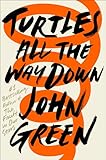
Editors Reads Verdict
Green's most personal and psychologically precise novel portrays OCD with rare authenticity, making intrusive thought patterns viscerally real on the page. The mystery is secondary to the portrait of a mind at war with itself.
What We Loved
- The most authentic YA portrayal of OCD and anxiety in recent memory
- Aza's internal monologue is hauntingly accurate to intrusive thought spirals
- Daisy is a brilliantly realized, complex best friend character
- Green's prose is at its most precise and controlled
Minor Drawbacks
- The mystery plot feels underdeveloped compared to the psychological depth
- Romantic subplot is less convincing than the friendship
- Resolution of Aza's condition offers limited hope without false comfort
Key Takeaways
- → Mental illness is not a personality quirk but a genuine constraint on selfhood
- → Friendship can survive — and sometimes requires surviving — our worst episodes
- → The self is less stable and unified than we like to believe
- → Caring for someone with OCD requires patience without enabling
- → Mystery and uncertainty are built into consciousness itself
| Author | John Green |
|---|---|
| Publisher | Dutton Books |
| Pages | 286 |
| Published | October 10, 2017 |
| Language | English |
| Genre | Young Adult, Coming of Age |
| Difficulty | Beginner |
| Best For | Teens and adults dealing with anxiety; anyone who wants to understand OCD from the inside. |
How Turtles All the Way Down Compares
Turtles All the Way Down at a glance against 3 similar books readers weigh alongside it.
| Book | Author | Rating | Best for |
|---|---|---|---|
| Turtles All the Way Down (this book) | John Green | ★ 4.1 | Teens and adults dealing with anxiety |
| All the Bright Places | Jennifer Niven | ★ 4.2 | YA readers |
| Paper Towns | John Green | ★ 3.9 | Teens and young adults |
| The Fault in Our Stars | John Green | ★ 4.3 | YA readers seeking literary depth alongside emotional resonance, and adult |
Inside the Spiral
Aza Holmes knows her fear that a cut on her finger will lead to C. diff infection is irrational. She knows this clearly, intellectually, and it makes absolutely no difference. The thought returns, the spiral tightens, and she finds herself pressing the wound open to check, caught in a loop her rational mind observes helplessly from the outside. Green, who has spoken openly about his own OCD and anxiety, renders this experience with a precision that is both uncomfortable and revelatory.
A Mystery Wrapped Around a Portrait
The nominal plot — Aza and her friend Daisy investigating the disappearance of a local billionaire whose son Aza once knew — is more scaffolding than story. The real subject is the texture of Aza’s inner life: the way OCD colonizes thought, the exhaustion of maintaining relationships when your mind is a hostile environment, the strange isolation of a condition invisible to the outside world. Green frames this through the philosophical concept in the title — the infinite regress of self-reflection, turtles all the way down.
Daisy and the Friendship Problem
The novel’s most nuanced relationship is not the romance but the friendship between Aza and Daisy. Daisy is warm, funny, and creatively ambitious — she writes wildly popular Star Wars fan fiction — and she genuinely loves Aza. But loving someone with severe OCD is exhausting, and Daisy’s resentment, when it finally surfaces, feels earned and honest. Green refuses to make either character wholly right or wrong in their conflict, which is a more sophisticated move than most YA fiction attempts.
What the Book Achieves
“Turtles All the Way Down” will not offer readers a cure or a neat arc of recovery. Aza manages rather than overcomes, and the epilogue acknowledges that her condition will be a lifelong companion. For readers who recognize their own minds in Aza’s spirals, this honesty is a form of validation more valuable than false resolution.
Our rating: 4.1/5 — Green’s bravest and most psychologically honest novel, essential reading for anyone touched by anxiety or OCD.
Living With an Anxious Mind
Turtles All the Way Down is John Green’s most personal novel, a moving and honest portrayal of life with severe anxiety and obsessive-compulsive disorder, drawn from his own experience. Its narrator, Aza Holmes, is a teenager whose mind is gripped by intrusive thoughts and consuming fears, and Green renders the experience of her condition from the inside with rare authenticity, capturing the exhausting spirals of anxious thought that can hijack a life. Around this intimate portrait he builds a tender story of friendship, first love, and a mystery, but the heart of the book is its compassionate, unflinching depiction of mental illness and the struggle to live and love while contending with it. Praised for reducing stigma and helping young readers feel understood, the novel treats its difficult subject with seriousness, hope, and care, and it stands as one of Green’s most important works, valued for its honesty about an experience that fiction rarely renders so truthfully.
Reading Guides
The Personal Novel
John Green has been public about his own experience of OCD and anxiety, and Turtles All the Way Down, published in October 2017, is his most directly autobiographical work in terms of psychological content. Green spent years unable to write following the enormous success of The Fault in Our Stars, and when he did return to fiction it was to write the thing he actually knew from the inside: what it is to have a mind that will not stop, that returns to the same feared thought in a spiral that reason cannot interrupt.
The novel’s title — from the philosophical parable about infinite regress — captures Aza’s experience precisely. She can observe her own thought spirals from outside them and know they are irrational; this knowledge makes no difference. The self, Green suggests through Aza, is not the rational supervisor of our mental life but one voice among many, and sometimes not the loudest one.
Aza and the Specificity of OCD
The specific shape of Aza’s OCD — her fear of C. diff infection, her compulsive checking of the wound on her finger, the way the fear returns regardless of how many times she has checked — is rendered with a precision that mental health professionals have noted as clinically accurate. This matters. YA fiction often treats mental illness as a character quirk or a redemption arc; Green treats it as what it is: a constraint on selfhood that cannot be willed away and manages rather than resolves.
The HBO Max film adaptation released in 2024 brought Aza’s story to a new audience, and the film’s positive reception among viewers with OCD and anxiety suggests that Green’s specificity translated to screen in ways that broader, less precise portrayals of mental illness frequently fail to do.
The Best Friend Problem
Daisy Ramirez, Aza’s best friend, is one of Green’s finest characterizations — a young woman who is funny, warm, deeply loyal, and also genuinely exhausted by the demands of loving someone whose illness makes certain things very hard. The scene in which Daisy’s resentment finally surfaces is the novel’s most emotionally complex moment, refusing to assign blame to either character while making both perspectives entirely understandable.
The Star Wars fan fiction Daisy writes, which becomes a subplot involving the billionaire whose disappearance nominally drives the plot, is one of Green’s most charming inventions — a reminder that his comic gifts remain sharp even in his most psychologically demanding work.
Living Inside the Spiral
Turtles All the Way Down (2017) is John Green’s most personal novel, written out of his own experience of obsessive-compulsive disorder. Sixteen-year-old Aza Holmes investigates the disappearance of a fugitive billionaire, Russell Pickett, but the real subject is the tightening “thought spiral” of her intrusive fears about infection and contamination, which threaten to swallow her sense of self. Green renders the texture of an anxious mind from the inside with unusual fidelity; the book was adapted into a film released in 2024.
The title alludes to the old image of a world resting on a turtle, and that turtle on another, “all the way down” — an infinite regress that mirrors Aza’s spiralling thoughts, which never reach a stable bottom on which the self can rest.
Frequently Asked Questions
What is "Turtles All the Way Down" about?
Sixteen-year-old Aza Holmes navigates the spiral of OCD and intrusive thoughts while investigating the disappearance of a billionaire and reconnecting with a childhood friend.
Who should read "Turtles All the Way Down"?
Teens and adults dealing with anxiety; anyone who wants to understand OCD from the inside.
What are the key takeaways from "Turtles All the Way Down"?
Mental illness is not a personality quirk but a genuine constraint on selfhood Friendship can survive — and sometimes requires surviving — our worst episodes The self is less stable and unified than we like to believe Caring for someone with OCD requires patience without enabling Mystery and uncertainty are built into consciousness itself
Is "Turtles All the Way Down" worth reading?
Green's most personal and psychologically precise novel portrays OCD with rare authenticity, making intrusive thought patterns viscerally real on the page. The mystery is secondary to the portrait of a mind at war with itself.
Ready to Read Turtles All the Way Down?
Check the current price on Amazon.
Check Price on Amazon (paid link)Prices and availability are subject to change. See Amazon for current price.
Review last updated: