Books Like Parable of the Sower: 10 Dystopian Reads
If Parable of the Sower gripped you with Lauren Olamina's journals and Octavia Butler's unflinching vision of collapse, these dystopian and speculative novels ask the same hard questions.
Parable of the Sower is set in a near-future California where climate change and wealth inequality have accelerated beyond recovery. Lauren Olamina — a teenager with hyperempathy, who physically feels the pain and pleasure of others — keeps a journal as her gated community collapses, as she walks north through a country already recognisable as a version of our own, and as she begins articulating the philosophy she calls Earthseed: a religion built around the idea that God is Change.
Octavia Butler was doing something rare: writing speculative fiction that extrapolates from documented trends rather than inventing crises, with a protagonist whose response to collapse is neither heroic in the traditional sense nor defeated. Lauren survives through intelligence, moral seriousness, and an ability to think institutionally — about what kind of community might survive what she sees coming.
Finding books with the same quality — speculative fiction that earns its darkness through disciplined extrapolation and centres human resilience without romanticising it — is the challenge the list below addresses.
The Most Direct Parallels
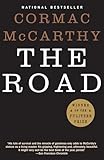
#1 — The Road — Cormac McCarthy
A man and his son walk south through a post-apocalyptic America toward a coast that may offer nothing. McCarthy strips the novel to the essential — no backstory, no explanation of what happened, no characters other than the father and son and the people who threaten them — and the result is both the bleakest and most purely loving novel in the post-apocalyptic tradition. Where Butler gives Lauren a philosophy and a destination, McCarthy gives his characters only each other and the question of whether that’s enough. The Road and Parable of the Sower are the two essential poles of American apocalyptic fiction.
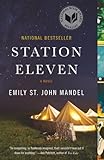
#2 — Station Eleven — Emily St. John Mandel
A flu pandemic kills most of humanity in weeks. Twenty years later, a traveling Shakespeare company moves between settlements on the shores of the Great Lakes. Mandel’s novel moves between the before and after — the last days of the old world and the slowly rebuilding new one — with an argument that what survives is not just institutions but meaning: art, memory, and the desire to create. The post-collapse world is quieter and more humane than Butler’s or McCarthy’s. For readers who want the speculative premise with more emphasis on what rebuilds.
The Feminist Dystopian Tradition
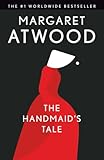
#3 — The Handmaid’s Tale — Margaret Atwood
Atwood’s 1985 novel imagines the near-future theocratic republic of Gilead, where fertile women are enslaved as “Handmaids” for the ruling class. The disciplined extrapolation from existing ideologies is exactly what Butler does: Atwood was not inventing a new kind of oppression but assembling one from historical precedents. The narrative structure — a woman recounting her experience after the fact, with gaps and uncertainties — generates the same documentary quality as Lauren’s journal. Essential reading alongside Butler.
#4 — Brave New World — Aldous Huxley
The other foundational dystopian novel, and in some ways more relevant to contemporary life than Orwell’s 1984. Huxley imagines not a world controlled through fear but one controlled through pleasure: a society where citizens are conditioned to want what they’re given, where consumption is the highest virtue, and where unhappiness is a malfunction to be medicated. For Butler readers interested in the range of ways societies can fail their members.
Octavia Butler’s Other Work
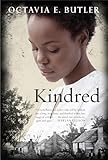
#5 — Kindred — Octavia Butler
The entry point to Butler for most readers: a contemporary Black woman is repeatedly pulled back through time to the antebellum South, where she must keep her white slaveholder ancestor alive to ensure her own existence. The novel works simultaneously as historical fiction (the conditions of slavery are rendered without sentimentality), as speculative fiction (the time-travel mechanism is never explained), and as a meditation on complicity and survival under conditions that offer no good options. If you’ve read Parable of the Sower and haven’t read Kindred, this is the obvious next step.
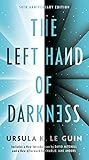
#6 — The Left Hand of Darkness — Ursula K. Le Guin
A human envoy visits a planet whose inhabitants have no fixed gender, becoming the emissary between cultures that may never fully understand each other. Le Guin’s novel is quieter than Butler’s in its crisis — political rather than civilisational — but shares Butler’s approach: speculative extrapolation as a tool for examining which aspects of human society are contingent and which are essential. The friendship at the novel’s centre is as emotionally compelling as anything in the post-apocalyptic tradition.
Climate and Collapse
#7 — The Ministry for the Future — Kim Stanley Robinson
The most rigorously researched near-future climate novel yet written. Robinson’s book spans fifty years from a heat-wave catastrophe that kills twenty million people in one week to the political, economic, and technological responses that may or may not avert worse. The scale is global rather than personal — dozens of POVs, institutional rather than individual — but the extrapolation is as disciplined as Butler’s and the political analysis is more detailed. For Butler readers who want the speculative fiction to engage with the systemic causes of collapse, not just its consequences.
#8 — Bewilderment — Richard Powers
A neuroscientist and his neurodivergent son navigate a world on the verge of environmental catastrophe. Powers is the leading literary novelist of ecological crisis, and Bewilderment shares Butler’s quality of making the systemic personal — the way civilisational failure lands on specific people with specific vulnerabilities. Shorter, more contained, and emotionally devastating.
The Philosophical Strand
#9 — The Children of Men — P.D. James
In 1994 James set her novel in 2021: a world where humanity became infertile in 1995 and faces extinction within a human lifetime. A historian who has retreated into private life is pulled into a resistance movement by a group of people hiding something that changes everything. James’s interest is theological and philosophical — what does human life mean when the future is foreclosed? — in a way that parallels Butler’s Earthseed philosophy about what an individual owes to a collective future.
The books above share Butler’s core conviction: that the most important question speculative fiction can ask is not “what went wrong?” but “what do we owe each other when everything goes wrong?” The answers they give vary enormously. That variation is the point.
Frequently Asked Questions
Should I read Parable of the Sower before Parable of the Talents?
Yes — read Parable of the Sower first. The duology is continuous; Parable of the Talents picks up Lauren's story directly where Sower ends and expands the Earthseed philosophy and the political context significantly. Many readers consider Talents the more complete book, but it requires Sower to work. Butler planned additional volumes but died in 2006 before completing them.
Why is Parable of the Sower so relevant now?
Butler wrote the novel in 1993, setting it in a 2024–2027 near-future California defined by climate destabilisation, wealth inequality, and the collapse of public institutions. The specifics she extrapolated — water scarcity, private policing, corporate company towns, political demagoguery — have tracked closer to reality than most readers expected. The book is disturbing precisely because its extrapolation is disciplined rather than fantastical.
What is the best Octavia Butler book to read first?
For readers new to Butler: Kindred is the most accessible entry point — a time-travel narrative about a Black woman repeatedly transported to the antebellum South that works as both a historical novel and a speculative one. Parable of the Sower is the best entry to her near-future work. The Patternist series and Xenogenesis/Lilith's Brood are her most ambitious science fiction.