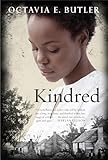
Editors Reads Verdict
Kindred is Octavia Butler's most accessible and most devastating work — a time-travel novel that uses the mechanics of science fiction to do what conventional historical fiction cannot: put a contemporary Black American body directly into the physical and psychological reality of slavery. The result is one of American literature's most essential confrontations with its founding atrocity.
What We Loved
- The time-travel conceit forces a visceral engagement with slavery that distanced historical narrative cannot achieve
- Dana's psychological adaptation — the gradual erosion of her modern self-concept — is Butler's most subtle characterization
- The moral complexity of Rufus Weylin defies simple villain categorization
- The novel refuses to offer historical distance as comfort
Minor Drawbacks
- The time-travel mechanism is deliberately unexplained, which some readers find unsatisfying
- Kevin's perspective as a white husband navigating antebellum society could be more fully developed
- The novel's brevity occasionally means important secondary characters are underdeveloped
Key Takeaways
- → Slavery was not an abstraction but a daily physical and psychological reality that adapted people to its demands
- → Survival under systems of oppression requires compromises that outsiders cannot easily judge
- → The relationship between oppressor and oppressed can be complex without being equal
- → American history is not safely past — its structures continue to shape the present
- → Butler uses science fiction to ask questions that realism might sentimentalize or sanitize
| Author | Octavia Butler |
|---|---|
| Publisher | Beacon Press |
| Pages | 287 |
| Published | June 1, 1979 |
| Language | English |
| Genre | Science Fiction, Historical Fiction, Literary Fiction |
| Difficulty | Intermediate |
| Best For | Readers interested in science fiction's literary possibilities, students of American history and slavery, and anyone seeking to understand Octavia Butler's foundational importance to speculative fiction. |
How Kindred Compares
Kindred at a glance against 3 similar books readers weigh alongside it.
| Book | Author | Rating | Best for |
|---|---|---|---|
| Kindred (this book) | Octavia Butler | ★ 4.5 | Readers interested in science fiction's literary possibilities, students of |
| Beloved | Toni Morrison | ★ 4.5 | Serious readers of literary fiction with the patience for challenging, |
| Never Let Me Go | Kazuo Ishiguro | ★ 4.2 | Literary fiction readers drawn to Ishiguro's distinctive voice and the |
| Parable of the Sower | Octavia Butler | ★ 4.4 | Science fiction readers interested in climate fiction and societal collapse, |
The Impossible Necessity of Being There
The problem with teaching slavery as history is distance. Facts, dates, statistics, even first-person testimony from the historical record — they allow a kind of cognitive quarantine, a processing of atrocity at remove. Octavia Butler, writing in 1979, understood this problem and solved it with a time machine.
Kindred’s protagonist Dana Franklin is a Black writer living in Los Angeles in 1976. On her birthday, she is suddenly pulled backward through time to antebellum Maryland, where she saves a white child named Rufus Weylin from drowning. She returns to the present, shaken, only to be pulled back repeatedly — each time Rufus’s life is in danger, each time remaining longer. She eventually understands: Rufus is her ancestor, and she must keep him alive so that he can father the daughter who begins her family line.
The Moral Horror of Complicity
Butler’s masterstroke is the impossible position this places Dana in. Rufus is a slaveholder’s son who grows into a slaveholder himself, a man who repeatedly brutalizes the people he owns. Dana must protect him — not as an act of loyalty but as a condition of her own existence. This is not a metaphor for respectability politics; it is an actual survival calculus.
What the novel accomplishes through this structure is an understanding of how slavery adapted its victims. Dana arrives with her 1970s consciousness intact and watches herself, over multiple visits, beginning to think and speak in ways that would have horrified her earlier self — and recognizing this adaptation as a survival skill rather than a moral failure. It is Butler’s most important insight about oppression: systems of dominance reshape the psychologies of those who endure them.
The Body as Historical Site
Each time Dana returns to the antebellum South, she carries evidence on her body. The novel’s final image — her arm — is one of American fiction’s most powerful, a literalization of how the history of slavery exists in the bodies of its descendants rather than safely in the past.
Butler wrote Kindred after a fellow student told her that contemporary Black people were too removed from their roots to appreciate what their ancestors endured. The novel is her answer: here is what removal looks like when it is revoked.
Our rating: 4.5/5 — One of American literature’s indispensable books, using science fiction’s imaginative freedom to create the most intimate reckoning with slavery’s reality that fiction has yet achieved.
Rufus Weylin and the Refusal of Easy Villainy
The deepest of Butler’s achievements in Kindred is the character of Rufus, the white child Dana repeatedly saves and watches grow into the man who enslaves and brutalises the people around him, including those Dana comes to love. Butler refuses to make him a cartoon of evil. We meet him first as a frightened, somewhat sympathetic boy, and the horror of the novel is partly the horror of watching the institution of slavery manufacture a monster out of a child who might, in another world, have grown differently. Dana’s obligation to keep him alive — because he is her ancestor, because her own existence depends on it — means she cannot simply hate him, and this enforced intimacy with her oppressor is the novel’s most unbearable and most illuminating pressure. The relationship between Dana and Rufus dramatises a truth that polemic cannot reach: that the bond between oppressor and oppressed can be intricate, even affectionate, without ever being equal, and that this complexity is part of how the system sustained itself.
Why Science Fiction Was the Right Tool
Butler always insisted that Kindred was not science fiction in the conventional sense — she called it a “grim fantasy” — and pointedly left the time-travel mechanism unexplained, refusing the technological apparatus a genre reader might expect. The point of the device is not how it works but what it does: it dissolves the protective distance that lets contemporary readers process slavery as settled history. By dropping a modern Black woman, with her modern assumptions about her own autonomy, into the daily physical reality of an antebellum plantation, Butler makes the abstraction unbearably concrete — the labour, the violence, the constant negotiation for survival, the slow adaptation of consciousness to conditions designed to crush it. The novel’s final image, in which Dana returns to the present having paid a permanent bodily cost for her last journey, literalises the book’s governing argument: that the history of slavery is not safely behind its descendants but carried forward in the body, that the past is not past. It is this fusion of speculative premise and unflinching historical specificity that has made Kindred a fixture of American classrooms and one of the most widely taught novels of its era.
A Fixture of the Classroom
More than four decades after its publication, Kindred has become one of the most widely taught American novels, and its durability in classrooms is a measure of how precisely Butler solved the problem she set herself. Conventional historical fiction about slavery must contend with the reader’s protective distance — the sense that this was long ago, that it happened to other people, that it is safely concluded. Butler’s time-travel device strips that distance away by sending a reader-surrogate, a modern woman with modern assumptions about her own freedom, directly into the daily reality of the antebellum plantation, where she must labour, endure violence, and adapt her consciousness to survive. Students who might read a textbook account unmoved find Dana’s predicament unbearable in exactly the way Butler intended. The novel’s accessibility — its clear prose, its propulsive structure, its refusal of comforting resolution — makes it an ideal entry point both to Butler’s work and to the broader question of how literature can make history felt rather than merely known, and it remains her most read and most assigned book.
Reading Guides
Frequently Asked Questions
What is "Kindred" about?
A Black woman in 1970s California is repeatedly pulled back in time to antebellum Maryland, where she must keep a white slaveholder alive to ensure her own existence.
Who should read "Kindred"?
Readers interested in science fiction's literary possibilities, students of American history and slavery, and anyone seeking to understand Octavia Butler's foundational importance to speculative fiction.
What are the key takeaways from "Kindred"?
Slavery was not an abstraction but a daily physical and psychological reality that adapted people to its demands Survival under systems of oppression requires compromises that outsiders cannot easily judge The relationship between oppressor and oppressed can be complex without being equal American history is not safely past — its structures continue to shape the present Butler uses science fiction to ask questions that realism might sentimentalize or sanitize
Is "Kindred" worth reading?
Kindred is Octavia Butler's most accessible and most devastating work — a time-travel novel that uses the mechanics of science fiction to do what conventional historical fiction cannot: put a contemporary Black American body directly into the physical and psychological reality of slavery. The result is one of American literature's most essential confrontations with its founding atrocity.
Ready to Read Kindred?
Check the current price on Amazon.
Check Price on Amazon (paid link)Prices and availability are subject to change. See Amazon for current price.
Review last updated: