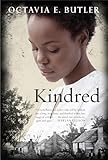
Octavia Butler was an American science fiction writer whose novels — including Kindred and Parable of the Sower — explored race, power, and human nature with visionary force and are now recognized as foundational works of the genre.
Octavia Butler grew up in Pasadena, California, and began writing science fiction as a teenager, eventually becoming the first science fiction author to receive the MacArthur Fellowship — the so-called “genius grant.” She wrote in a genre where Black women were virtually absent both as characters and authors, and she spent her career creating stories that centered race, gender, and power in ways American science fiction had systematically avoided. Kindred (1979), her most widely read novel, follows a Black woman living in 1970s California who is repeatedly pulled back in time to a Maryland plantation before the Civil War, where she becomes bound to the white ancestor whose life she must save to preserve her own existence.
Kindred is both a time-travel novel and a work of brutal historical reckoning. Butler uses genre mechanics to make visceral what historical distance had made abstract — the day-to-day terror of American slavery, the impossible moral compromises it forced on the enslaved, the corruption it worked on enslavers. The novel is harrowing and unflinching, and its final image is among the most devastating in American fiction. Parable of the Sower (1993) looks forward rather than back: a near-future California in societal collapse, following a teenage girl with a neurological condition that makes her feel others’ pain as she builds a community based on a theology of change and adaptation.
Butler died unexpectedly in 2006, cutting short a body of work that was still developing. She remains one of the most important American speculative fiction writers of the twentieth century, and the moral seriousness and emotional intelligence she brought to genre fiction have proven permanently influential.
A Pioneering Visionary of Science Fiction
Octavia Butler was one of the most important and influential science fiction writers of the twentieth century, a groundbreaking author who brought new perspectives, depth, and moral seriousness to the genre. As a Black woman writing science fiction at a time when the field was overwhelmingly white and male, Butler broke barriers and expanded the genre’s horizons, exploring race, power, gender, and survival with extraordinary insight and imaginative power. The first science fiction writer to receive a MacArthur “genius” grant, she created a body of work of lasting significance, and her influence on the genre and on a new generation of writers has only grown since her death.
Kindred
Butler’s most widely read novel, Kindred, is a powerful and harrowing work in which a modern Black woman is repeatedly pulled back in time to the antebellum American South, where she must survive on a slave plantation connected to her own ancestry. Blending science fiction with the brutal realities of slavery, the novel offers an unflinching exploration of history, race, power, and survival, making the horrors of the past viscerally immediate. Widely taught and deeply admired, Kindred is a landmark work that demonstrates Butler’s ability to use speculative fiction to confront the deepest and most painful truths of American history.
Race, Power, and Survival
A central concern of Butler’s fiction is the exploration of power, hierarchy, and survival, particularly as they relate to race, gender, and difference. Her work examines how power is exercised and resisted, how the marginalized survive and adapt, and how relationships of domination and dependence shape human and other societies. She refused easy answers, exploring moral complexity and the compromises survival demands with unflinching honesty. This profound engagement with power and survival, informed by her perspective as a Black woman, gives her fiction its distinctive depth and its enduring relevance.
The Parable Novels
Butler’s Parable of the Sower and Parable of the Talents are among her most acclaimed and prescient works, depicting a near-future America devastated by climate change, inequality, and social collapse, and following a young woman who founds a new belief system in response. Remarkably prophetic in their vision of environmental and social crisis, the novels explore community, leadership, and the human capacity to adapt and create meaning amid catastrophe. Their disturbing relevance to contemporary concerns has brought them renewed attention, and they stand as powerful examples of Butler’s visionary engagement with the future.
Complex Humanity
Butler’s fiction is notable for its complex, morally serious treatment of human nature and relationships. Her characters, human and alien alike, are richly drawn and psychologically complex, and she explored difficult themes of dependency, hybridity, consent, and transformation with nuance and courage, as in her Xenogenesis trilogy. She refused to simplify or sentimentalize, confronting uncomfortable questions about power, biology, and survival with intellectual rigor and emotional depth. This serious, unflinching exploration of the complexities of humanity and relationship is central to the power and the lasting value of her work.
Breaking Barriers
As a Black woman in a field dominated by white men, Butler broke significant barriers and opened the genre to new voices and perspectives. Her success and her acclaim, including major awards and the MacArthur grant, helped pave the way for greater diversity in science fiction, and she has become an inspiration and a touchstone for subsequent generations of writers, particularly writers of color and women. Her pioneering role, alongside the quality of her work, has made her a foundational figure in the ongoing transformation of the genre and a celebrated symbol of its expanding possibilities.
Where to Start with Octavia Butler
Octavia Butler’s influence on science fiction has grown enormously, and she is now recognized as one of the genre’s most important and visionary authors, her work widely read, taught, and celebrated. For newcomers, Kindred is the essential starting point, with Parable of the Sower offering her prophetic vision of the future and Dawn, the first Xenogenesis novel, her exploration of alien contact. For readers seeking intelligent, morally serious, and groundbreaking science fiction that confronts race, power, and survival with extraordinary depth, Octavia Butler is an essential and increasingly celebrated author.
Reading Guides