Octavia Butler Books in Order: Complete Bibliography & Best Starting Points
Octavia Butler's complete bibliography in order — from Kindred and Parable of the Sower to Parable of the Talents and Dawn. Best starting points for new readers.
Octavia Butler was the first major African American woman to achieve recognition in science fiction, and she transformed the genre — bringing questions of race, gender, colonialism, and power to the centre of speculative fiction at a time when science fiction was almost entirely white and male. She wrote between 1971 and her death in 2006, producing twelve novels and a collection of short fiction, and was awarded the MacArthur Fellowship in 1995 — the first science fiction writer to receive it.
Her fiction does not offer easy utopias. It is preoccupied with hierarchy, survival, and the moral compromises people make to live — and with the specific history of Black Americans as the primary experience through which those questions are approached.
Where to Start
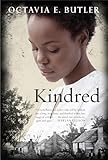
Kindred (1979)
The best starting point and the most widely read of Butler’s novels. Dana, a Black woman in 1976 California, is repeatedly pulled back in time to a Maryland plantation in the antebellum South, where she must protect Rufus — the white son of a slave owner and her ancestor — in order to secure her own existence. Each visit to the past is longer; each return to the present is more disorienting.
Kindred is not science fiction in the conventional sense — there is no explanation of the time travel mechanism — but rather a device for putting a contemporary reader into the physical reality of American slavery. It is the most powerful fictional treatment of that history since Toni Morrison’s Beloved, and more immediately accessible to readers outside the science fiction tradition.
Parable of the Sower (1993)
The most urgently relevant of Butler’s novels — a near-future dystopia set in a collapsed California (2024–2027) that reads as prophecy rather than speculation. Lauren Olamina, a teenager with hyperempathy who experiences others’ pain as her own, loses her community to fire and violence and leads a group north, developing a new religion (Earthseed: ‘God is Change’) as a framework for surviving a world without stable institutions.
Butler’s vision of climate collapse, corporate control, and social fragmentation was written thirty years before it became current. The novel’s politics are not simple — Earthseed is demanding, Olamina is pragmatic to the point of ruthlessness — which is why it repays reading rather than simply validating what readers already believe.
Parable of the Talents (1998)
The sequel to Parable of the Sower — Lauren Olamina continues building Earthseed as a militant Christian theocracy rises to political power in America. The novel adds complexity to the first book’s vision: the community Lauren has built is vulnerable to exactly the kind of authoritarian movement she has been tracking. One of the most politically prescient American novels of the last fifty years.
Complete Bibliography
| Title | Year | Series | Note |
|---|---|---|---|
| Patternmaster | 1976 | Patternist | First published; read last in series |
| Mind of My Mind | 1977 | Patternist | Chronologically first in series |
| Survivor | 1978 | Patternist | Out of print (Butler disavowed it) |
| Kindred | 1979 | Standalone | Best starting point; most accessible |
| Wild Seed | 1980 | Patternist | Chronologically first; best in series |
| Clay’s Ark | 1984 | Patternist | |
| Dawn | 1987 | Xenogenesis/Lilith’s Brood | Alien contact; alien-human hybrids |
| Adulthood Rites | 1988 | Xenogenesis | |
| Imago | 1989 | Xenogenesis | |
| Parable of the Sower | 1993 | Parable | Near-future; essential |
| Parable of the Talents | 1998 | Parable | Sequel; equally essential |
| Fledgling | 2005 | Standalone | Vampire novel; final novel |
| Bloodchild | 1995 | Stories | MacArthur-winning story collection |
A Pioneer of Science Fiction
Octavia Butler was a pioneering figure in science fiction, a writer who broke new ground as one of the first prominent Black women in the genre and who brought to science fiction new perspectives, concerns, and voices that transformed and enriched the field. Butler was a pioneer, one of the first prominent Black women in science fiction, and she brought to the genre the perspectives, concerns, and voice of those long absent from it, transforming and enriching the field. Her fiction brought new perspectives to science fiction, exploring through the genre the realities of race, power, gender, and oppression, and bringing the experiences and concerns of the marginalized into a genre that had largely excluded them. This pioneering role is central to Butler’s significance, for she broke new ground as one of the first prominent Black women in science fiction and brought to the genre new perspectives, concerns, and voices that transformed and enriched the field. Her pioneering achievement expanded the possibilities and the perspectives of science fiction. For readers, Butler offers the work of a pioneer of science fiction, fiction that brought new perspectives, concerns, and voices to the genre. A pioneer of science fiction, Butler broke new ground as one of the first prominent Black women in the genre and brought to science fiction new perspectives, concerns, and voices that transformed and enriched the field.
Power, Hierarchy, and Oppression
A central concern of Octavia Butler’s fiction is the workings of power, hierarchy, and oppression, the dynamics of domination and subjugation, and the experience of the oppressed, explored with insight, honesty, and force through the resources of science fiction. Butler’s fiction is deeply concerned with power, hierarchy, and oppression, with the dynamics of domination and subjugation, the structures and the psychology of oppression, and the experience of those who are dominated, enslaved, and oppressed. Her celebrated novel of a modern Black woman transported into the era of slavery, in particular, confronts the reality of slavery and oppression with unflinching force, and her fiction more broadly explores the workings of power, hierarchy, and oppression through the imaginative resources of science fiction. This concern with power, hierarchy, and oppression is central to Butler’s fiction, for she explored the dynamics of domination and subjugation and the experience of the oppressed with insight, honesty, and force, using science fiction to illuminate these realities. Her fiction confronts the realities of power, oppression, and survival with unflinching honesty and insight. For readers, Butler offers a powerful exploration of power, hierarchy, and oppression, the dynamics of domination and the experience of the oppressed explored through science fiction. Power, hierarchy, and oppression are a central concern of Butler’s fiction, the dynamics of domination and subjugation and the experience of the oppressed, explored with insight, honesty, and force through the resources of science fiction.
Survival, Adaptation, and the Future
A profound dimension of Octavia Butler’s fiction is its concern with survival, adaptation, and the future, with the question of how the oppressed and the vulnerable survive, adapt, and endure, and with the possibilities and dangers of the future. Butler’s fiction is deeply concerned with survival and adaptation, with the question of how individuals and communities, particularly the oppressed and the vulnerable, survive, adapt, and endure in the face of oppression, catastrophe, and change. Her fiction is also concerned with the future, with the possibilities and dangers that the future holds, and with the question of how humanity might survive, adapt, and change. This concern with survival, adaptation, and the future is a profound dimension of Butler’s fiction, for she explored how the oppressed and vulnerable survive, adapt, and endure, and the possibilities and dangers of the future, with insight and seriousness. Her fiction confronts the challenges of survival and adaptation and looks to the future with a clear-eyed concern for its possibilities and dangers. For readers, Butler offers a profound exploration of survival, adaptation, and the future, how the oppressed and vulnerable survive and endure and the possibilities and dangers of the future. Survival, adaptation, and the future are a profound dimension of Butler’s fiction, its concern with how the oppressed and the vulnerable survive, adapt, and endure, and with the possibilities and dangers of the future.
Reading Order Recommendations
New to Butler: Kindred → Parable of the Sower → Parable of the Talents.
Science fiction approach: Parable of the Sower → Parable of the Talents → Dawn (Lilith’s Brood).
Complete: Patternist series: Wild Seed → Mind of My Mind → Clay’s Ark → Patternmaster.
Frequently Asked Questions
What is the best Octavia Butler book to start with?
Kindred (1979) is the best starting point — a time-travel novel in which a modern Black woman is repeatedly pulled back to the antebellum South, where she must protect a white ancestor in order to survive. It is Butler's most accessible novel, the one that requires the least familiarity with science fiction conventions, and the most immediate in its engagement with American history. Parable of the Sower is the best starting point for readers who want Butler's science fiction and speculative world-building at full strength.
What is Kindred about?
Kindred (1979) follows Dana, a Black woman living in California in 1976, who is repeatedly pulled back in time to a Maryland plantation in the antebellum South — specifically to save Rufus, the white son of a slave owner who is one of her ancestors. Dana must protect Rufus to ensure her own existence, while navigating the moral compromises that survival requires. Butler uses the premise to make readers feel the reality of slavery — the daily negotiations, the violence, the impossible moral terrain — rather than keeping it at a historical distance.
What is Parable of the Sower about?
Parable of the Sower (1993) is set in the near future (2024–2027) in a California that has collapsed — climate change has made most of the country uninhabitable, corporations control most of the remaining resources, and most people survive in walled communities. Lauren Olamina, a teenager with the unusual condition of hyperempathy (she physically feels others' pain), leaves her community after it is destroyed and leads a group of survivors north, developing a new religion (Earthseed) as she goes. The novel is prophetic in its accuracy about American social fragmentation.
Is Octavia Butler the best Black science fiction writer?
Butler is generally considered the most important Black science fiction writer and one of the most important science fiction writers of any background — she was the first science fiction writer to win a MacArthur Fellowship (the 'Genius Grant'), in 1995. Her significance is multiple: she brought questions of race, gender, power, and hierarchy to the centre of science fiction, she created Black protagonists in a genre that had almost none, and she used speculative fiction to make slavery, colonialism, and social hierarchy feel visceral and immediate rather than abstract. She died in 2006 at fifty-eight.