Margaret Atwood Books in Order: Complete Bibliography & Best Starting Points
Margaret Atwood's complete bibliography in order — from The Handmaid's Tale and Alias Grace to Oryx and Crake and The Testaments. Best starting points and reading order.
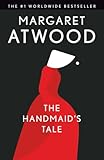
Margaret Atwood is one of the most important novelists writing in English — a Canadian writer whose work spans realistic fiction, historical fiction, speculative fiction, and poetry, and who has been one of the central voices of literary feminism since the 1970s. She is the writer who gave the feminist dystopian novel its definitive form, and whose work engages with questions of gender, power, and environmental catastrophe with unfailing intelligence and formal sophistication.
Born in Ottawa in 1939, she began publishing poetry in 1961 and has produced over fifty books of poetry, fiction, and essays. She has twice won the Booker Prize (The Blind Assassin, 2000; The Testaments, 2019) and is among the most frequently discussed writers for the Nobel Prize in Literature.
Atwood’s Major Novels in Order
| # | Title | Year |
|---|---|---|
| 1 | The Handmaid’s Tale | 1985 |
| 2 | Alias Grace | 1996 |
| 3 | The Blind Assassin | 2000 |
| 4 | Oryx and Crake | 2003 |
| 5 | The Year of the Flood | 2009 |
| 6 | MaddAddam | 2013 |
| 7 | The Testaments | 2019 |
Where to Start
The Handmaid’s Tale (1985)
The essential starting point — the founding document of feminist dystopian fiction and the novel that established Atwood as a global literary figure. Gilead (the theocratic successor state to the United States) and its system of forced reproduction are built from historically verifiable practices of control over women’s bodies: Atwood documented each element’s real precedent. The novel is frightening not because it imagines the impossible but because it assembles existing possibilities into their logical conclusion.
Alias Grace (1996)
The best alternative starting point for readers who want Atwood’s historical fiction. Grace Marks, convicted of murder at sixteen in Victorian Canada, narrates her life to a young American doctor — narration that is always self-aware, partly strategic, and fundamentally unreliable. Atwood’s examination of how women’s inner lives are recorded, interpreted, and appropriated by the men who have institutional authority over them is the novel’s central argument.
The Booker Prize Novels
The Blind Assassin (2000)
Atwood’s most formally inventive novel — and the one that won her first Booker Prize. An elderly woman recalls her sister’s suicide in 1945 and the events that led to it; embedded in the narrative is a novel called The Blind Assassin written by her sister, and embedded in that novel is a science fiction story told by two illicit lovers. Three narrative frames, each illuminating the others. The most demanding of Atwood’s novels, and the most formally rewarding.
The Testaments (2019)
The sequel to The Handmaid’s Tale — set fifteen years later, narrated by three women (Aunt Lydia, the architect of Gilead’s ideology; a young woman growing up inside Gilead; a young woman who has grown up as a refugee in Canada). The Testaments is more plot-driven and more hopeful than The Handmaid’s Tale, and can be read independently, though it rewards readers who have read the earlier novel.
The MaddAddam Trilogy
Oryx and Crake (2003)
The first volume — set after a genetically engineered plague kills most of humanity. Snowman, one of the survivors, recalls in flashback his childhood friendship with Crake (the brilliant, amoral scientist who engineered the plague) and his love for Oryx (a woman both men loved). The novel is Atwood’s most concentrated examination of corporate capitalism, genetic engineering, and what happens when scientific intelligence is entirely divorced from ethical consideration.
The Year of the Flood (2009)
The second volume — set in the same world as Oryx and Crake, following two women who were members of God’s Gardeners (an eco-religious group) through the same period. The trilogy’s middle volume, best read after Oryx and Crake.
MaddAddam (2013)
The conclusion — bringing together the survivors of the first two volumes to build something new. Best read as the end of the trilogy.
A Master of Speculative Vision
Margaret Atwood is one of the great masters of speculative fiction, a writer whose dystopian and speculative novels extrapolate from present realities to imagine possible futures, illuminating the dangers and the tendencies of the present through the lens of the imagined future. Atwood’s celebrated speculative fiction, including her famous dystopia of a patriarchal theocracy, extrapolates from present realities, tendencies, and dangers to imagine possible futures, and through these imagined futures she illuminates and warns of the dangers latent in the present. Her speculative novels are grounded in real present tendencies and dangers, extrapolating from them to imagine where they might lead, and they serve as warnings, illuminating the dangers of the present through the lens of the imagined future. This mastery of speculative vision is central to Atwood’s achievement, for her dystopian and speculative novels extrapolate from present realities to imagine possible futures, illuminating the dangers and tendencies of the present. Her speculative fiction, grounded in real present concerns and extrapolated into imagined futures, serves as warning and illumination. For readers, Atwood offers a master’s speculative vision, dystopian and speculative novels that extrapolate from present realities to imagine possible futures and illuminate the dangers of the present. A master of speculative vision, Atwood extrapolates from present realities to imagine possible futures in her dystopian and speculative novels, illuminating the dangers and the tendencies of the present through the lens of the imagined future.
Power, Gender, and Oppression
A central concern of Margaret Atwood’s fiction is the workings of power, gender, and oppression, particularly the oppression of women and the dynamics of patriarchal power, explored with insight, intelligence, and force. Atwood’s fiction is deeply concerned with power and oppression, particularly with the oppression of women and the dynamics of patriarchal power, and her work explores the mechanisms of domination, control, and subjugation with insight and force. Her celebrated dystopia of a patriarchal theocracy, in particular, explores the oppression of women and the workings of patriarchal power with a chilling force, but her concern with power, gender, and oppression runs throughout her fiction. This concern with power, gender, and oppression is central to Atwood’s achievement, for she explores the workings of power and oppression, particularly the oppression of women and the dynamics of patriarchal power, with insight, intelligence, and force. Her fiction illuminates the mechanisms of domination and control and the realities of women’s oppression, and it has made her a powerful voice on questions of gender and power. For readers, Atwood offers a powerful exploration of power, gender, and oppression, the workings of patriarchal power and the oppression of women explored with insight and force. Power, gender, and oppression are a central concern of Atwood’s fiction, particularly the oppression of women and the dynamics of patriarchal power, explored with insight, intelligence, and force.
Intelligence, Range, and Craft
Margaret Atwood is distinguished by her formidable intelligence, her remarkable range, and her mastery of craft, qualities that have made her one of the most accomplished and versatile writers of her time. Atwood brings to her work a formidable intelligence, a sharp and probing mind that engages the great questions of power, gender, society, and the future with insight and rigor. She is also a writer of remarkable range, working across genres and forms, from speculative and dystopian fiction to historical fiction, poetry, and more, and mastering each in turn. And she is a master of craft, a writer of accomplished and versatile skill whose work is distinguished by its intelligence, its precision, and its artistry. This combination of intelligence, range, and craft is central to Atwood’s achievement, for her formidable intelligence, her remarkable range, and her mastery of craft have made her one of the most accomplished and versatile writers of her time. Her intelligence, versatility, and skill give her work its distinction and its breadth. For readers, Atwood offers intelligence, range, and craft, the formidable intelligence, remarkable range, and mastery of craft that mark one of the most accomplished writers of her time. Intelligence, range, and craft distinguish Atwood, her formidable intelligence, her remarkable range across genres and forms, and her mastery of craft, which have made her one of the most accomplished and versatile writers of her time.
Reading Order Recommendations
New to Atwood: The Handmaid’s Tale → Alias Grace → The Blind Assassin.
Speculative Atwood: The Handmaid’s Tale → Oryx and Crake → The Year of the Flood → MaddAddam → The Testaments.
Fiction first: Alias Grace → The Blind Assassin → The Handmaid’s Tale.
Frequently Asked Questions
What is the best Margaret Atwood book to start with?
The Handmaid's Tale (1985) is Atwood's most widely read novel and the natural starting point — it is the founding document of feminist dystopian fiction and the novel that established Atwood's reputation globally. Alias Grace is the best alternative starting point: a historical mystery about a nineteenth-century Canadian woman convicted of murder, which demonstrates Atwood's range beyond speculative fiction. The Blind Assassin won the Booker Prize and is Atwood's most formally inventive novel — best approached after having read her other work.
What is The Handmaid's Tale about?
The Handmaid's Tale (1985) is set in Gilead, a totalitarian theocracy established in the former United States after a military coup. Women have been stripped of rights, property, and identity; those who are fertile have been made Handmaids — the reproductive property of the powerful men (Commanders) whose wives are infertile. Offred, a Handmaid, narrates her daily life and what she can remember of the world before. The novel is a warning: Gilead is built from existing historical precedents, assembled from real practices of control over women's bodies. The Testaments (2019) is the direct sequel.
What is Alias Grace about?
Alias Grace (1996) is based on the true story of Grace Marks, an Irish immigrant servant in Canada who was convicted in 1843, at sixteen, of the murder of her employer and his housekeeper. A young American doctor visits her in prison to assess her mental state, and the novel consists of Grace's account of herself and her past — narration that is self-aware, strategic, and profoundly unreliable. Atwood uses the historical case to examine the difficulty of knowing a woman's inner life through the distorting lens of the men (doctors, lawyers, journalists) who record it.
What is Oryx and Crake about?
Oryx and Crake (2003) is set in a near-future world in which most humans have been killed by a genetically engineered plague. Snowman, one of the survivors, lives among a genetically engineered species of humanoids called Crakers, created by his friend Crake, and remembers in flashback how the catastrophe happened. The novel is the first of the MaddAddam trilogy — Oryx and Crake, The Year of the Flood, MaddAddam — which together form Atwood's most sustained engagement with genetic engineering, corporate power, and environmental collapse.