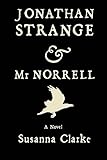
Editors Reads Verdict
Jonathan Strange and Mr Norrell is one of the great achievements of twenty-first century fantasy — a novel that takes the Dickensian triple-decker form seriously and inhabits an alternative Regency England with the same density and texture that Austen and Dickens inhabited the real one. Clarke's footnote-rich style creates a fictional history so complete that the magic feels documentary rather than invented.
What We Loved
- The footnotes create an entire alternate history of English magic with the texture of genuine scholarship
- Clarke's Regency prose voice is impeccably sustained across 800-plus pages
- The contrast between Norrell (fearful, proprietary) and Strange (adventurous, reckless) is perfectly calibrated
- The Raven King mythology is among the most compelling fantasy world-building of recent decades
Minor Drawbacks
- The deliberate pace will test modern readers habituated to faster fantasy
- Female characters exist primarily at the margins of the central male rivalry
- The ending resolves in ways that are more suggestive than satisfying
Key Takeaways
- → Magic, like any powerful tool, becomes dangerous when hoarded and dangerous when freely applied
- → Institutional fear of knowledge is itself a form of knowledge destruction
- → Clarke demonstrates that fantasy can inhabit literary historical fiction's traditions rather than genre adventure
- → The best world-building feels discovered rather than invented
- → Mr Norrell represents the conservative intellectual who would rather keep knowledge rare than see it flourish
| Author | Susanna Clarke |
|---|---|
| Publisher | Bloomsbury |
| Pages | 846 |
| Published | September 8, 2004 |
| Language | English |
| Genre | Fantasy, Historical Fiction, Fiction |
| Difficulty | Advanced |
| Best For | Literary fiction readers willing to engage with fantasy on its own terms, Austen and Dickens enthusiasts who wonder what those writers would have done with magic, and fantasy readers who want genuine prose ambition. |
How Jonathan Strange and Mr Norrell Compares
Jonathan Strange and Mr Norrell at a glance against 3 similar books readers weigh alongside it.
| Book | Author | Rating | Best for |
|---|---|---|---|
| Jonathan Strange and Mr Norrell (this book) | Susanna Clarke | ★ 4.2 | Literary fiction readers willing to engage with fantasy on its own terms, |
| Babel | R.F. Kuang | ★ 4.3 | Readers interested in dark academia, literary fantasy with historical |
| Circe | Madeline Miller | ★ 4.5 | Readers who love Greek mythology, feminist literary fiction, beautiful prose, |
| Good Omens | Terry Pratchett & Neil Gaiman | ★ 4.6 | Fans of Pratchett, Gaiman, or British comedy who want a genuinely funny fantasy |
Regency England, but Magical
Susanna Clarke spent ten years writing Jonathan Strange and Mr Norrell, and the novel bears the mark of that patience in every page. It is set in an alternative England of the Napoleonic era, where magic — real, documented, historical magic — was once commonplace but has been absent for three centuries. The Learned Society of York Magicians study its history without practicing it; they are theoreticians of an art no one uses.
Into this situation comes Gilbert Norrell, the only practicing magician in England, who has spent decades accumulating England’s entire library of magical books in his Yorkshire house and keeping magic from anyone else. Norrell is Clarke’s masterstroke: a man who loves magic so much he would rather let it die than share it, a conservative intellectual who uses the language of preservation to justify monopoly. He is not a villain but he is certainly wrong.
The Footnotes as Architecture
Clarke’s narrative innovation — hundreds of footnotes that describe the history of English magic in the same scholarly tone as the narrative — is not a stylistic quirk but a structural achievement. The footnotes create a fictional scholarship so dense and internally consistent that readers finish the novel feeling they have genuinely studied a suppressed academic field. The Raven King, the historical magician who brought magic to England from Faerie, is built almost entirely through this footnote apparatus, and yet he becomes one of fantasy’s most compelling absent presences.
Strange and Norrell
The novel’s central relationship — between the establishment-minded, fearful Norrell and the adventurous, intuitive Strange — is a deliberate study in temperamental opposition. Norrell hoards; Strange explores. Norrell fears the Raven King’s wilder magic; Strange is drawn to it. Their collaboration in the Napoleonic Wars (raising the dead, moving roads, creating illusions on the battlefield) is the novel’s most dramatically satisfying section.
The entry of the fairy known as the Gentleman with the Thistle-Down Hair — who makes a bargain with Norrell that has long, dark consequences — introduces the novel’s most genuinely uncanny element.
The Raven King
Hovering over the entire novel is a figure who never quite appears: John Uskglass, the Raven King, the medieval magician raised in Faerie who once ruled northern England and from whom all true English magic descends. Clarke builds him almost entirely through rumor, footnote, folk tale, and prophecy, and the result is one of fantasy’s most powerful absent presences — a god-sized myth whose return both Norrell and Strange fear and court without understanding. The genius of this construction is that the Raven King embodies everything Norrell’s timid, bookish magic has tried to suppress: the wild, amoral, weather-and-stone magic of the land itself. The novel’s deep argument is that English magic cannot be tamed into respectability, and the Raven King is the name of the thing that will not be tamed.
A Decade in the Making
Clarke spent roughly ten years writing the novel, and the patience shows in its astonishing tonal control. The prose is a sustained pastiche of nineteenth-century style — Jane Austen’s irony and social comedy married to the amplitude and footnoted erudition of a Victorian historian — and Clarke maintains it across nearly eight hundred pages without a false note. Period spellings (“chuse,” “shewed”), the dry comic voice, and the mock-scholarly apparatus combine to produce something that reads less like a fantasy novel than like a genuine artifact of an alternate Regency. It is a feat of literary impersonation so complete that many readers report forgetting the book is a contemporary invention at all, which is precisely the effect Clarke’s decade of labor was designed to achieve.
Magic as Englishness
Beneath its plot, the novel is a meditation on Englishness itself — on class, on the relationship between reason and wildness, and on a nation’s amnesia about its own buried history. Norrell represents a genteel, institutional, southern England that wants magic catalogued, licensed, and safe; the Raven King and the wilder magic of the north represent everything that England has tried to forget about itself. The fairy known as the Gentleman with the Thistle-Down Hair, who enslaves mortals with casual cruelty, embodies the amorality of a Faerie that respectable society pretends no longer touches it. Clarke’s England is one whose rational, imperial confidence sits atop a vast, unacknowledged strangeness, and the novel’s drama is the return of that repressed magic to a country that no longer believes in it.
The BBC Adaptation
In 2015 the BBC adapted Jonathan Strange & Mr Norrell into a seven-part television series, with Bertie Carvel and Eddie Marsan as the two magicians, and it was praised for capturing the book’s blend of period drama, dry comedy, and genuine unease. The adaptation necessarily compressed Clarke’s footnoted digressions and vast cast, but it preserved the central relationship and the creeping menace of the Gentleman, introducing the story to viewers who might never have tackled the formidable novel. For all the series’ merits, the book remains the richer experience, precisely because so much of its world lives in the footnotes and the prose voice — the very elements that no screen adaptation can fully reproduce. To read the novel is to study a discipline that never existed; to watch the series is merely to visit it, and the difference is the difference between Clarke’s decade of patient invention and a few hours of handsome television.
Our rating: 4.2/5 — A landmark of literary fantasy that earns its 800 pages through prose perfection and world-building so complete it feels like recovered history rather than invented fiction.
Reading Guides
Frequently Asked Questions
What is "Jonathan Strange and Mr Norrell" about?
In an alternative Napoleonic England where magic was once commonplace, two very different magicians attempt to restore English magic — with dangerous and unforeseen consequences.
Who should read "Jonathan Strange and Mr Norrell"?
Literary fiction readers willing to engage with fantasy on its own terms, Austen and Dickens enthusiasts who wonder what those writers would have done with magic, and fantasy readers who want genuine prose ambition.
What are the key takeaways from "Jonathan Strange and Mr Norrell"?
Magic, like any powerful tool, becomes dangerous when hoarded and dangerous when freely applied Institutional fear of knowledge is itself a form of knowledge destruction Clarke demonstrates that fantasy can inhabit literary historical fiction's traditions rather than genre adventure The best world-building feels discovered rather than invented Mr Norrell represents the conservative intellectual who would rather keep knowledge rare than see it flourish
Is "Jonathan Strange and Mr Norrell" worth reading?
Jonathan Strange and Mr Norrell is one of the great achievements of twenty-first century fantasy — a novel that takes the Dickensian triple-decker form seriously and inhabits an alternative Regency England with the same density and texture that Austen and Dickens inhabited the real one. Clarke's footnote-rich style creates a fictional history so complete that the magic feels documentary rather than invented.
Ready to Read Jonathan Strange and Mr Norrell?
Check the current price on Amazon.
Check Price on Amazon (paid link)Prices and availability are subject to change. See Amazon for current price.
Review last updated: