Books Like The Lord of the Rings: 12 Epic Fantasies
Nothing quite replaces Tolkien, but these epic fantasy novels capture the same sense of a vast, ancient world, heroic quests, and myths that feel older than the page.

There is no replacing Tolkien. That is worth saying plainly before making any recommendations at all. The Lord of the Rings is not a novel that happens to have elvish languages, detailed genealogies, and twelve thousand years of mythology behind it — those things are not decorations. They are the point. Tolkien spent the better part of forty years building Middle-earth because he believed that a world worth reading about had to be worth believing in, and that belief had to be earned through precisely the kind of obsessive, philological, archaeological labor that most authors redirect toward plot. The prose carries it: by the time the Fellowship reaches Moria, the mountains and the dark and the ancient evil below them feel genuinely ancient, because they are — in the sense that Tolkien had been imagining them since the 1910s.
The Shire is a particular kind of loss. The early chapters of The Fellowship of the Ring establish a version of England that never existed but feels like it should have: warm, unhurried, ordered by seasons and pipe-smoke and second breakfasts. The tragedy of the book is partly that this world cannot be preserved — that the Ring must be destroyed, that the Shire will be scoured, that even after the victory the hobbits return changed. Tolkien understood that the best fantasy is elegiac. The quest succeeds; the world that was worth saving is gone anyway.
None of the books below replicate this. But they each scratch a different part of the Tolkien itch — and knowing which itch you’re trying to scratch is the best guide to what to read next.
Books Like The Lord of the Rings at a Glance
| Book | Author | Best for |
|---|---|---|
| The Hobbit | J.R.R. Tolkien | First-time fantasy readers of any age, children |
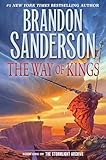
| The Way of Kings | Brandon Sanderson (The Stormlight Archive) | Epic fantasy readers ready for a 1,000-page |
| The Eye of the World | Robert Jordan (The Wheel of Time) | Epic fantasy readers ready for a major commitment |
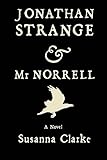
| Jonathan Strange & Mr Norrell | Susanna Clarke | Literary fiction readers willing to engage |
| A Wizard of Earthsea | Ursula K. Le Guin | Fantasy readers of all ages who want the most |
| Assassin’s Apprentice | Robin Hobb (The Farseer Trilogy) | Fantasy readers who prioritise character depth |
| A Game of Thrones | George R.R. Martin (A Song of Ice and Fire) | Fantasy readers wanting political complexity |
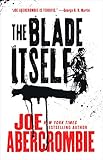
| The Blade Itself | Joe Abercrombie (The First Law) | Fantasy readers ready for moral complexity |
| The Lies of Locke Lamora | Scott Lynch (The Gentleman Bastard Sequence) | Fantasy readers who enjoy crime fiction, Ocean’s |
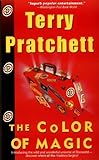
| The Colour of Magic | Terry Pratchett (Discworld) | Fantasy readers looking for an irreverent, funny |
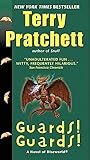
| Guards! Guards! | Terry Pratchett (Discworld) | The ideal first Discworld book for adult readers |
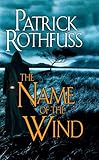
| The Name of the Wind | Patrick Rothfuss (The Kingkiller Chronicle) | Literary fiction readers willing to try fantasy |
Start Here, If You Haven’t
The Hobbit by J.R.R. Tolkien
If you came to Tolkien through The Lord of the Rings and haven’t read The Hobbit, reverse course immediately. It is shorter (written for children, though it does not read as condescending), warmer, funnier, and lighter on its feet. Bilbo Baggins is one of literature’s great reluctant heroes — a comfort-loving homebody dragged into an adventure by a wizard and thirteen dwarves — and his journey from the Shire to the Lonely Mountain and back is the best possible introduction to Middle-earth. The Riddles in the Dark chapter, where Bilbo meets Gollum, is Tolkien at his most elemental. Read The Hobbit first; then The Lord of the Rings hits harder.
For the World-Building and Mythology
These are for readers who stayed up to read the Appendices — who wanted to know the full chronology of the Third Age, the lineages of the Dúnedain, the etymology of elvish names.
#1 — The Way of Kings by Brandon Sanderson (The Stormlight Archive)
Roshar is the most fully realized secondary world in post-Tolkien fantasy. The highstorms that reshape its ecology, the Shardblades and Shardplate that define its warfare, the spren that embody concepts and emotions, the ten-based systems of measurement and religion, the ancient Radiants and their abandoned oaths — Sanderson has been building this world for decades, and it shows. The magic is harder and more systematized than Tolkien’s (Sanderson’s aesthetic runs toward rules where Tolkien’s runs toward mystery), but the sense of a world with a deep, unrecovered past is exactly right. Five books of a planned ten are published; this is the long commitment Tolkien fans want.
#2 — The Eye of the World by Robert Jordan (The Wheel of Time)
Jordan explicitly wrote The Eye of the World as an heir to Tolkien. The opening chapters — a village on the edge of nowhere, an old man who turns out to be a figure out of legend, a shadow from the East bearing down on ordinary people who cannot understand why they matter — are a deliberate echo. The world of WoT has the same sense of layered history: the Age of Legends, the Breaking of the World, the War of the Shadow all preceding the story the reader enters. The series runs to fourteen volumes and four million words. The investment is significant; so is the reward.
#3 — Jonathan Strange & Mr Norrell by Susanna Clarke
Clarke’s novel is the most formally unexpected entry on this list: it is set in Napoleonic England, written in an Austen-adjacent prose style (complete with footnotes citing a fictional tradition of English magical scholarship), and asks what would happen if magic returned to England after three hundred years of theoretical study. The mythology underpinning it — the Raven King, the history of English faerie, the centuries of magical practice that precede the story — is Tolkien-deep. Clarke builds her world through implication and footnote rather than exposition, which gives it exactly the quality Tolkien achieved: the feeling that the story you are reading is a small part of something much larger that has been going on for a very long time.
For the Heroic Quest and Moral Clarity
These are for readers who loved the clarity of Tolkien’s moral framework — good against evil, the corruption of power, the virtue of the small and humble.
#4 — A Wizard of Earthsea by Ursula K. Le Guin
Le Guin’s Earthsea is the most philosophically rich response to Tolkien in the fantasy tradition. Ged, a boy from a poor island, comes into his power as a wizard and unleashes a shadow — a thing without name or form — that pursues him across the archipelago. Le Guin’s magic is based on the true names of things: to know the real name of a thing is to have power over it. The world is built with the same anthropological care she brought to her science fiction — the seafaring culture, the islands with distinct histories and customs — but the book’s real concern is Jungian: the shadow Ged pursues is himself. Shorter than Tolkien, purer, and philosophically richer.
#5 — Assassin’s Apprentice by Robin Hobb (The Farseer Trilogy)
FitzChivalry Farseer is the illegitimate son of a prince, raised in obscurity and trained as a royal assassin. Hobb’s world has the same deep-rooted quality as Middle-earth — a history that predates the story, a magic (the Skill, the Wit) with costs and consequences — but her commitment is to interiority and emotional truth. Fitz’s sense of loyalty to people who repeatedly betray him, and the slowly accumulated damage this does to him, makes this trilogy darker than Tolkien but equally serious about what heroism costs. The series is complete, and it leads into a much larger world — six further trilogies, all finished.
For the Political Complexity
These are for readers who felt Tolkien’s world was perhaps a little too clear about who deserved to win.
#6 — A Game of Thrones by George R.R. Martin (A Song of Ice and Fire)
Martin has said that he was partly reacting against Tolkien’s certainties — against the fantasy convention that the rightful king’s return is straightforwardly a good thing, that nobility of blood corresponds to nobility of character, that there are clear sides and the right side wins. A Game of Thrones is the anti-Lord of the Rings in the most productive sense: it asks what actually happens when power is contested, and its answer is relentless and frequently brutal. The world has the mythic depth Tolkien readers want; the moral framework is entirely different. Five books are published; the series remains unfinished.
#7 — The Blade Itself by Joe Abercrombie (The First Law)
Where Martin complicates heroic fantasy, Abercrombie systematically dismantles it. The First Law trilogy begins with the genre’s standard ingredients — a barbarian from the North, a crippled nobleman, an ancient and manipulative wizard — and uses them to demonstrate that heroic fantasy’s conventions are not just unrealistic but ideologically suspect. The magic is bleak, the violence has weight, and the ending refuses the satisfactions that Tolkien’s endings provide. Read it as a critical response to the tradition Tolkien founded rather than as a substitute for it.
#8 — The Lies of Locke Lamora by Scott Lynch (The Gentleman Bastard Sequence)
Lynch’s debut is set in a fantasy city built on the ruins of an alien civilization, and it follows a band of con artists running elaborate schemes against the nobility. The world-building is dense and inventive — the Eldren ruins, the alchemy, the criminal guild structure — and the ensemble cast has genuine warmth and chemistry. For readers who loved the fellowship dynamics of The Lord of the Rings but want morally grey protagonists and a heist plot, this is the right move. The tone is witty and dark in equal measure.
For the British Warmth and Humour
These are for readers who loved the Shire — the comfort, the ordinariness, the sense that what is being defended is worth defending precisely because it is small and domestic.
#9 — The Colour of Magic by Terry Pratchett (Discworld)
Pratchett spent forty-one novels writing the funniest and most sustained response to Tolkien in the literature. Discworld is a flat world on the backs of four elephants standing on a turtle, and Pratchett used it to examine every fantasy convention Tolkien established with a combination of satire, genuine affection, and increasingly serious moral purpose. The Colour of Magic is the starting point: Rincewind the incompetent wizard is pressed into service as a guide for the Disc’s first tourist. It is lighter than Pratchett gets, but it establishes the world’s logic and warmth. For readers who want the British-ness of Tolkien — the hedgerows and the pubs and the deeply ordinary courage — Pratchett is the essential author.
#10 — Guards! Guards! by Terry Pratchett (Discworld)
If The Colour of Magic is Pratchett finding his feet, Guards! Guards! is Pratchett at full speed. It is also the better entry point for most readers: Sam Vimes, the alcoholic captain of the Night Watch, is Tolkien’s common man made literary — the person who does the actual unglamorous work of keeping civilization running while the heroes are off on quests. The novel is about a dragon, and about who gets to be a hero, and about whether the rightful king’s return is as straightforwardly good as fantasy usually insists. It is very funny and genuinely moving.
For the Epic Scope
#11 — The Name of the Wind by Patrick Rothfuss (The Kingkiller Chronicle)
Kvothe is telling the story of his own life over three days — and the story includes growing up in a traveling troupe, attending a university of magic, and becoming the most feared figure of his age. Rothfuss writes with a prose beauty rare in epic fantasy, and his magic system (sympathy, naming) has the deep etymological logic that Tolkien’s linguistic approach provides. The world has genuine mythic depth. The caveat is significant: two books are published, and the third has been awaited since 2011 with no confirmed publication date. Read it for what exists; do not count on resolution.
If You Want More Tolkien Himself
Before looking elsewhere, it is worth noting that Tolkien wrote more than most readers have encountered. The Silmarillion — published posthumously in 1977 — contains the mythology that underlies The Lord of the Rings: the creation of Arda, the wars of the First Age, the stories of Beren and Lúthien and Túrin Turambar. It reads as mythology rather than novel; it is dense and occasionally demanding. But for readers who found themselves lingering over the Appendices, The Silmarillion is not optional — it is where the full depth of what Tolkien built becomes clear.
The Children of Húrin, edited by Christopher Tolkien and published in 2007, presents the complete story of Túrin Turambar as a standalone novel. It is Tolkien’s darkest work — a tragedy in the Norse mode — and it stands on its own more readily than The Silmarillion does. Neither book is in our catalog, but both are worth seeking out before concluding that you have read everything Tolkien wrote.
How to Choose Your Next Read
If you loved the mythology and world-building: The Way of Kings or Jonathan Strange & Mr Norrell.
If you loved the moral clarity and heroic quest: A Wizard of Earthsea or Assassin’s Apprentice.
If you want more Tolkien himself, first: The Hobbit, then The Silmarillion.
If you want political complexity and grey morality: A Game of Thrones or The Blade Itself.
If you want the warmth and British humour: Guards! Guards! by Pratchett.
If you want beautiful prose and a vast world: The Name of the Wind — with clear eyes about its unfinished status.
For the Best Fantasy Books
For the definitive guide to fantasy fiction — from Tolkien and Le Guin to Brandon Sanderson and George R.R. Martin — see our Best Fantasy Books of All Time list.
More Epic Fantasy Reading Guides
- Leigh Bardugo Books in Order
- Robin Hobb Books in Order: Farseer and Realm of the Elderlings
- Discworld Books in Order: How to Read Terry Pratchett
Also Recommended
Affiliate disclosure: Some links on this page are affiliate links. We earn a small commission at no extra cost to you. This does not influence our editorial recommendations.
Frequently Asked Questions
What books are most similar to The Lord of the Rings?
The books most similar to The Lord of the Rings are The Wheel of Time by Robert Jordan, The Stormlight Archive by Brandon Sanderson, and The Chronicles of Narnia by C.S. Lewis. Jordan was explicitly building on Tolkien's tradition; Sanderson completed the Wheel of Time and brings the same commitment to world-building mythology.
What should I read immediately after Lord of the Rings?
After Lord of the Rings, the most natural next reads are The Silmarillion by Tolkien himself (deeper mythology of the same world), The Name of the Wind by Patrick Rothfuss (literary fantasy with a similar sense of myth-making), or The Way of Kings by Brandon Sanderson (the closest contemporary equivalent in scope).
What epic fantasy matches Tolkien in terms of world-building depth?
The fantasy worlds that rival Tolkien in depth and internal consistency are Brandon Sanderson's Cosmere, Robert Jordan's Wheel of Time, and Ursula K. Le Guin's Earthsea. Sanderson's Cosmere spans 20+ novels across multiple worlds with a shared underlying cosmology. The Wheel of Time's world is the most directly Tolkien-influenced in scale.
What is a shorter book that captures the same feel as Lord of the Rings?
For a shorter book with the same mythic epic fantasy feeling, try The Hobbit by Tolkien (the obvious first choice), A Wizard of Earthsea by Ursula K. Le Guin (elegant and complete in 200 pages), or Piranesi by Susanna Clarke (short but delivers a sense of wonder and hidden worlds). The Final Empire by Brandon Sanderson is longer but self-contained and delivers a complete arc.