15 Books Like Wheel of Time: Best Epic Fantasy (2026)
Finished the Wheel of Time and need something equally epic? These 15 fantasy series match the scale, world-building depth, and long-haul investment that made Robert Jordan's saga unforgettable.

Robert Jordan’s Wheel of Time is not a series — it is an undertaking. Fourteen books, approximately four million words, and a cast of characters so large Jordan maintained a glossary of hundreds of names. The Eye of the World opens with a village on the edge of nowhere and ends with the reader committed to a decade-long relationship with the Two Rivers, the Aes Sedai, the One Power, and the slow turning of the Wheel itself. By the final page of A Memory of Light, something that took years to read is over, and the silence it leaves is genuinely difficult to fill.
The void is particular. WoT readers aren’t just looking for “more fantasy.” They want a world that feels inhabited across thousands of years of history. They want a magic system with rules and costs and political consequences. They want characters who grow — who change in ways that feel earned across multiple books, not just within one. They want the long arc, the sense that each book is a chapter in something vast and still unfolding.
These fifteen series and novels come closest. None of them are the Wheel of Time — nothing is — but each one offers something that WoT readers recognize and need.
What to Look for in a WoT Replacement
Before diving in, it helps to know which part of WoT you’re trying to recapture. Different readers love different things about it.
If you loved the scope and world-building — the Age of Legends, the geography, the cultures, the historical depth — you want something that rewards the same kind of patient immersion. If you loved the magic system — the saidin/saidar distinction, the seven Ajahs, the channeling mechanics — you want tightly designed systems with genuine internal logic. If you loved the multiple POVs and political complexity — the Forsaken, the White Tower politics, the Seanchan invasion — you want books that manage large casts and large-scale conflict. If you loved the sheer commitment of it — the length, the investment — you want a series that doesn’t resolve neatly in three books.
Most of the recommendations below score highly on multiple counts.
For Scale and World-Building
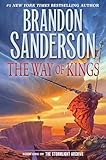
#1 — The Way of Kings by Brandon Sanderson (The Stormlight Archive)
The single most obvious recommendation — and not just because Sanderson finished the Wheel of Time after Jordan’s death. The Stormlight Archive is the most ambitious epic fantasy series being written today. Roshar is a world remade by enormous storms that sweep the continent every few days; its ecology, its politics, its magic (Stormlight, Shardblades, the ten Surges), and its history across thousands of years are built with the same commitment Jordan brought to his world. The first book is long by any standard other than WoT’s, and it earns every page. Five books are published; the series is planned for ten. Readers who want the long haul will find it here.
#2 — A Game of Thrones by George R.R. Martin (A Song of Ice and Fire)
Martin’s series shares WoT’s political complexity and its conviction that the world is larger than any one story. The tone is darker — Westeros operates without moral safety nets, and characters who seem central have a way of disappearing — and the magic is more restrained and atmospheric than Jordan’s elaborate systems. But the multiple POVs, the dynastic maneuvering, the sense of deep history underlying current events, and the sheer ambition of scale put this firmly in the same territory. Five books are published; the series remains unfinished (Martin has been working on The Winds of Winter for over a decade — this is worth knowing before you start).
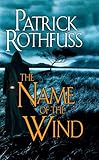
#3 — The Name of the Wind by Patrick Rothfuss (The Kingkiller Chronicle)
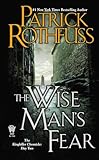
Kvothe is telling the story of his own life to a Chronicler over three days — a life that includes growing up in a traveling troupe of performers, attending the University to learn the hard magic of sympathy, and becoming the most famous and feared figure of his age. Rothfuss writes with a prose elegance rare in epic fantasy, and the University sequences have the same sense of a world with deep institutional roots that WoT’s White Tower provides. Two books are published: The Name of the Wind and The Wise Man’s Fear. The third and final volume, The Doors of Stone, has been awaited since 2011 and has no confirmed publication date. This is not a minor caveat — it is the central fact about this series. Read it for the prose and the world; do not expect closure.
For Magic Systems and Plot Momentum
#4 — The Final Empire by Brandon Sanderson (Mistborn)
If the middle books of WoT occasionally felt like they were treading water, Mistborn is the corrective. Sanderson’s first Mistborn trilogy is tight, plotted, and driven by one of his finest magic systems: Allomancy, where practitioners swallow and burn metals to gain specific powers. The world — an ash-covered empire ruled by an immortal Lord Ruler — has the political texture and deep history that WoT fans want, but the story moves quickly and resolves completely within three books. The Well of Ascension and The Hero of Ages maintain the momentum. This is the right recommendation for WoT readers who want the depth without the sprawl.
#5 — The Blade Itself by Joe Abercrombie (The First Law)
Abercrombie’s First Law trilogy begins as an apparent homage to epic fantasy conventions — a barbarian from the North, a tortured nobleman, an ancient wizard, a quest — and then systematically dismantles every heroic assumption WoT operates on. The magic is bleak and costly. The heroes are compromised. The ending of Last Argument of Kings is one of the most deliberately subversive conclusions in the genre. Readers who loved WoT unironically may find this uncomfortable; readers who engaged critically with Jordan’s heroic framework will find it exhilarating. Before They Are Hanged bridges the first and final volumes with the same relentless intelligence.
For Character-Driven Epic
#6 — Assassin’s Apprentice by Robin Hobb (The Farseer Trilogy)
FitzChivalry Farseer is the royal bastard of a prince who renounced his claim to the throne — which makes Fitz an embarrassment, a political tool, and eventually an assassin trained in secret. Hobb’s trilogy is the most emotionally demanding fantasy series on this list. The world has the same sense of historical depth as WoT, with a magic system (the Skill, a mental connection between people; the Wit, a bond with animals) that has social and political consequences. But Hobb’s primary commitment is to character: Fitz’s interiority, his loneliness, his loyalty to people who repeatedly fail him. This is epic fantasy that will break your heart.
#7 — The Lies of Locke Lamora by Scott Lynch (The Gentleman Bastard Sequence)
Locke Lamora leads a small band of con artists in a fantasy city built on the ruins of an alien civilization, running elaborate schemes against the nobility. Lynch’s debut is a heist novel and an ensemble drama — the chemistry between Locke and his crew has the same warmth and friction that WoT readers get from the Two Rivers companions. The world-building is dense and original, the plotting is genuinely surprising, and Lynch writes action sequences with real momentum. Two further books in the sequence are published; the series is ongoing.
The Origin Point
#8 — The Lord of the Rings by J.R.R. Tolkien
Jordan explicitly wrote WoT in conversation with Tolkien — the opening of The Eye of the World is a near-deliberate echo of The Fellowship of the Ring. If you came to fantasy through Jordan and haven’t read Tolkien, this is the correction. The prose operates at a different register — more elevated, more consciously mythic — and Tolkien’s relationship to his world is archaeological rather than novelistic: he is reporting from a history rather than inventing one. The Hobbit is the shorter, warmer entry point; The Lord of the Rings is the monument everything else is responding to.
Accessible Entry Points for New Epic Fantasy Readers
#9 — Red Rising by Pierce Brown
For readers who want the scale and political complexity of WoT but need a faster pace to get started, Red Rising is the most accessible gateway on this list. Darrow, a low-caste miner on a colonised Mars, infiltrates the ruling class to dismantle a system built on exploitation and myth. Brown blends the class stratification and multi-faction scheming of Jordan’s world with a propulsive, momentum-driven structure — each chapter ends pulling you into the next. The trilogy escalates steadily in scope, and by the later books in the broader Red Rising Saga, the cast of POV characters and political factions rivals WoT in complexity. A good choice for readers who want the long haul without a slow start.
#10 — A Wizard of Earthsea by Ursula K. Le Guin
Le Guin’s Earthsea series is the most important body of epic fantasy outside Tolkien, and it sits upstream of everything Jordan built. A Wizard of Earthsea follows Ged, a young mage from a poor island, through his education at the school of wizardry on Roke and his confrontation with a shadow he summoned from the darkness. Le Guin’s magic system — the language of the Making, in which knowing the true name of a thing gives power over it — has influenced virtually every major magic system that followed, including Jordan’s One Power. The Earthsea books are shorter than WoT but structurally foundational: understanding them helps you understand why WoT works the way it does.
A Note on Series Completion Status
This matters. WoT is complete — Jordan wrote books one through eleven before his death in 2007; Brandon Sanderson completed the series in three final volumes. You finished something whole. Not all the series above are in that position.
- The Stormlight Archive: Ongoing. Five of ten planned books are published. Sanderson is actively writing.
- Mistborn: The original trilogy is complete. The broader Mistborn universe continues.
- A Song of Ice and Fire: Five books published; The Winds of Winter is unfinished as of 2026. The TV adaptation (Game of Thrones) aired a complete but divisive ending. This is worth knowing.
- The Kingkiller Chronicle: Two books published. The Doors of Stone has no release date. This is the starkest caveat on this list: the series has been unfinished since 2011, and there is no indication of when or whether it will be completed. Read it for what exists, not for what might follow.
- The First Law: The original trilogy is complete. Abercrombie has published several standalone novels and a second trilogy set in the same world.
- The Farseer Trilogy: Complete, and part of a larger interconnected world (the Realm of the Elderlings) across six further trilogies — all written, all complete.
- The Gentleman Bastard Sequence: Ongoing. Three books published; Lynch has been slow but is still writing.
- Red Rising Saga: Ongoing. Six books published; the series continues with more volumes planned.
- Earthsea: Complete. Le Guin completed the cycle across six books before her death in 2018.
How to Choose Your Next Series
If you want the closest thing to WoT in scope and commitment: The Stormlight Archive.
If you want political complexity and darkness: A Song of Ice and Fire.
If you want tight plotting and great magic systems: Mistborn.
If you want beautiful prose and a rich world: The Kingkiller Chronicle — with eyes open about its unfinished status.
If you want emotional depth and character-first storytelling: The Farseer Trilogy.
If you want a series that challenges epic fantasy’s assumptions: The First Law.
If you want to understand where WoT came from: The Lord of the Rings.
The Wheel of Time: Complete Reading Order
For all 14 books in order, starting points, and what to expect from the full series, see our Wheel of Time Books in Order guide.
For the Best Fantasy Books
For the definitive guide to fantasy fiction — from Tolkien and Le Guin to Brandon Sanderson and George R.R. Martin — see our Best Fantasy Books of All Time list.
Affiliate disclosure: Some links on this page are affiliate links. We earn a small commission at no extra cost to you. This does not influence our editorial recommendations.
Frequently Asked Questions
What epic fantasy is most similar to the Wheel of Time?
The epic fantasy series most similar to the Wheel of Time are The Stormlight Archive by Brandon Sanderson (who completed the Wheel of Time), the Malazan Book of the Fallen by Steven Erikson, and Memory, Sorrow, and Thorn by Tad Williams. Sanderson is the most accessible; Erikson matches the scale but requires considerably more patience.
What should I read after finishing the Wheel of Time?
After the Wheel of Time, the most recommended next series are The Stormlight Archive by Brandon Sanderson for the same commitment to world-building, The First Law trilogy by Joe Abercrombie for a moral deconstruction of the same epic fantasy tropes, and A Game of Thrones by George R.R. Martin for political complexity the Wheel of Time lacks.
Is the Stormlight Archive similar to the Wheel of Time?
The Stormlight Archive is the most direct spiritual successor to the Wheel of Time. Both are massive multi-volume epics with intricate magic systems, large ensemble casts, and a commitment to world-building at a civilisational scale. Sanderson's prose is cleaner and faster-paced than Jordan's; his emotional depth is different but equally impressive.
How does the Malazan Book of the Fallen compare to the Wheel of Time?
The Malazan Book of the Fallen by Steven Erikson is arguably even more ambitious than the Wheel of Time in scope, featuring thousands of characters across multiple continents and timelines. It is significantly harder to read — the first book drops you into the story with no orientation — but rewards patient readers with the most fully realised fantasy world in the genre.