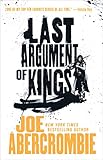
Editors Reads Verdict
Abercrombie's trilogy conclusion is one of the great endings in modern fantasy: surprising without being arbitrary, devastating without being nihilistic, and philosophically serious about what happens when the genre's promises are examined rather than fulfilled. It rewards — and arguably requires — a second reading.
What We Loved
- The ending is one of fantasy's most genuinely surprising and earned conclusions
- Every character arc is resolved in ways that are unexpected and yet feel completely inevitable in retrospect
- The thematic examination of power, complicity, and the impossibility of real change is sustained to the last page
- Abercrombie's prose is at its sharpest — darker and more assured than the earlier volumes
Minor Drawbacks
- The ending will frustrate readers who want heroic fantasy resolutions, as it deliberately refuses them
- The scope of the conclusion can feel overwhelming before the pieces click together
- Some secondary characters receive less resolution than their development through the trilogy warrants
Key Takeaways
- → Real change in entrenched systems is almost impossible — not because people lack courage, but because the system selects against it
- → The cost of power is complicity, and the cost of complicity is that you become the thing you originally opposed
- → Endings reveal what stories were actually about — not what they appeared to be about
- → The fantasy genre's conventions are ideological commitments; questioning them is a philosophical act
- → Surviving is not the same as winning, and winning is not the same as being right
| Author | Joe Abercrombie |
|---|---|
| Publisher | Orbit |
| Pages | 639 |
| Published | March 20, 2008 |
| Language | English |
| Genre | Fantasy, Grimdark Fantasy, Fiction |
| Difficulty | Intermediate |
| Best For | Readers completing the First Law trilogy; fans of fantasy willing to have genre conventions systematically dismantled; readers interested in what the grimdark subgenre does at its best. |
How Last Argument of Kings Compares
Last Argument of Kings at a glance against 3 similar books readers weigh alongside it.
| Book | Author | Rating | Best for |
|---|---|---|---|
| Last Argument of Kings (this book) | Joe Abercrombie | ★ 4.5 | Readers completing the First Law trilogy |
| A Game of Thrones | George R.R. Martin | ★ 4.7 | Fantasy readers wanting political complexity, fans of HBO's Game of Thrones who |
| Before They Are Hanged | Joe Abercrombie | ★ 4.5 | Readers of The Blade Itself continuing the trilogy |
| The Blade Itself | Joe Abercrombie | ★ 4.5 | Fantasy readers ready for moral complexity, antiheroes, and a world where good |
The Reckoning
Everything built across two novels converges in Last Argument of Kings, and Joe Abercrombie has been more careful about what he was building than most readers initially suspect. The battles arrive — the siege, the duel, the final confrontation — but the novel is structured so that each apparent resolution contains the seed of a deeper complication, and the true ending is not the one the narrative appears to be moving toward.
This is not cleverness for its own sake. Abercrombie has been thinking, from the first novel’s opening, about what fantasy promises and whether those promises are honest — about what the genre’s conventions actually argue about power, virtue, and change. Last Argument of Kings is where he delivers his answer.
How Every Arc Resolves
The reader who reaches the final hundred pages expecting the genre’s standard vocabulary of resolution will be systematically disoriented. Jezal’s transformation — from vain, cowardly nobleman to something more tested and complicated — reaches its endpoint in a place that is neither heroic defeat nor heroic victory but something more uncomfortable. Logen’s relationship with his own violence reaches its conclusion through a logic that has been present since the first chapter of the first book and that is all the more horrifying for its consistency. Glokta’s arc resolves in a way that is simultaneously the funniest and most chilling moment of the trilogy.
The structural ambition here is considerable: Abercrombie needs each arc to feel individually inevitable while also fitting together into a coordinated subversion of what the trilogy appeared to be doing. He pulls it off.
The Philosophy in the Ending
The First Law’s conclusion is a serious argument about the impossibility of genuine change in entrenched systems. The institutions of the Union — the political structures, the magical hierarchy, the power relations between North and South — are not reformed by the events of three novels. They are reconfigured with different faces and the same underlying logic. This is not cynicism as aesthetic stance but cynicism as argument, and the argument is carefully made.
Whether you agree with Abercrombie’s conclusion about the intractability of power structures, it is arrived at through three novels of specific, consistent world-building and character development rather than asserted as a mood.
The Fantasy Novel That Earned Its Ending
Last Argument of Kings is the reason the First Law trilogy has its status in the genre. The first novel is remarkable; the second is stronger; the third is where the project is revealed as something more ambitious than its surface suggested. Read the trilogy as a unit, resist reading ahead about what happens, and give Abercrombie the time he has spent preparing the ground. The ending will land.
Reading Guides
- 15 Books Like Wheel of Time: Best Epic Fantasy Series for WoT Fans (2026)
- Joe Abercrombie Books in Order: First Law and Complete Reading Guide (2026)
The Ending and Its Reputation
The ending of Last Argument of Kings has been discussed, debated, and cited in conversations about the First Law world’s meaning since the novel’s publication in 2008. Without spoiling its specific mechanics for new readers, it can be said that the ending does three things simultaneously: it resolves every major character arc in ways that feel both surprising and inevitable, it reveals that the trilogy was about something rather different from what it appeared to be about, and it makes an explicit argument about the relationship between power, manipulation, and the possibility of genuine change.
The third point is the most important. Abercrombie does not end the trilogy nihilistically — it is not “nothing matters and everyone loses.” He ends it with a specific, argued position about how power works and why certain things cannot change through the mechanisms the narrative appeared to be setting up. This is philosophy delivered through story rather than statement, and it lands with proportionate force precisely because three novels of accumulated investment are behind it.
Readers who finish Last Argument of Kings typically do one of two things: they immediately want to read the standalones (Best Served Cold, The Heroes, Red Country) and the Age of Madness trilogy to see what the world becomes, or they immediately want to re-read the original trilogy knowing what they now know. Both responses are correct.
Abercrombie and the First Law TV Adaptation
The First Law trilogy has been under option for television adaptation. The world’s density of character, its political complexity, and the scale of its climactic battles make it natural prestige television material. The challenge of adaptation is the ending: a resolution that works in print through the reader’s accumulated understanding of what has been built and what has been subverted may require different structural support in a visual medium. Whether the adaptation captures what makes the ending work is a question that will interest anyone who read the books.
The Grimdark Legacy
Abercrombie’s trilogy, along with Martin’s A Song of Ice and Fire, defined the parameters within which a generation of fantasy writers has worked. The question of whether grimdark is simply nihilism dressed up as sophistication — whether the subversion of heroic fantasy tropes is itself just another genre posture — has been argued persistently since the term emerged, and Last Argument of Kings is the text to which that argument consistently returns.
The strongest defence of what Abercrombie achieves here is that the argument is specific rather than general: not “heroes are fake” but rather “here is the specific mechanism by which power reproduces itself and subverts those who try to challenge it, and here is why that mechanism is more powerful than individual virtue.” That is an argument, not a mood, and it is worth engaging with on those terms.
Our rating: 4.5/5 — One of fantasy’s great endings: ruthless, surprising, philosophically serious, and impossible to read correctly until you have read it twice.
Frequently Asked Questions
What is "Last Argument of Kings" about?
The First Law trilogy's conclusion delivers one of fantasy literature's most ruthless and genuinely surprising endings — a masterwork of subverted expectations that recontextualises the entire trilogy.
Who should read "Last Argument of Kings"?
Readers completing the First Law trilogy; fans of fantasy willing to have genre conventions systematically dismantled; readers interested in what the grimdark subgenre does at its best.
What are the key takeaways from "Last Argument of Kings"?
Real change in entrenched systems is almost impossible — not because people lack courage, but because the system selects against it The cost of power is complicity, and the cost of complicity is that you become the thing you originally opposed Endings reveal what stories were actually about — not what they appeared to be about The fantasy genre's conventions are ideological commitments; questioning them is a philosophical act Surviving is not the same as winning, and winning is not the same as being right
Is "Last Argument of Kings" worth reading?
Abercrombie's trilogy conclusion is one of the great endings in modern fantasy: surprising without being arbitrary, devastating without being nihilistic, and philosophically serious about what happens when the genre's promises are examined rather than fulfilled. It rewards — and arguably requires — a second reading.
Ready to Read Last Argument of Kings?
Check the current price on Amazon.
Check Price on Amazon (paid link)Prices and availability are subject to change. See Amazon for current price.
Review last updated: