British fantasy author known as the Lord of Grimdark, whose First Law trilogy subverts heroic fantasy conventions with moral ambiguity, brutal violence, and pitch-black humor.
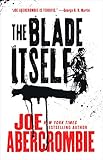
Joe Abercrombie entered fantasy publishing in 2006 with The Blade Itself, the first volume of the First Law trilogy, and immediately announced himself as someone doing something different with the genre. Where conventional fantasy offers heroes, quests, and earned victories, Abercrombie offers morally compromised mercenaries, inquisitors who torture for ideology, and a world in which the quest structure is deliberately undermined. The Blade Itself introduces Logen Ninefingers, Jezal dan Luthar, and Inquisitor Glokta — characters who are compelling precisely because they are unreliable, self-interested, and honest about it in ways fantasy protagonists rarely are.
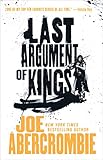
Before They Are Hanged and Last Argument of Kings complete the trilogy, and Abercrombie’s willingness to deny readers expected satisfactions — to make the heroic gesture fail, the prophecy mislead, the character arc refuse the expected resolution — gives the books their distinctive energy. Last Argument of Kings in particular takes risks that most genre fiction avoids, and the trilogy’s conclusion remains divisive: some readers find it courageous, others find it nihilistic.
The “grimdark” label Abercrombie helped define has since become a genre cliché, but his own work sustains itself on wit and character work that lesser imitators lack. His prose is sharp and funny in ways that keep the darkness from becoming oppressive. Readers who want moral complexity, excellent secondary-world building, and no safety nets will find the First Law trilogy among the best fantasy of the past two decades.
The King of Grimdark
Joe Abercrombie is one of the leading figures in modern fantasy and a defining voice of the “grimdark” movement, the darker, more morally ambiguous strain of the genre that emerged in the twenty-first century. His fiction takes the familiar furniture of epic fantasy — warriors, wizards, kings, and quests — and strips away its romantic illusions, presenting a brutal, cynical, and bleakly funny world where heroism is suspect, violence has consequences, and almost no one is purely good. Abercrombie’s unflinching realism and his refusal of comforting moral certainties have made him both hugely popular and influential, reshaping reader expectations of what fantasy can be.
The First Law
His foundational work is The First Law trilogy, beginning with The Blade Itself, which introduced the gritty, war-torn world he has returned to across many books. Rather than a sweeping tale of good triumphing over evil, the trilogy offers a sardonic, character-driven story in which schemes collapse, heroes prove flawed or worse, and the expected fantasy payoffs are deliberately subverted. The series established Abercrombie’s reputation and his distinctive blend of cynicism, dark humour, and genuine narrative drive, and it remains the essential entry point into his interconnected world.
Unforgettable Characters
For all its bleakness, the heart of Abercrombie’s appeal lies in his characters, who are vivid, complex, and often perversely lovable. Figures such as the crippled, brilliant torturer Sand dan Glokta and the fearsome but weary barbarian Logen Ninefingers rank among the most memorable in contemporary fantasy, precisely because they defy simple categorisation as hero or villain. Abercrombie excels at the morally grey, giving even his most brutal creations interiority, wit, and pathos, and it is this depth of characterisation that keeps readers invested in a world otherwise defined by violence and disappointment.
Wit Amid the Darkness
What saves Abercrombie’s fiction from mere nihilism is its humour. His prose crackles with dark comedy, sharp dialogue, and a knowing, sardonic wit, so that even the grimmest material is leavened by entertainment and irony. He is a writer acutely aware of the conventions he is subverting, and much of the pleasure of his work comes from the gap between the heroic story the characters think they are in and the messy, compromised reality Abercrombie actually delivers. This combination of brutality and humour is the signature of his voice.
Subverting the Genre
Abercrombie’s project is, in large part, a sustained interrogation of fantasy’s traditional promises. He delights in setting up expectations only to dash them, questioning the genre’s assumptions about destiny, redemption, and the triumph of good, and exposing the ugliness that more romantic fantasy conceals. This subversion is not merely cynical posturing but a serious examination of power, violence, and human nature, and it has made his work a touchstone for readers seeking fantasy that feels grounded, unsentimental, and true to the harsher realities of the world.
Joe Abercrombie’s Reputation Endures
Abercrombie’s influence on the direction of modern fantasy has been considerable, and he has continued to expand his world across multiple trilogies and standalone novels, including the acclaimed Age of Madness sequence that carries his realm into an age of industrial revolution. He has also written well-received young-adult fantasy. For newcomers, The Blade Itself is the natural starting point, while the standalone Best Served Cold offers a self-contained revenge saga that showcases his strengths. For readers who want their fantasy dark, witty, and unflinchingly honest, Joe Abercrombie is an essential and irresistible voice.
A Lasting Influence
Abercrombie’s success helped cement grimdark as a major current in twenty-first-century fantasy, and his fingerprints are visible across a generation of darker, more morally complex genre writing. By proving that a large audience hungered for fantasy stripped of easy heroism and sentimental comfort, he widened the range of stories the genre felt able to tell. His combination of brutal honesty, biting humour, and genuine craft has earned him both commercial success and lasting critical respect, and his ongoing expansion of his world ensures that his influence — and his readership — continues to grow with each new book he publishes.
Reading Guides