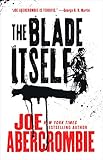
Editors Reads Verdict
Abercrombie's debut established grimdark fantasy as a genre and created three of fantasy literature's most unforgettable antiheroes. The moral complexity is genuine, not just window dressing.
What We Loved
- The three protagonists (Logen, Glokta, Jezal) are among fantasy's most memorable antiheroes
- Abercrombie's deconstruction of fantasy tropes is sophisticated rather than cynical
- The worldbuilding is understated and the better for it
- The prose is sharp and often darkly funny
Minor Drawbacks
- This is primarily a setup book — the best payoffs come in the trilogy's later volumes
- The grimdark tone will not suit readers wanting heroic fantasy
- Some readers want more plot momentum in the first half
Key Takeaways
- → Heroism is often retrospective — people do terrible things for understandable reasons
- → The torturer who understands the futility of his work is more interesting than the villain who enjoys it
- → Institutional corruption is banal — not evil cackling but bureaucratic accommodation
- → Courage is not the absence of fear but the willingness to act despite it — and even then, it's complicated
- → The fantasy genre's tropes are worth deconstructing precisely because they reveal our assumptions about virtue and violence
| Author | Joe Abercrombie |
|---|---|
| Publisher | Orbit |
| Pages | 515 |
| Published | May 4, 2006 |
| Language | English |
| Genre | Fantasy, Grimdark Fantasy |
| Difficulty | Intermediate |
| Best For | Fantasy readers ready for moral complexity, antiheroes, and a world where good and evil are not clearly labelled. |
How The Blade Itself Compares
The Blade Itself at a glance against 3 similar books readers weigh alongside it.
| Book | Author | Rating | Best for |
|---|---|---|---|
| The Blade Itself (this book) | Joe Abercrombie | ★ 4.5 | Fantasy readers ready for moral complexity, antiheroes, and a world where good |
| American Gods | Neil Gaiman | ★ 4.5 | Fantasy readers with an interest in mythology, American culture, and literary |
| The Lies of Locke Lamora | Scott Lynch | ★ 4.6 | Fantasy readers who enjoy crime fiction, Ocean's Eleven-style heist plots, and |
| The Way of Kings | Brandon Sanderson | ★ 4.7 | Epic fantasy readers ready for a 1,000-page commitment who want the most |
The Book That Created Grimdark Fantasy
Joe Abercrombie published The Blade Itself in 2006 and invented a genre — or at least gave it a name. “Grimdark” (a term borrowed from the Warhammer 40K setting) described a style of fantasy in which heroes are corrupt, villains are sympathetic, and the institutions of power are uniformly self-interested. Abercrombie’s First Law trilogy became the defining example of the genre.
What distinguishes Abercrombie from merely cynical fantasy is his genuine interest in his characters’ interiority. He doesn’t deconstruct heroism to score clever points against genre convention — he does it because the psychological reality of people who do terrible things for complicated reasons is more interesting than simple heroes and villains.
Three Unforgettable Antiheroes
Logen Ninefingers is a scarred barbarian from the North with a reputation as the most dangerous man in the world. He is trying to leave that reputation behind, and keeps failing. His internal monologue — the voice in his head that says “Still alive” after every near-death experience — is both darkly funny and genuinely poignant.
Sand dan Glokta is the most original character in the trilogy: a former heroic soldier who was captured, tortured, and returned broken — now working as a torturer for the Inquisition. He is physically ruined, morally compromised, and the sharpest intelligence in the book. His cynical running commentary on the operations of power is the novel’s most pleasurable voice.
Jezal dan Luthar is a vain, cowardly nobleman who believes in his own specialness and is systematically disabused of that belief. He is the novel’s closest thing to a conventional fantasy hero, which makes his arc the most subversive.
The Bayaz Question
The novel’s mysterious mover is Bayaz, the First of the Magi — apparently the most powerful wizard in the world, who has returned after centuries of absence. Bayaz is charming, powerful, apparently benevolent, and increasingly suspicious. Abercrombie is interested in what it would actually mean to have a person of vast power, vast age, and vast agenda be the patron of your quest.
Abercrombie and the Birth of Grimdark
When The Blade Itself appeared in 2006, the fantasy genre was in the middle of what would become a significant shift in its assumptions. George R. R. Martin’s A Song of Ice and Fire, beginning in 1996, had already started questioning the genre’s conventions around heroism and happy endings, but Abercrombie’s debut pushed further: not just into moral ambiguity but into a systematic examination of what the genre’s tropes actually argued about power, virtue, and the relationship between them.
The term “grimdark” — borrowed from the Warhammer 40,000 tagline “In the grim darkness of the far future, there is only war” — became the label applied to this tendency. Abercrombie is its most celebrated practitioner, and The Blade Itself is the foundational text. What distinguishes his version of grimdark from mere nihilism is that it is an argument rather than a mood: Abercrombie is not simply refusing the genre’s optimism but examining why the genre’s optimism is dishonest and what a more honest fantasy would look like.
The First Law trilogy has been optioned for television adaptation, a development that, when it occurs, will likely introduce Glokta, Logen, and Jezal to a much wider audience. The material is suited to prestige television precisely because its complexity requires time to develop — the trilogy’s emotional impact depends on accumulated investment in characters who are not loveable in conventional ways and whose arcs resist the genre’s standard vocabulary of resolution.
The World of the First Law
Abercrombie’s world-building is deliberately understated, particularly in the first novel: the Union, the North, the Gurkish Empire to the south, the Old Empire beyond — these are sketched rather than elaborated, and the restraint is a strength. The Discworld satirises the standard fantasy world by making its impossibility visible; the First Law world achieves its effect by making its political and institutional logic feel uncomfortably familiar. The Union is a recognisably Western European-inflected state with recognisable problems: aristocratic dysfunction, institutional corruption, the gap between official ideology and operational reality.
The magic system is similarly economical. Bayaz’s power is established early and impressive but the mechanics are deliberately obscured. The mystery of what the Magi can do and why they do it is one of the trilogy’s sustained tensions, and The Blade Itself maintains it with considerable discipline.
A Debut That Announced a Career
Abercrombie published five more First Law world novels between 2009 and 2012 — Best Served Cold, The Heroes, and Red Country as standalones, and the Age of Madness trilogy from 2019 to 2021. He has also published the Shattered Sea young adult trilogy beginning with Half a King in 2014. Across this body of work, the First Law world has developed into one of the most extensively imagined settings in contemporary fantasy, with The Blade Itself as its foundation.
Reading the first novel again after completing the entire First Law world is a different experience: the details that seemed incidental acquire significance, the characters who seemed simply to be what they appeared to be reveal their full complexity, and Bayaz’s benevolent wizard act reads entirely differently once you know what he is.
Final Verdict
The Blade Itself is the most accomplished grimdark fantasy debut published in the twenty-first century. Read as the first part of a trilogy rather than as a standalone for the best experience.
Our rating: 4.5/5 — Grimdark at its best: morally complex, psychologically rich, and genuinely funny. Glokta alone makes it essential.
Reading Guides
Frequently Asked Questions
What is "The Blade Itself" about?
Joe Abercrombie's debut fantasy introduces the Union, a corrupt empire, and three deeply flawed protagonists: a disabled barbarian, a self-loathing torturer, and a vain nobleman who slowly discovers courage.
Who should read "The Blade Itself"?
Fantasy readers ready for moral complexity, antiheroes, and a world where good and evil are not clearly labelled.
What are the key takeaways from "The Blade Itself"?
Heroism is often retrospective — people do terrible things for understandable reasons The torturer who understands the futility of his work is more interesting than the villain who enjoys it Institutional corruption is banal — not evil cackling but bureaucratic accommodation Courage is not the absence of fear but the willingness to act despite it — and even then, it's complicated The fantasy genre's tropes are worth deconstructing precisely because they reveal our assumptions about virtue and violence
Is "The Blade Itself" worth reading?
Abercrombie's debut established grimdark fantasy as a genre and created three of fantasy literature's most unforgettable antiheroes. The moral complexity is genuine, not just window dressing.
Ready to Read The Blade Itself?
Check the current price on Amazon.
Check Price on Amazon (paid link)Prices and availability are subject to change. See Amazon for current price.
Review last updated: