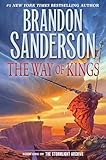
Editors Reads Verdict
The most ambitious fantasy series of the twenty-first century, and this first volume is its most complete standalone chapter. Sanderson's world-building, magic systems, and character development are extraordinary even at 1,000 pages.
What We Loved
- The Stormlight world (Roshar) is the most thoroughly developed fantasy world since Tolkien
- Kaladin's arc from slave to soldier to leader is one of fantasy's greatest character journeys
- The magic systems are original, consistent, and deeply integrated with the world-building
- The climax rewards the full 1,000-page investment with one of fantasy's great payoffs
Minor Drawbacks
- At 1,000 pages, the early pace is deliberately slow — the investment required is real
- The multiple POV structure means some storylines are more compelling than others
- The series is projected to be ten books — full resolution is decades away
Key Takeaways
- → Sanderson's First Law: a magic system's limitations are more interesting than its powers
- → Leadership is not authority but the willingness to carry others when they cannot carry themselves
- → The world-building in epic fantasy should serve character and theme, not just spectacle
- → Depression and trauma are part of the hero's journey — Kaladin's struggles with darkness are central, not incidental
- → The best epic fantasy creates a world where each new detail deepens rather than complicates understanding
| Author | Brandon Sanderson |
|---|---|
| Publisher | Tor Books |
| Pages | 1007 |
| Published | August 31, 2010 |
| Language | English |
| Genre | Fantasy, Epic Fantasy |
| Difficulty | Intermediate |
| Best For | Epic fantasy readers ready for a 1,000-page commitment who want the most ambitious and thoroughly realised fantasy world of the current generation. |
How The Way of Kings Compares
The Way of Kings at a glance against 3 similar books readers weigh alongside it.
| Book | Author | Rating | Best for |
|---|---|---|---|
| The Way of Kings (this book) | Brandon Sanderson | ★ 4.7 | Epic fantasy readers ready for a 1,000-page commitment who want the most |
| American Gods | Neil Gaiman | ★ 4.5 | Fantasy readers with an interest in mythology, American culture, and literary |
| The Blade Itself | Joe Abercrombie | ★ 4.5 | Fantasy readers ready for moral complexity, antiheroes, and a world where good |
| The Name of the Wind | Patrick Rothfuss | ★ 4.6 | Literary fiction readers willing to try fantasy, existing fantasy readers who |
The Most Ambitious Fantasy of the Twenty-First Century
Brandon Sanderson is the most productive and widely read epic fantasy author of his generation. He finished Robert Jordan’s Wheel of Time after Jordan’s death, has published several complete epic fantasy series, and is currently writing the Stormlight Archive — a planned ten-book series set on the world of Roshar. The Way of Kings is its opening volume, and at 1,007 pages, it is the most complete single-book world-building achievement in fantasy since Tolkien.
Roshar is a world of violent storms — enormous highstorms that sweep across the continent, killing the unprepared and reshaping the landscape. Life on Roshar has evolved around this reality: trees are built to retract into stone-like shells, animals have carapaces, human settlements are built against cliff faces. The storms are not just weather but a fundamental feature of the world’s magic system — Stormlight, the energy collected from the storms, powers the ancient magic of the Radiants.
Three Protagonists
Sanderson tells the story through three main perspectives. Kaladin is a soldier turned slave who emerges as the natural leader of Bridge Four — the most dangerous assignment in a military siege — through sheer force of will and tactical brilliance. His arc from suicidal despair to leadership is the novel’s emotional heart. Dalinar is a highprince receiving visions of the ancient world and struggling to convince his fellow highprinces that an ancient threat is returning. Shallan is a scholar trying to steal from her mentor to save her family.
Of the three, Kaladin is the most compelling — a rare fantasy protagonist whose struggle with depression and the desire to give up is treated with genuine psychological seriousness.
Sanderson’s Laws of Magic
Sanderson is famous in the fantasy community for his articulation of magic system design principles, particularly Sanderson’s First Law: “An author’s ability to solve conflict with magic is directly proportional to how well the reader understands said magic.” The magic in Roshar — Stormlight, Shards, Fabrials — is meticulously explained, internally consistent, and deeply integrated with the world-building.
The Payoff
The novel builds slowly through the first third — deliberately, as Sanderson establishes the world, the characters, and the stakes. The final quarter pays off this investment with one of fantasy’s great climactic sequences. The revelations about the Radiants, the nature of the ancient conflict, and Kaladin’s abilities converge in a way that retroactively deepens everything that preceded it.
Finishing Wheel of Time, Then Building Roshar
The context in which Sanderson wrote and published The Way of Kings is relevant to understanding its ambition. In 2007, shortly after finishing the first draft, Sanderson was asked by Robert Jordan’s estate to complete Jordan’s Wheel of Time series after Jordan’s death. He wrote three novels in Jordan’s universe — The Gathering Storm (2009), Towers of Midnight (2010), and A Memory of Light (2013) — while simultaneously developing the Stormlight Archive.
The experience of completing one of epic fantasy’s largest series, with its fourteen-book scope and its enormous readership, directly informed Sanderson’s approach to Stormlight. He saw both the possibilities and the challenges of long-form epic fantasy at the most demanding scale, and The Way of Kings reflects the lessons drawn from that experience: deeper initial world-building than is strictly necessary for the first volume, more careful character groundwork, a more deliberate pace that trusts the investment.
The Highstorm Ecology
The ecological specificity of Roshar is one of the most consistent pleasures of the Stormlight Archive, and The Way of Kings establishes it with extraordinary care. The highstorms that sweep the continent from east to west have shaped every aspect of the world’s life: the Rosharan equivalent of grass retracts into stone-like shells; crustaceans have replaced most mammalian fauna; human architecture is universally built against cliff faces or with stormwalls on the windward side. Nothing in the ecology of Roshar is cosmetic.
This is Sanderson applying the same rigor to biology and meteorology that he applies to magic systems — establishing rules and then following them with consistent, imaginative commitment. The result is a world where every new detail feels like discovery rather than decoration.
Bridge Four as Community
Kaladin’s relationship with Bridge Four — the slave crew he is assigned to and eventually comes to lead — is the novel’s most emotionally resonant element. Bridge Four begins as a collection of broken men, people so thoroughly defeated that they have lost the will to resist. Kaladin’s arc is not simply the discovery of his powers; it is the prior task of convincing these men that resistance is worth attempting, that the cost of trying is justified by the possibility of living as people rather than tools.
The individual members of Bridge Four receive sufficient characterization that their choices and fates carry real weight. Sanderson is building a community, and the process of building it — the small loyalties, the shared meals, the practice spears, the gradual accumulation of small dignities — is as carefully rendered as any of the novel’s action sequences.
Szeth and the World Beyond the Shattered Plains
The chapters following Szeth — the Shin assassin with Radiant powers operating in the political world of the west — introduce a dimension of the novel that the Shattered Plains storyline can obscure on first reading. While Kaladin and Dalinar are caught up in the war camp politics and the highprince military conflict, Szeth is murdering kings across the continent, and the assassinations are driving a political crisis whose full implications won’t be clear until later books.
These chapters establish that the world of Roshar extends far beyond the region the main characters inhabit, and that the Voidbringer threat is already driving events that will shape the series’ direction for volumes to come.
Final Verdict
The Way of Kings is a remarkable achievement in epic fantasy. The 1,000-page investment is real but justified — Sanderson delivers extraordinary world-building, genuine character development, and one of the most satisfying climaxes in the genre.
Our rating: 4.7/5 — The most ambitious and carefully constructed epic fantasy series of its generation. A serious but rewarding commitment.
Reading Guides
- Books Like The Way of Kings
- The Name of the Wind vs The Way of Kings: Which to Read First
- Books Like The Lord of the Rings: 12 Epic Fantasy Novels for Tolkien Fans
- 15 Books Like Wheel of Time: Best Epic Fantasy Series for WoT Fans (2026)
- 15 Books Like Game of Thrones: Best Epic Fantasy for ASOIAF Fans (2026)
- Brandon Sanderson Cosmere Reading Order: The Complete Guide (2026)
- Brandon Sanderson Books in Order: The Complete Cosmere Reading Guide (2026)
- Best Fantasy Books of All Time — The Definitive Reading List
Frequently Asked Questions
What is "The Way of Kings" about?
The first book in Brandon Sanderson's epic Stormlight Archive series, set on the storm-ravaged world of Roshar and following three protagonists navigating war, politics, and the discovery of ancient magic.
Who should read "The Way of Kings"?
Epic fantasy readers ready for a 1,000-page commitment who want the most ambitious and thoroughly realised fantasy world of the current generation.
What are the key takeaways from "The Way of Kings"?
Sanderson's First Law: a magic system's limitations are more interesting than its powers Leadership is not authority but the willingness to carry others when they cannot carry themselves The world-building in epic fantasy should serve character and theme, not just spectacle Depression and trauma are part of the hero's journey — Kaladin's struggles with darkness are central, not incidental The best epic fantasy creates a world where each new detail deepens rather than complicates understanding
Is "The Way of Kings" worth reading?
The most ambitious fantasy series of the twenty-first century, and this first volume is its most complete standalone chapter. Sanderson's world-building, magic systems, and character development are extraordinary even at 1,000 pages.
Ready to Read The Way of Kings?
Check the current price on Amazon.
Check Price on Amazon (paid link)Prices and availability are subject to change. See Amazon for current price.
Review last updated: