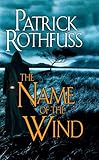
Editors Reads Verdict
The most beautifully written fantasy debut of its generation. Rothfuss brought literary prose to a genre that rarely demands it — Kvothe's voice is extraordinary, his world is fresh and specific, and the magic system (Sympathy) is the most intellectually satisfying ever designed. The unfinished third book is a genuine problem; the first two are worth reading regardless.
What We Loved
- The most literary prose in fantasy — Rothfuss writes sentences that stop you and make you read again
- Sympathy (the magic system) is the most rigorous and original in the genre — governed by physics rather than mysticism
- Kvothe's voice is matchless — arrogant, self-aware, occasionally unreliable, completely compelling
- The framing device (Kvothe telling his own story) creates constant dramatic irony — we know he survived
- The University sequences capture the joy of learning with a specificity that feels lived-in
Minor Drawbacks
- Book Three (*The Doors of Stone*) has not been published after 17 years — the series is unfinished
- Kvothe can veer into wish-fulfilment — he is the best at nearly everything
- The romance subplot (Denna) is the novel's weakest element for many readers
- The frame narrative creates an obligation to finish that the author hasn't yet fulfilled
Key Takeaways
- → A story about a legend is always partly about how legends are made and why we need them
- → The best magic systems have rules — constraints make magic dramatic rather than convenient
- → Poverty is not character-building — Kvothe's time in Tarbean is the most honest portrayal of homelessness in fantasy
- → Music and language are forms of power — naming things precisely gives you mastery over them
- → The gap between who you are and who people believe you to be is the most interesting territory in fiction
| Author | Patrick Rothfuss |
|---|---|
| Publisher | DAW Books |
| Pages | 662 |
| Published | March 27, 2007 |
| Language | English |
| Genre | Fantasy, Fiction, Adventure |
| Difficulty | Intermediate |
| Best For | Literary fiction readers willing to try fantasy, existing fantasy readers who want beautiful prose, anyone who loved Harry Potter as a child and wants its adult equivalent, and readers who can tolerate an unfinished series. |
How The Name of the Wind Compares
The Name of the Wind at a glance against 3 similar books readers weigh alongside it.
| Book | Author | Rating | Best for |
|---|---|---|---|
| The Name of the Wind (this book) | Patrick Rothfuss | ★ 4.6 | Literary fiction readers willing to try fantasy, existing fantasy readers who |
| A Game of Thrones | George R.R. Martin | ★ 4.7 | Fantasy readers wanting political complexity, fans of HBO's Game of Thrones who |
| Dune | Frank Herbert | ★ 4.7 | Readers of ambitious fiction, fans of the films who want the deeper version, |
| The Lord of the Rings | J.R.R. Tolkien | ★ 4.9 | Fantasy readers of all kinds, Peter Jackson film fans ready to experience the |
The Fantasy Novel That Literary Fiction Readers Love
Patrick Rothfuss spent fourteen years writing The Name of the Wind before it was published in 2007. He was a writing teacher at the University of Wisconsin when his agent sold the debut. It was immediately recognised as extraordinary: not just the best fantasy debut in years but a novel that could hold its own against literary fiction in any genre.
The Guardian compared it to Tolkien. Neil Gaiman called it wonderful. It sold millions of copies and put Rothfuss on a very short list of fantasy writers whose prose is genuinely exceptional.
The Framing Device
The novel opens with Kvothe — known to the world as the Kingkiller, the most famous and feared man alive, and now apparently hiding as an innkeeper in a small town — agreeing to tell his life story to a Chronicler who has tracked him down.
What follows is a story within a story: Kvothe narrating his own legend, in the first person, with the self-awareness that he is a legend and that legends are unreliable. The framing creates constant dramatic irony — we know Kvothe survived whatever disasters await him, but we don’t know what he survived or at what cost. The inn in the present is clearly a place of danger and concealment, and the novel ends on a note of quiet foreboding that makes Book Two essential.
The Magic System
Sympathy — the magic of the Arcanum at the University — is based on physics. A Sympathist creates a link between two objects and transfers energy or force between them. The strength of the link depends on concentration, the similarity of the objects, and the skill of the Sympathist. It costs the practitioner energy — a careless Sympathist can die of hypothermia by drawing too much heat from their own body.
This is revolutionary in fantasy terms. Most magic systems operate on narrative logic: spells work because the story needs them to. Sympathy operates on internal physics — the practitioner is constrained, drained, and endangered by the work in ways that make every magical act dramatically meaningful.
Naming — the deeper magic, involving knowing the true nature of things — is rarer, more powerful, and less understood. Kvothe has glimpses of it; the full implications are presumably the subject of the third book.
Kvothe’s Voice
The novel is written entirely in Kvothe’s first person — and this is both its greatest strength and its most contentious quality. Kvothe is brilliant, poor, driven, vain, and acutely self-aware about his own myth-making. He is also, occasionally, too good at everything.
The counter-argument to the wish-fulfilment critique: the framing device exists precisely to complicate this. We are being told a story by a man who has clearly lost something enormous. The legend of Kvothe the Bloodless, Kvothe the Arcane, is being told by someone who is hiding in a village inn and hoping not to be found. Whatever made Kvothe legendary also broke him.
The Unfinished Problem
The honest caveat: The Doors of Stone, Book Three of the Kingkiller Chronicle, has not been published as of 2026 — seventeen years after Book Two. Rothfuss has given no publication date and limited information about the manuscript’s status.
This is a real problem for a series whose premise depends on completing a three-day story. Books One and Two are complete in themselves — the University years, the early adventures — but the frame narrative will remain unresolved until Book Three appears.
Read them for the prose, the magic, and the voice. Go in knowing the resolution may be a long time coming.
Our rating: 4.6/5 — The most beautifully written fantasy novel of its generation. Essential, with the caveat that the series remains unfinished.
A Story Within a Story
The novel’s frame is part of its appeal: a legendary, now-quiet figure named Kvothe recounts his own life over three days to a chronicler, which means the whole tale is told in his voice, shaped and possibly burnished by the man it concerns. This first-person retrospective lets Rothfuss balance the wonder of a gifted boy’s coming of age against the melancholy of the older man who knows how it turns out, and it invites the reader to wonder how much of the legend to trust. The structure gives an otherwise familiar tale — orphan, prodigy, magical university — an unusual depth and a built-in mystery.
Why Readers Love the Prose
What sets the book apart in a crowded genre is the quality of the writing. Rothfuss writes with a lyricism rare in epic fantasy, lavishing attention on music, language, and the texture of Kvothe’s world, and the famous set pieces — the workings of sympathy and naming, the sequences at the University, the haunting interludes — are crafted with real care. Readers who prize beautiful sentences and immersive world-building over breakneck plotting find it one of the most rewarding fantasies of its generation.
The Unfinished-Series Question
No honest recommendation can omit the obvious caveat: the trilogy remains unfinished, with the long-awaited third volume still not published many years after the second, and readers should begin knowing they may be entering a story without a guaranteed ending. For some that is a dealbreaker; for many others the journey is reward enough, because The Name of the Wind is largely self-contained and satisfying on its own terms. Taken as the opening of a beautifully written, immersive coming-of-age fantasy — with eyes open about the wait — it remains a modern favourite and a frequent gateway into the genre.
Reading Guides
- The Name of the Wind vs The Way of Kings: Which to Read First
- Books Like The Name of the Wind: 11 Fantasy Novels with the Same Brilliant Prose
- Books Like Piranesi: Labyrinthine Worlds, Mystery, and the Strangeness of Reality
- Books Like The Count of Monte Cristo: 11 Epic Adventure and Revenge Classics
- Books Like Assassin
- Books Like Red Rising: 12 Brutal, Epic Reads for Fans of Pierce Brown
- Books Like The Lord of the Rings: 12 Epic Fantasy Novels for Tolkien Fans
- Books Like Harry Potter: 15 Magical Series to Read Next
Frequently Asked Questions
What is "The Name of the Wind" about?
Kvothe — innkeeper, legend, the most infamous man alive — agrees to tell his life story to a Chronicler over three days. Day One: his childhood with a troupe of travelling performers, his time as a street orphan in Tarbean, and his legendary entry to the University where magic is studied.
Who should read "The Name of the Wind"?
Literary fiction readers willing to try fantasy, existing fantasy readers who want beautiful prose, anyone who loved Harry Potter as a child and wants its adult equivalent, and readers who can tolerate an unfinished series.
What are the key takeaways from "The Name of the Wind"?
A story about a legend is always partly about how legends are made and why we need them The best magic systems have rules — constraints make magic dramatic rather than convenient Poverty is not character-building — Kvothe's time in Tarbean is the most honest portrayal of homelessness in fantasy Music and language are forms of power — naming things precisely gives you mastery over them The gap between who you are and who people believe you to be is the most interesting territory in fiction
Is "The Name of the Wind" worth reading?
The most beautifully written fantasy debut of its generation. Rothfuss brought literary prose to a genre that rarely demands it — Kvothe's voice is extraordinary, his world is fresh and specific, and the magic system (Sympathy) is the most intellectually satisfying ever designed. The unfinished third book is a genuine problem; the first two are worth reading regardless.
Ready to Read The Name of the Wind?
Check the current price on Amazon.
Check Price on Amazon (paid link)Prices and availability are subject to change. See Amazon for current price.
Review last updated: