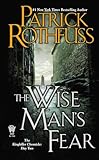
Editors Reads Verdict
The Wise Man's Fear is a novel of exceptional prose and extraordinary indulgence — the middle volume of an unfinished trilogy that expands the world of the Kingkiller Chronicle in every direction while frustratingly delaying the story's ultimate destinations. Rothfuss's prose is the finest in contemporary epic fantasy, and Kvothe remains one of the genre's most compelling unreliable narrators.
What We Loved
- Rothfuss writes at the sentence level with a precision and beauty rare in epic fantasy
- The Ademre sections are the most fully realized foreign culture in contemporary fantasy world-building
- Kvothe as unreliable narrator adds constant dramatic irony
- The sympathy magic system remains the genre's most intellectually rigorous
Minor Drawbacks
- At 994 pages, the novel wanders extensively without advancing the frame story
- The Felurian episode is nearly 100 pages of wish fulfillment that strains credibility
- The third book has not appeared after more than a decade, leaving the story incomplete
Key Takeaways
- → The gap between legend and reality is where character actually lives
- → Rothfuss demonstrates that fantasy can aspire to literary prose without abandoning genre pleasures
- → Kvothe's brilliance is also his flaw — his inability to be ordinary is what makes him tragic
- → The frame story (Kvothe as broken innkeeper) promises a fall we still await
- → The Lethani represents one of fantasy's most interesting philosophical systems
| Author | Patrick Rothfuss |
|---|---|
| Publisher | DAW Books |
| Pages | 994 |
| Published | March 1, 2011 |
| Language | English |
| Genre | Fantasy, Fiction |
| Difficulty | Intermediate |
| Best For | Epic fantasy readers willing to commit to an unfinished trilogy, readers who prioritize prose quality and world-building over plot velocity, and fans of the Kingkiller Chronicle seeking continuation. |
How The Wise Man's Fear Compares
The Wise Man's Fear at a glance against 3 similar books readers weigh alongside it.
| Book | Author | Rating | Best for |
|---|---|---|---|
| The Wise Man's Fear (this book) | Patrick Rothfuss | ★ 4.5 | Epic fantasy readers willing to commit to an unfinished trilogy, readers who |
| A Game of Thrones | George R.R. Martin | ★ 4.7 | Fantasy readers wanting political complexity, fans of HBO's Game of Thrones who |
| The Final Empire | Brandon Sanderson | ★ 4.6 | Fantasy readers looking for innovative magic systems and tightly plotted epic |
| The Name of the Wind | Patrick Rothfuss | ★ 4.6 | Literary fiction readers willing to try fantasy, existing fantasy readers who |
The Middle That Does Not Move
The Wise Man’s Fear is a 994-page novel that is simultaneously one of the most beautifully written books in contemporary epic fantasy and a genuine test of a reader’s patience with indirection. It is the second volume of Patrick Rothfuss’s Kingkiller Chronicle — a trilogy whose completion has been awaited for over a decade — and it leaves the frame story (present-day Kvothe as a defeated innkeeper three days into telling his life story to a Chronicler) almost exactly where The Name of the Wind left it.
This is either a feature or a flaw depending on your relationship to literary fantasy. Rothfuss is not interested in plot velocity; he is interested in texture, in the specific grain of an experience, in rendering a world so completely that you feel its physics and its music and the way its people think. On those terms, The Wise Man’s Fear is a triumph.
Three Educations
The novel follows Kvothe through three distinct extended episodes: his continued education at the University, where he learns sympathy and alchemy and music and navigates academic politics; his sojourn in Vintas at the court of Maer Alveron, where he learns courtly intrigue; and his time among the Ademre in the Fae realm, where he trains as a warrior and learns the Lethani, a philosophy of action that defies easy Western articulation.
Each section is essentially a standalone novella, and each demonstrates Rothfuss’s world-building at its best. The Ademre are the most fully realized alien culture in contemporary fantasy — their martial philosophy, their relationship to language, their social codes are all coherent and fascinating without being easily mapped onto existing cultures.
Kvothe as Unreliable Narrator
The genius of Rothfuss’s frame structure is that we know, before a word of the story proper, that Kvothe’s legend exceeds his reality. He is telling his own story, which means every extraordinary thing he does is filtered through his own self-conception. The Felurian episode — in which Kvothe spends weeks with a supernatural seductress in the Fae realm — is wish fulfillment, yes, but it’s Kvothe’s wish fulfillment, told by Kvothe. The unreliability is the point.
The novel’s ending, which resolves nothing, is either maddening or philosophically appropriate: this is day two of three. Everything waits for a third book that continues not to arrive.
The Prose as the Point
To read Patrick Rothfuss is to accept a particular bargain: in exchange for relinquishing the propulsive plotting of most epic fantasy, you receive prose of a beauty rarely found in the genre. Rothfuss writes at the sentence level, lavishing attention on the texture of experience — the feel of a lute string under a finger, the precise social choreography of a conversation, the music of a name — and his world acquires its extraordinary solidity not through info-dumps but through the accumulated grain of carefully rendered detail. This is fantasy as a sensory and aesthetic experience rather than a plot-delivery system, and on those terms The Wise Man’s Fear is a triumph: few writers in the genre can match the sheer quality of Rothfuss’s craft. The cost of this approach is real — readers who come to fantasy for momentum and incident will find the book maddeningly slow — but for those who prize immersion and language, the lingering, unhurried prose is precisely the reward.
Three Novellas in One
Structurally, The Wise Man’s Fear functions as three loosely connected novellas, each showcasing a different facet of Rothfuss’s world-building, and the variety is one of its chief pleasures. Kvothe’s continued study at the University extends the magic-school material that made the first book so beloved, deepening the rigorous, rule-bound magic systems of sympathy and naming and the cutthroat academic politics. His sojourn at the court of the Maer Alveron in Vintas plunges him into a world of aristocratic intrigue, where the relevant skills are flattery, patience, and the reading of social codes. And his time among the Adem, the mercenary warrior culture, produces the book’s most impressive feat of invention. Each section operates almost as a self-contained story with its own logic and pleasures, and while this episodic structure contributes to the sense that the larger narrative is barely advancing, it also allows Rothfuss to display the remarkable range and coherence of the world he has built across radically different settings.
The Unreliable Legend
The frame story — present-day Kvothe, now a defeated and diminished innkeeper, recounting his own life to a chronicler over three days — is the structural masterstroke that elevates the Kingkiller Chronicle above conventional wish-fulfillment fantasy. Because Kvothe narrates his own legend, every extraordinary feat is filtered through his self-regard, and the reader is invited to wonder how much of this dazzling young hero is accurate memory and how much is the embellished mythology of a man explaining how he became a legend. The Felurian episode, in which Kvothe survives and masters an immortal seductress in the Fae, reads as pure adolescent fantasy precisely because it is Kvothe’s fantasy, told by Kvothe; the unreliability is not a flaw but the design. This tension between the glorious story Kvothe tells and the broken man telling it gives the trilogy a melancholy depth and an interpretive richness, transforming what might be straightforward heroics into a meditation on storytelling, memory, and the gap between who we were and who we claim to have been.
The Unfinished Chronicle
No assessment of The Wise Man’s Fear can avoid the elephant in the room: the trilogy remains unfinished, with the long-awaited third volume, The Doors of Stone, having gone unpublished for well over a decade despite intense anticipation. This incompleteness inevitably colors the experience of the second book, which advances the larger plot only glacially and ends, like its predecessor, having covered just one of the three days of Kvothe’s telling. For readers, this presents a genuine dilemma — the two existing volumes are superbly written but constitute the opening movements of a story whose resolution may never arrive, and the ending of The Wise Man’s Fear resolves almost nothing. Whether to invest in an unfinished masterwork is a real question each reader must weigh. What is not in doubt is the quality of what exists: as immersive, beautifully crafted, sentence-level fantasy, The Wise Man’s Fear is among the finest the genre has produced, compromised only by its wandering pace and by the long, perhaps permanent, silence that has followed it.
Our rating: 4.5/5 — One of fantasy’s most beautifully written novels, an immersive world built at the sentence level, compromised only by its incompleteness and its willingness to wander.
Reading Guides
Frequently Asked Questions
What is "The Wise Man's Fear" about?
Kvothe continues his legendary life story, traveling to foreign courts and distant lands while attending the University and becoming the man of myth and music his world knows.
Who should read "The Wise Man's Fear"?
Epic fantasy readers willing to commit to an unfinished trilogy, readers who prioritize prose quality and world-building over plot velocity, and fans of the Kingkiller Chronicle seeking continuation.
What are the key takeaways from "The Wise Man's Fear"?
The gap between legend and reality is where character actually lives Rothfuss demonstrates that fantasy can aspire to literary prose without abandoning genre pleasures Kvothe's brilliance is also his flaw — his inability to be ordinary is what makes him tragic The frame story (Kvothe as broken innkeeper) promises a fall we still await The Lethani represents one of fantasy's most interesting philosophical systems
Is "The Wise Man's Fear" worth reading?
The Wise Man's Fear is a novel of exceptional prose and extraordinary indulgence — the middle volume of an unfinished trilogy that expands the world of the Kingkiller Chronicle in every direction while frustratingly delaying the story's ultimate destinations. Rothfuss's prose is the finest in contemporary epic fantasy, and Kvothe remains one of the genre's most compelling unreliable narrators.
Ready to Read The Wise Man's Fear?
Check the current price on Amazon.
Check Price on Amazon (paid link)Prices and availability are subject to change. See Amazon for current price.
Review last updated: