Where to Start with Patrick Rothfuss: A Reading Guide
Where to start with Patrick Rothfuss and the Kingkiller Chronicle — what to expect from The Name of the Wind and the unfinished trilogy. A complete reading guide.
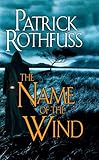
Patrick Rothfuss (born 1973) is the American fantasy novelist who — with The Name of the Wind (2007) — produced one of the most celebrated fantasy debuts of the twenty-first century. The first book of the Kingkiller Chronicle, narrated by the legendary Kvothe as he tells his own life story to a Chronicler, demonstrated an unusual combination of prose quality, original magic system design, and structural intelligence. The second volume, The Wise Man’s Fear, was published in 2011. The third and concluding volume has not been published as of 2026. The Kingkiller Chronicle is among the most widely loved unfinished fantasy series in contemporary fiction.
Where to Start: The Name of the Wind (2007)
The essential Rothfuss — and a fantasy debut of unusual quality. The structure is a frame: the legendary Kvothe, whose name appears in songs and stories across the known world as arcanist, musician, and killer of kings, has disappeared. He is found by a Chronicler — a professional recorder of important stories — living quietly as an innkeeper named Kote. Kvothe agrees to tell his story over three days. The Name of the Wind is Day One.
It begins with his childhood among the Edema Ruh — the travelling performers who are his people — and his early discovery of sympathy, the magic system Rothfuss has conceived with particular care. Sympathy is the mental linking of objects: understanding the relationship between a candle flame and a campfire deeply enough to transfer heat between them, or between a falling stone and a potential assassin. It requires concentration, mental discipline, and a precise understanding of the physics involved. It is the closest thing in fantasy to a scientifically rigorous magic.
The story moves to Kvothe’s years as a street child in Tarbean after his family is destroyed, his entry into the University, his pursuit of the Chandrian who killed his parents, and his complicated, ultimately disastrous relationship with Denna, a woman who resists categorisation as a love interest with the same energy Kvothe applies to everything he attempts. The prose throughout is notably controlled; Rothfuss writes fantasy sentences that bear reading aloud.
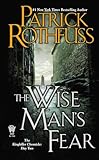
The Wise Man’s Fear (2011)
The second day of Kvothe’s story — and the point where Rothfuss’s narrative expands geographically, taking Kvothe out of the University and into the wider world: the court of a nobleman, the forests of the Fae, the desert training camp of the Adem (a warrior people with an entirely original culture and fighting philosophy). Longer than the first book and more varied in setting; Kvothe develops further as a character and the Chandrian mystery deepens. The Adem sequences are particularly original. Less tightly constructed than the first book but consistently pleasurable. Ends on another pause rather than a resolution; the third book remains unpublished.
Why The Name of the Wind Is the Ideal First Book
For a reader new to Patrick Rothfuss, The Name of the Wind is the ideal first book because it is his celebrated debut, the opening of the Kingkiller Chronicle, and the fullest expression of his distinctive gifts, the beautiful prose, the compelling storytelling, and the richly imagined world. The Name of the Wind tells the story of Kvothe, a gifted and legendary figure who recounts his own life, from a traveling childhood and tragedy to his education at a renowned university of magic, in a frame narrative of remarkable richness. As an entry point it is the natural beginning of the series and a perfect introduction to his lyrical, immersive fantasy. It welcomes the newcomer with its gorgeous prose, its captivating hero, and its detailed world and magic system, drawing the reader into one of the most acclaimed modern fantasy debuts. It is his most famous work and the start of his series, so the new reader begins where his story begins. For the newcomer, then, The Name of the Wind is the natural and ideal starting point.
What to Expect as a New Reader
As a new reader, you can expect The Name of the Wind to be a beautifully written, immersive, and character-driven fantasy. You can expect gorgeous prose, for Rothfuss writes with a lyrical, polished style that sets the book apart in the genre. You can expect a compelling hero, for the novel follows Kvothe, a brilliant, charismatic, and legendary figure recounting his own remarkable life. You can expect a richly imagined world, with a detailed setting, a thoughtful system of magic, and a deep sense of history and lore. You can expect a frame narrative, as the older Kvothe tells his story, lending the book a reflective, layered structure. You can expect immersive, leisurely storytelling that prizes character, atmosphere, and language. You should know that the series remains unfinished, with readers long awaiting its conclusion. Expect, in short, a beautifully written, immersive, and character-driven fantasy, a captivating introduction to Rothfuss’s gifts.
Going Deeper After Your First Book
Once The Name of the Wind has drawn you into Kvothe’s story, the natural next step is to continue with The Wise Man’s Fear, the second book of the Kingkiller Chronicle, which carries his tale forward with the same lyrical prose and immersive world-building. The series is best read in order, for it tells a single continuing story. Readers should be aware that the trilogy remains unfinished, its concluding volume long and eagerly awaited, so the journey for now extends across the two published books. Beyond the main novels, the reader who has enjoyed Rothfuss’s gifts can explore his related novella set in the same world, which offers a quieter, more experimental story. His characteristic strengths, the beautiful prose, the compelling characters, and the richly imagined world, run through his work. Building your reading journey through Rothfuss is a matter of continuing into The Wise Man’s Fear and his related fiction. The reader who begins with The Name of the Wind will find one of the most lyrically gifted modern fantasy writers, with a much-anticipated conclusion still to come.
Reading Patrick Rothfuss
Begin with The Name of the Wind knowing that the trilogy is unfinished and may remain so for some time. The decision to start is a decision to accept an unresolved narrative — the frame story has Kvothe explicitly constructing his own legend, which means the books are about the distance between heroism’s myth and its reality, and this argument is available even in two volumes. If you can read within that constraint, the Kingkiller Chronicle is among the most beautifully written fantasy of its generation.
Frequently Asked Questions
Where should I start with Patrick Rothfuss?
The Name of the Wind (2007) is the only starting point — the first book of the Kingkiller Chronicle, narrated by Kvothe, a legendary figure of extraordinary fame and disputed reputation who has retired to obscurity as an innkeeper. A chronicler tracks him down; Kvothe agrees to tell his story over three days. The novel is the account of his first day. Rothfuss writes with remarkable prose precision and the magic system (sympathy, naming) is one of the most originally conceived in modern fantasy. The warning: the third book in the trilogy has not been published as of 2026, and no publication date has been announced.
What is the Kingkiller Chronicle about?
The Kingkiller Chronicle is structured as a frame narrative — Kvothe, once a legendary arcanist, musician, and fighter, now hides as a quiet innkeeper in a small village. When a Chronicler arrives to record his story, Kvothe agrees to speak three days. The Name of the Wind is Day One: his childhood among the Edema Ruh (a travelling performing people), the destruction of his family by the Chandrian (mysterious beings of great power), his years as a street child in the city of Tarbean, and his entry into the University where he studies sympathy (the manipulation of physical forces through mental connection). The story is a bildungsroman about a boy becoming a legend — and about the gap between legend and reality.
Is the Kingkiller Chronicle finished?
No. The Kingkiller Chronicle is a planned trilogy — The Name of the Wind (2007), The Wise Man's Fear (2011), and a third volume titled The Doors of Stone — but as of 2026, the third book has not been published and no publication date has been announced. Rothfuss has given updates suggesting the manuscript is in progress but has not committed to a timeline. Many readers choose to begin the series anyway, given the quality of the existing two volumes; others prefer to wait. The frame narrative structure — Kvothe telling his story across three days — means the ending of the existing story is also technically the ending, though many major narrative threads are unresolved.
What makes The Name of the Wind stand out in fantasy?
Rothfuss writes with unusual prose care for fantasy — the language is precise, rhythmically controlled, and occasionally beautiful in ways that most epic fantasy prose is not. His magic system (sympathy, the linking of objects to transfer energy; naming, the ability to command things by speaking their true name) is genuinely original and internally consistent. Kvothe as a narrator is unreliable in an interesting way — his story is explicitly a legend being constructed, and the gap between the mythologised Kvothe and the quiet innkeeper of the frame is a sustained structural irony. The University sections are among the most enjoyable passages in contemporary fantasy.