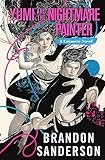
Editors Reads Verdict
Yumi and the Nightmare Painter is Sanderson's most explicitly romantic novel and his most culturally specific world-building, building two alien civilizations — one of geothermal heat and ritual, one of perpetual darkness and art — with genuine imagination. The dual-protagonist structure is the Secret Projects' most ambitious, and the climax earns its emotional weight through careful character development across 460 pages.
What We Loved
- The two worlds — Yumi's and Painter's — are among Sanderson's most culturally distinct and imaginatively realized
- The romance is Sanderson's most fully developed, given space and time to develop rather than being incidental
- The mystery of how the two protagonists are connected creates genuine dramatic tension
- The art-based magic system on Painter's world is thematically integrated in unusual ways
Minor Drawbacks
- The slower pace of the dual world-building may test readers expecting Sanderson's typical propulsive plotting
- Some cultural elements of Yumi's world require patient reading before they fully cohere
- The villain's nature, once revealed, is less surprising than the book's mysteries suggest
Key Takeaways
- → Cultural specificity in world-building — ritual, art, obligation — creates richer characters than generic settings
- → Loneliness is the same across different kinds of duty and different kinds of darkness
- → Art as a defense against literal darkness is fantasy world-building doing genuine thematic work
- → What two very different people can learn from each other is often more interesting than either alone
- → Duty and desire are not always opposed — understanding their relationship is part of maturity
| Author | Brandon Sanderson |
|---|---|
| Publisher | Dragonsteel Entertainment |
| Pages | 464 |
| Published | September 12, 2023 |
| Language | English |
| Genre | Fantasy, Epic Fantasy, Fiction |
| Difficulty | Intermediate |
| Best For | Cosmere readers interested in the Secret Projects; romance readers who want fantasy depth; fans of character-driven stories with unusual settings. |
How Yumi and the Nightmare Painter Compares
Yumi and the Nightmare Painter at a glance against 3 similar books readers weigh alongside it.
| Book | Author | Rating | Best for |
|---|---|---|---|
| Yumi and the Nightmare Painter (this book) | Brandon Sanderson | ★ 4.5 | Cosmere readers interested in the Secret Projects |
| The Final Empire | Brandon Sanderson | ★ 4.6 | Fantasy readers looking for innovative magic systems and tightly plotted epic |
| The Sunlit Man | Brandon Sanderson | ★ 4.4 | Cosmere readers who want to see future developments in the universe |
| The Way of Kings | Brandon Sanderson | ★ 4.7 | Epic fantasy readers ready for a 1,000-page commitment who want the most |
Two Worlds Apart
Yumi and the Nightmare Painter is structurally unusual among Sanderson’s novels: two protagonists, two worlds, two magic systems, two tone registers that must somehow harmonize into a single story. It is the most ambitious of the Secret Projects and the one that most clearly demonstrates what Sanderson can do when he is writing outside the structural demands of a major series.
Yumi is a yoki-hijo — a holy girl — on a world of constant geothermal activity, where the practice of stacking stones in precise configurations summons powerful spirits. Her life is one of rigid ritual obligation: she is carried everywhere to prevent her feet from touching the ground, her schedule is prescribed down to the minute, and her spiritual gift comes at the cost of almost all personal autonomy. She is deeply alone in the middle of constant attention.
Painter is a nightmare painter on a world of perpetual darkness — a city lit by artificial light, its outskirts constantly threatened by nightmare creatures that his art can hold back, if he paints them correctly and quickly enough. He is mediocre at his job, lonely in different ways from Yumi, and deeply uncertain about whether what he does matters.
The Art of Connection
When Yumi and Painter’s minds somehow merge across their two worlds — each inhabiting the other’s life on alternate days — the fish-out-of-water dynamics are immediate and funny, but Sanderson is more interested in what each learns from being forced to inhabit the other’s experience. Yumi discovers freedom; Painter discovers purpose. Their growing understanding of each other, mediated through worlds they didn’t choose and situations they didn’t ask for, is the most carefully developed romance in any Sanderson novel.
The book takes its time with this — 464 pages for a standalone is more space than Sanderson usually gives romance, and he uses it well.
Nightmare Painting
The magic of Painter’s world — identifying nightmare creatures by painting them before they solidify into reality — is the Secret Projects’ most unusual system. Art as defense, creation as containment, the brush as weapon: these metaphors are doing real work alongside their functional plot roles. The nightmare painters as a profession, their guild structure, their attitudes toward mastery and mediocrity, all form a cultural portrait that gives Painter’s world genuine depth.
Our rating: 4.5/5 — Sanderson’s most fully realized romance and his most culturally specific world-building, earning its emotional climax through patient character development across two beautifully alien worlds.
Reading Guides
- Brandon Sanderson Cosmere Reading Order: The Complete Guide (2026)
- Brandon Sanderson Books in Order: The Complete Cosmere Reading Guide (2026)
The Secret Projects as Experiments
Among the four Secret Projects, Yumi and the Nightmare Painter is the one that most clearly reflects Sanderson allowing himself to do something different from his usual mode. The slower pace, the romance as central rather than incidental, the two-world structure with no shared geography, the cultural specificity of both settings — these are choices that would be difficult to make in a series with an established readership and a genre contract to honor.
The Secret Projects format gave Sanderson the freedom to write novels whose commercial profile was less predictable, backed by a direct relationship with his most dedicated readers rather than the expectations of a traditional publishing market. Yumi is the most direct expression of this freedom: a novel that is built around romance and cultural specificity in ways that Sanderson’s Cosmere novels typically are not.
Japanese Cultural Influences in Yumi’s World
Yumi’s world draws on Japanese aesthetic and cultural traditions in ways that are specific rather than decorative. The yoki-hijo practice — the rituals of stone stacking, the restrictions on contact with the ground, the elaborate social protocols surrounding a holy figure — reflects a real engagement with the cultural logic of these traditions rather than surface borrowing.
Sanderson has spoken about the research that went into the cultural elements of Yumi’s world, and the result is a setting that feels genuinely other rather than pseudo-medieval-European with different names. The specific character of Yumi’s loneliness — the isolation that comes from being venerated rather than known — is inseparable from the cultural context that creates it.
The Hoid Narration
Like Tress of the Emerald Sea, Yumi and the Nightmare Painter is narrated by Hoid — the Cosmere’s recurring wandering figure who here adopts a storyteller’s voice, addressing the reader directly and acknowledging that he is constructing a narrative rather than simply reporting events. The specific texture of Hoid’s narration in this book is different from his Tress voice: warmer in some places, more melancholy in others, shaped by what he knows about the worlds he is describing and what he chooses not to say.
For Cosmere readers, Hoid’s presence in the Secret Projects is itself meaningful: his choice to tell these specific stories, his investment in these specific people, reflects something about what he values and what he considers important. The narration is not just a stylistic choice but a character choice with implications.
The Nightmare Painters’ Guild
The professional world of the nightmare painters — their hierarchy, their training, their relationships with each other, the specific competitive and cooperative dynamics of a guild defined by its relationship to a threat — is one of the most developed professional cultures in any Sanderson novel of this length. Painter’s position within this culture, his mediocre reputation, his relationships with colleagues who are more and less talented, all ground his arc in a social reality that makes his development feel earned rather than predetermined.
Frequently Asked Questions
What is "Yumi and the Nightmare Painter" about?
Yumi is a yoki-hijo on a world of geothermal heat, summoning spirits through elaborate rituals. Painter is an artist on a world of perpetual darkness, holding back nightmare creatures with his brush. When their lives inexplicably intersect, each must learn from the other while solving the mystery of their connection.
Who should read "Yumi and the Nightmare Painter"?
Cosmere readers interested in the Secret Projects; romance readers who want fantasy depth; fans of character-driven stories with unusual settings.
What are the key takeaways from "Yumi and the Nightmare Painter"?
Cultural specificity in world-building — ritual, art, obligation — creates richer characters than generic settings Loneliness is the same across different kinds of duty and different kinds of darkness Art as a defense against literal darkness is fantasy world-building doing genuine thematic work What two very different people can learn from each other is often more interesting than either alone Duty and desire are not always opposed — understanding their relationship is part of maturity
Is "Yumi and the Nightmare Painter" worth reading?
Yumi and the Nightmare Painter is Sanderson's most explicitly romantic novel and his most culturally specific world-building, building two alien civilizations — one of geothermal heat and ritual, one of perpetual darkness and art — with genuine imagination. The dual-protagonist structure is the Secret Projects' most ambitious, and the climax earns its emotional weight through careful character development across 460 pages.
Ready to Read Yumi and the Nightmare Painter?
Check the current price on Amazon.
Check Price on Amazon (paid link)Prices and availability are subject to change. See Amazon for current price.
Review last updated: