15 Books Like Game of Thrones: Best Epic Fantasy (2026)
Can't wait for Winds of Winter? These 15 epic fantasy series offer the same political intrigue, moral complexity, and world-scale stakes.

George R.R. Martin’s A Song of Ice and Fire redefined what epic fantasy could be. Before A Game of Thrones, the genre’s default mode was the hero’s journey: chosen protagonist, clear evil, decisive victory. Martin replaced this with something far more uncomfortable — a world in which decent people are killed early, power belongs to the ruthless, and history is written by survivors rather than heroes. The political scheming, the POV structure that forces you to empathize with characters you’d prefer to hate, and the sense that no one is safe made ASOIAF the most discussed fantasy series of the past three decades.
While you wait for The Winds of Winter, these 15 series and novels will give you the same combination of moral complexity, political density, and epic scope that makes Martin’s world so hard to leave.
The Longest, Densest Series
#1 — The Wheel of Time by Robert Jordan (completed by Brandon Sanderson)
Fourteen books, over four million words, and one of the most elaborately constructed fantasy worlds in the genre’s history. The Eye of the World opens the series with a recognizably Tolkienian setup — young people from a rural village swept into a conflict between Light and Shadow — but Jordan rapidly expands outward into a world of dozens of nations, political factions, competing magical traditions, and hundreds of named characters. The later books are slower, but the payoff of the final trilogy (completed by Sanderson after Jordan’s death) is enormous.
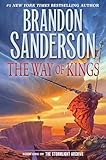
#2 — The Stormlight Archive by Brandon Sanderson
Sanderson’s masterwork-in-progress is planned for ten volumes, of which four are published. The Way of Kings introduces a world scarred by supernatural storms, a rigid caste system, a war being fought for reasons that may be entirely false, and a mystery about the nature of history itself. The scale is ASOIAF-adjacent: multiple POV characters across different social strata, political maneuvering at every level, and a sense that the author has planned the entire arc down to its final pages. Sanderson’s plotting is tighter than Martin’s, his characters differently but equally compelling.
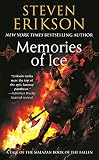
#3 — Malazan Book of the Fallen by Steven Erikson
The most demanding series on this list — and possibly the most rewarding for readers willing to meet it. Gardens of the Moon opens mid-action with no orientation: you are dropped into a military campaign on a world with ten thousand years of history, multiple intelligent species, dozens of gods, and a magic system of genuine complexity. Erikson does not explain. He trusts that the world will eventually cohere, and it does. The Malazan series is the only fantasy epic that genuinely matches ASOIAF for political cynicism, mortality, and scope.
Morally Grey Characters and Political Scheming
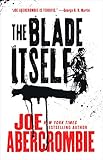
#4 — The First Law Trilogy by Joe Abercrombie
Abercrombie is the writer most directly in dialogue with Martin. The Blade Itself opens the trilogy with three characters: a torturer who is one of the most original POV characters in the genre, a nobleman soldier who is more complex than he appears, and a barbarian from the frozen north with a quest. The First Law is relentlessly anti-heroic: Abercrombie systematically dismantles the assumptions of quest fantasy and puts nothing comfortable in their place. The ending of the trilogy is one of the most debated in modern fantasy.
#5 — The Lies of Locke Lamora by Scott Lynch
The Gentleman Bastards — a gang of con artists operating in a fantasy analog of Venice — pull off increasingly elaborate schemes while navigating the politics of a city divided between legitimate and criminal power. The Lies of Locke Lamora is funnier than Game of Thrones and its violence is more operatic, but the moral texture is similar: Locke is charming and genuinely heroic in some lights, self-serving and reckless in others. The ensemble is as well-realized as any in the genre.
#6 — A Little Hatred by Joe Abercrombie
The first book in Abercrombie’s Age of Madness trilogy, set in the same world as the First Law but a generation later, as the industrial revolution arrives in the Union. A Little Hatred introduces a new generation of characters against a backdrop of class warfare, imperial overstretch, and the legacy of the previous trilogy’s choices. Abercrombie has deepened everything: the politics are more complex, the world has changed in ways that feel real, and the moral questions are harder.
World-Building as the Point
#7 — Tigana by Guy Gavriel Kay
A province called Tigana has been magically erased from memory — conquered by a sorcerer-king who destroyed its very name so completely that no one outside its borders can even hear it. A band of survivors plans to restore it. Kay’s novel is the most emotionally affecting book on this list: the politics of memory, identity, and cultural survival are handled with a depth that Martin rarely attempts. Tigana is a standalone, which makes it more accessible than the multi-volume epics.
#8 — The Book of the New Sun by Gene Wolfe
Set in a far future so distant that it reads as fantasy, Wolfe’s four-volume novel follows Severian, a torturer’s apprentice who is exiled for showing mercy, through a dying civilization at the end of the world. Wolfe’s narrator is unreliable in ways that become clearer on rereading, and the political intrigue of the Autarchy is as labyrinthine as anything in ASOIAF. This is the most literary series on this list and the one that will yield most to patient rereading.
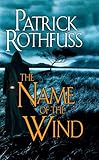
#9 — The Name of the Wind by Patrick Rothfuss
Kvothe is the most legendary figure of his age, now hiding in plain sight as an innkeeper, and this is his story told in his own voice. Rothfuss constructs a world with genuine internal consistency — the University’s sympathy magic has rules as rigorous as any scientific system — and Kvothe’s voice is magnetic. The political dimensions deepen across the series, and the question of how a legend is constructed is, at its core, what Rothfuss is examining.
Military and Gritty Fantasy
#10 — The Black Company by Glen Cook
A mercenary company in the service of a succession of evil overlords, narrated by the company’s annalist in a style that reads like a soldier’s journal. Cook’s novel is the grandmother of grimdark fantasy — written in the 1980s, before the genre had a name. The Black Company has no heroes, only survivors; its loyalties are to the company itself rather than any cause. Martin has cited Cook as an influence, and it shows.
#11 — Prince of Thorns by Mark Lawrence
Jorg Ancrath is thirteen years old, the son of a king, and the leader of a band of outlaws. He is also, by any conventional standard, a villain. Lawrence’s Broken Empire trilogy follows Jorg’s campaign to take the throne of the empire and is told entirely from his perspective — which means spending three books inside the head of someone who does genuinely terrible things. The worldbuilding conceals a revelation that reframes everything; the morality is as dark as Abercrombie at his most unsparing.
For Readers Who Want More Entry Points
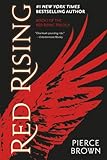
#12 — Red Rising by Pierce Brown
Darrow is a Red, one of the lowest castes in the color-coded hierarchy of a colonized Mars. When he infiltrates the Gold ruling class, he must navigate their brutal political and social games. Brown blends the class warfare and political intrigue of ASOIAF with a propulsive, YA-adjacent pacing that makes the series one of the most accessible on this list. The trilogy escalates steadily, and the later books match Martin for willingness to kill characters the reader has come to love.
#13 — The Goblin Emperor by Katherine Addison
The half-goblin, half-elf youngest son of an emperor finds himself suddenly on the throne after his father and brothers are killed in an airship crash. The Goblin Emperor is the anti-grimdark: Maia is decent, kind, and entirely unprepared for power, and the novel follows his attempt to rule ethically within a system designed for the ruthless. If ASOIAF exhausts you with its cruelty, this is the corrective — but the political intrigue is no less real.
#14 — The Sword of Kaigen by M.L. Wang
A warrior mother on a peninsula whose culture is built on the myth of its own invincibility discovers that the history she was raised to believe is a lie. Wang’s novella packs ASOIAF-level political revelation and personal devastation into a fraction of the page count. The prose is precise, the fight scenes are extraordinary, and the exploration of how myths of national greatness are manufactured and maintained is among the sharpest in the genre.
#15 — Assassin’s Apprentice by Robin Hobb (The Farseer Trilogy)
FitzChivalry Farseer is the royal bastard of a prince who renounced his throne — which makes Fitz an embarrassment, a political instrument, and eventually an assassin trained in secret by the king’s spymaster. Hobb’s trilogy has the dynastic scheming and political betrayal that ASOIAF readers crave, but delivers it at close quarters: where Martin operates at the scale of kingdoms, Hobb works inside the head of one deeply compromised individual. The Farseer Trilogy is complete, which gives it a significant advantage over Martin’s unfinished series — and Hobb has continued building the same world across six further trilogies, all of them finished.
How to Choose Your Next Read
If you want the fullest immersion: Malazan or Wheel of Time.
If you want the closest moral match: The First Law or The Black Company.
If you want tighter plotting: The Stormlight Archive or The Lies of Locke Lamora.
If you want something shorter first: Tigana or The Sword of Kaigen.
George R.R. Martin: All Books in Order
For A Song of Ice and Fire in publication order, where to start, and George R.R. Martin’s full bibliography, see our George R.R. Martin Books in Order guide.
For the Best Fantasy Books
For the definitive guide to fantasy fiction — from Tolkien and Le Guin to Brandon Sanderson and George R.R. Martin — see our Best Fantasy Books of All Time list.
Affiliate disclosure: Links to Amazon on this page are affiliate links. We earn a small commission at no extra cost to you. This does not influence our editorial recommendations.
Frequently Asked Questions
What fantasy books are most similar to Game of Thrones?
The fantasy books most similar to Game of Thrones are The Blade Itself by Joe Abercrombie for gritty political realism, The Lions of Al-Rassan by Guy Gavriel Kay for civilisational-scale stakes, and The Name of the Wind by Patrick Rothfuss for literary ambition. Abercrombie is the closest tonal match and is the most recommended by Game of Thrones fans.
What should I read while waiting for Winds of Winter?
While waiting for Winds of Winter, the best options are The First Law trilogy by Joe Abercrombie, which shares the moral complexity and willingness to punish its characters, and the Mistborn series by Brandon Sanderson, which offers complete, finished story arcs. The Poppy War by R.F. Kuang delivers similar brutality and political scope in a China-inspired setting.
What books have the same political complexity as Game of Thrones?
The books that best match Game of Thrones in political complexity are The Lions of Al-Rassan by Guy Gavriel Kay, The Cursed Child and other works in the First Law universe by Joe Abercrombie, and the Malazan Book of the Fallen by Steven Erikson. Abercrombie is the most accessible; Erikson is the most ambitious but requires considerable patience.
What is a shorter fantasy series with the same feel as Game of Thrones?
For readers who want the Game of Thrones experience in a more manageable length, The First Law trilogy by Joe Abercrombie (3 books) is the best option. The Lies of Locke Lamora by Scott Lynch is a single volume with similar moral greyness. The Goblin Emperor by Katherine Addison offers political intrigue in a more hopeful key.