Books Like Mistborn: 12 Epic Fantasy Novels
Love Mistborn's intricate magic, heist structure, and subverted tropes? These 12 fantasy novels deliver the same qualities — inside the Cosmere and beyond.
Brandon Sanderson’s Mistborn trilogy is one of the defining achievements of contemporary epic fantasy — not because it is the most literary or the most emotionally complex, but because it does what fantasy does best with unusual rigour: it builds a coherent world, populates it with compelling characters, and constructs a magic system elegant enough that the rules themselves generate plot.
If you have finished the Original Trilogy — or even just The Final Empire — and are asking what to read next, the answer depends on which quality you want to chase. The magic-system precision is most closely matched within Sanderson’s own Cosmere. The heist structure and ensemble plotting draws comparison to Scott Lynch. The political complexity and moral ambiguity in the face of revolutionary change connects to Joe Abercrombie. Below is a guide to all of them.
Start Here: The Mistborn Trilogy
Before branching out, there is the rest of the series to address.
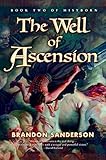
The Well of Ascension — Brandon Sanderson (Mistborn #2)
The political novel in the trilogy. After the fall of the Lord Ruler, Vin and Elend must hold a fragile new government together against three besieging armies while Vin is hunted by a Mistborn of unusual capability. Sanderson shifts the genre register here — from heist to siege — and the magic system begins revealing new dimensions. The pacing is slower than The Final Empire, but the world-building reward is substantial.
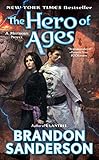
The Hero of Ages — Brandon Sanderson (Mistborn #3)
The conclusion. The third volume resolves the metaphysical mysteries seeded across the first two books and pays off what Sanderson has been building in the series’ cosmological architecture. The ending is among the most satisfying in commercial fantasy — ambitious, emotionally earned, and structurally coherent. Read it last and do not spoil it for yourself.
The Cosmere: Sanderson’s Other Worlds
The Mistborn series is set within Sanderson’s wider shared universe, the Cosmere. Each world has its own magic system; all share an underlying metaphysical framework. The Cosmere novels can be read independently, but the connections deepen everything.
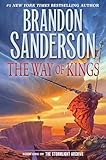
The Way of Kings — Brandon Sanderson (Stormlight Archive #1)
The most ambitious thing Sanderson has attempted. A thousand-page epic set on a world ravaged by Highstorms, where ancient armour and weapons of enormous power have been lost across history, and three characters — a soldier, a scholar, and a thief — converge toward a mystery that spans millennia. The magic system (Stormlight, Surgebinding) is more complex than allomancy, introduced more gradually, and ultimately more awe-inspiring. Where Mistborn is a heist, The Way of Kings is an epic in the classical sense: it is trying to be the defining fantasy series of the century, and it may succeed.
Words of Radiance — Brandon Sanderson (Stormlight Archive #2)
The second Stormlight novel consolidates and accelerates. The central characters have been established; now Sanderson turns up the stakes and begins delivering payoffs. Most readers find it superior to The Way of Kings, and they are not wrong — though the first volume’s foundational work makes this one possible.
Warbreaker — Brandon Sanderson
A standalone Cosmere novel set in a world where colour is magic currency: the dead can be returned to life as Returned, worshipped as gods, and the system of Breath — the life force that powers BioChromatic magic — can be traded and accumulated. Warbreaker is Sanderson at his most playful: the magic is visually inventive, the plot turns on political intrigue rather than military conflict, and two princesses at the centre of the story are among his best characters. An ideal second Cosmere novel for readers who want something shorter than Stormlight.
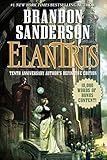
Elantris — Brandon Sanderson
Sanderson’s debut novel. A city that was once a place of divine magic has fallen — its inhabitants transformed but not killed, trapped in bodies that feel pain without dying. Elantris is slighter than his later work, and the magic system less fully developed, but it shows Sanderson’s core instincts already in place: the systematic approach to magic, the political intrigue, the characters who solve problems through intelligence rather than violence. A worthwhile entry for readers who want to understand how the Cosmere began.
Beyond the Cosmere: What to Read Next
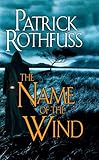
The Name of the Wind by Patrick Rothfuss (Kingkiller Chronicle #1)
The most prose-literary of the post-Tolkien epic fantasy writers, Rothfuss tells the story of Kvothe — perhaps the most famous man in the world, now hiding as an innkeeper, recounting his life to a chronicler. The magic system (sympathy) is rigorous in a different way than Sanderson’s: more alchemical, more about understanding true names and proportions than about physical properties of metals. The prose is the draw: The Name of the Wind has a literary quality that Sanderson’s work does not attempt and achieves something different as a result. Note that the third book in the trilogy remains unpublished — a consideration worth weighing before committing. The first two volumes are, on their own terms, extraordinary.
The Lies of Locke Lamora by Scott Lynch (Gentleman Bastard #1)
For readers drawn to the heist mechanics of The Final Empire, Scott Lynch’s debut is the natural next step. The Gentleman Bastards are a crew of thieves in a fantasy Venice analogue, operating a long con against the city’s nobility while being squeezed by a mysterious stranger. Lynch’s dialogue is the sharpest in the genre; the Camorr world-building is textured and specific; the plot manages to be both an elaborate puzzle and a story with genuine emotional stakes. More violent and darker in tone than Sanderson, but with the same satisfaction of watching intelligent people execute a clever plan.
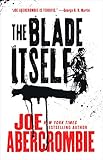
The Blade Itself by Joe Abercrombie (First Law #1)
The necessary corrective for anyone who has noticed that Sanderson’s characters tend toward the heroic. Abercrombie is the defining voice of grimdark fantasy — a subgenre interested in what epic fantasy looks like when stripped of its moral idealism. The Blade Itself follows a disgraced hero, a torturer who understands his work as a moral necessity, and a Northern barbarian. The First Law trilogy systematically deconstructs every fantasy trope Sanderson builds on. Read Sanderson first, then Abercrombie — in that order, the contrast illuminates both.
The Black Prism by Brent Weeks (Lightbringer #1)
The closest stylistic analogue to Sanderson in the broader market. Weeks constructs magic systems with the same explicit-rules approach — here, drafting: the ability to use light to create physical matter, with each colour of the spectrum having different properties and costs. The Chromeria, a religious empire built around this power, is a fully realised political institution. The Black Prism has Sanderson’s structural clarity and world-building ambition with a slightly more emotionally complex register.
The Final Empire Again — Your Second Read
This is not a joke entry. The Final Empire, read a second time after completing the trilogy, is a different novel. The foreshadowing Sanderson plants in chapter one, the specific wording of certain prophecies, the things characters say about magic that have a double meaning only visible in retrospect — none of it is visible on first read. Sanderson designs his books to reward rereading in a way that few authors bother with. The second read is not obligatory, but it is revelatory.
The Cosmere, taken whole, is the most ambitious single connected project in the history of popular fantasy. Mistborn is the best starting point — contained, brilliant, constructed with unusual elegance — but it is also an entrance to something much larger. Where you go from here depends on what you loved most. Follow the magic systems into Stormlight. Follow the prose into Rothfuss. Follow the heist into Scott Lynch. All three paths are worth walking.
Frequently Asked Questions
What makes Mistborn unique compared to other fantasy?
Mistborn distinguishes itself through three interlocking qualities: its magic system (allomancy) is governed by explicit, consistent rules that create real narrative tension rather than allowing authorial escape hatches; its premise inverts the chosen-one fantasy convention by asking what happens when the Dark Lord wins; and its heist structure gives the epic world-building a functional, propulsive plot engine. Most fantasy novels have one of these qualities. Mistborn has all three working simultaneously.
Should I read Mistborn or The Way of Kings first?
For most readers, Mistborn is the better entry point to the Cosmere. The Final Empire is shorter than The Way of Kings (672 vs 1,007 pages), its magic system is introduced more elegantly, and its standalone first-book structure means the investment is lower. The Way of Kings is a deeper and more ambitious work, but it demands more patience. Read Mistborn first, then tackle Stormlight once you trust Sanderson's instincts.
How many Mistborn books are there?
There are two complete trilogies and one ongoing series. The Original Trilogy — The Final Empire, The Well of Ascension, The Hero of Ages — is set in the Lord Ruler's world. The Wax and Wayne series (four books: Alloy of Law, Shadows of Self, Bands of Mourning, The Lost Metal) is set three hundred years later in a Victorian-era version of the same world. A third era is planned. All are set within Sanderson's wider Cosmere universe.
What order should I read Mistborn in?
Read the Original Trilogy first — The Final Empire, The Well of Ascension, The Hero of Ages — in order. The Wax and Wayne series (Alloy of Law onwards) makes much more sense having completed the original three, as it operates partly as a legacy sequel and partly as a tonal experiment in a different register. Do not start with The Alloy of Law despite its shorter length — you will miss the full weight of what the series has built.