Editors Reads Verdict
Elantris is a debut novel with debut novel flaws — the prose is less assured than Sanderson's later work, the political machinations occasionally strain credulity — but the core premise is original, the magic system is intricate, and Sarene is one of Sanderson's best early protagonists. The mystery structure works, and the resolution is genuinely clever.
What We Loved
- The fallen-city-of-gods premise is immediately compelling and unusual in the genre
- Sarene is a fully realized female protagonist with intelligence and agency
- The mystery of what broke Elantris has a satisfying, fair solution
- The AonDor magic system — symbol-based, geometric — is unlike anything Sanderson used later
Minor Drawbacks
- The prose is noticeably less polished than Sanderson's mature work
- Hrathen's conversion arc, while interesting, follows a predictable trajectory
- The political scheming of the secondary characters is sometimes cartoonish
- Raoden's optimism can read as implausible given his circumstances
Key Takeaways
- → Hope and community building are survival strategies, not naive responses to catastrophe
- → Religious systems that serve power can be manipulated back against those who wield them
- → A magic system based on symbols and geometry creates uniquely visual narrative possibilities
- → Debut novels often reveal more about a writer's thematic preoccupations than polished later work
- → Political power that depends on information asymmetry is always vulnerable to someone who studies it
| Author | Brandon Sanderson |
|---|---|
| Publisher | Tor Books |
| Pages | 496 |
| Published | April 21, 2005 |
| Language | English |
| Genre | Fantasy, Epic Fantasy, Fiction |
| Difficulty | Intermediate |
| Best For | Sanderson completionists working through the Cosmere in publication order; fantasy readers interested in his development as a writer; fans of politically-minded fantasy with a mystery core. |
How Elantris Compares
Elantris at a glance against 3 similar books readers weigh alongside it.
| Book | Author | Rating | Best for |
|---|---|---|---|
| Elantris (this book) | Brandon Sanderson | ★ 4.2 | Sanderson completionists working through the Cosmere in publication order |
| The Final Empire | Brandon Sanderson | ★ 4.6 | Fantasy readers looking for innovative magic systems and tightly plotted epic |
| The Name of the Wind | Patrick Rothfuss | ★ 4.6 | Literary fiction readers willing to try fantasy, existing fantasy readers who |
| The Way of Kings | Brandon Sanderson | ★ 4.7 | Epic fantasy readers ready for a 1,000-page commitment who want the most |
The City That Fell
Before the Mistborn trilogy, before the Stormlight Archive, before Brandon Sanderson had any significant readership, there was Elantris. His debut novel is set in a world where a magical transformation — the Shaod — used to randomly strike individuals and elevate them to godhood, turning them into the luminous, all-powerful inhabitants of the city of Elantris. Ten years ago, the Shaod broke. Now it still transforms people, but instead of gods it creates shambling, pain-wracked undead who feel every wound without healing and must survive on almost nothing in the ruins of the city that once celebrated them.
The premise is remarkable for a debut: a city of fallen gods, a magic system gone wrong, a society built around the assumption of divine power that has had to rebuild its theology around its absence. This is the kind of high-concept premise that Sanderson would develop with more craft in his later work, but even here it drives the story with genuine momentum.
Three Perspectives
Sanderson tells Elantris from three viewpoints. Raoden is the prince of Arelon who undergoes the Shaod on the eve of his wedding and is secretly deposited in Elantris rather than acknowledged as dead. Sarene is his betrothed — a princess from a foreign nation who arrives to find her fiancé officially dead and must navigate a hostile court while trying to understand what is actually happening. Hrathen is a priest of the rival religion who has been sent to convert the nation within three months or prepare it for conquest.
Of the three, Sarene is the most successful — a diplomatic, athletic, politically shrewd woman who is consistently underestimated and uses that underestimation as a weapon. She is Sanderson’s best female protagonist from this period and holds up well even against his later work.
AonDor and the Geometry of Magic
The magic of Elantris — AonDor — is based on drawing precise geometric symbols called Aons, which trigger magical effects based on their shapes. The system is broken because the land itself changed ten years ago and the Aons no longer correspond to the geographic reality they were drawn to represent. This is a genuinely original premise for a broken magic system, and its resolution requires the kind of elegant logical solution that Sanderson would later make his signature.
A Debut Worth Reading
Elantris is not Sanderson’s best book. It is the book that earned him the chance to write his best books, and reading it with knowledge of what came after illuminates the thematic preoccupations he would develop across twenty years: the relationship between religion and political power, the way broken systems can be understood and repaired through careful observation, and the capacity of communities to sustain hope under conditions designed to eliminate it.
Our rating: 4.2/5 — A debut novel with significant flaws and a genuinely original premise, notable for the intelligence of its protagonist and the elegance of its magic system resolution.
Reading Guides
- Brandon Sanderson Cosmere Reading Order: The Complete Guide (2026)
- Brandon Sanderson Books in Order: The Complete Cosmere Reading Guide (2026)
The Debut That Earned the Career
Elantris holds a particular place in Sanderson’s bibliography as the novel that opened the door. Published by Tor Books in April 2005, it was his first novel to find a major publisher, after years of writing novels that did not sell. Sanderson has been open about the fact that he wrote twelve novels before finding publication, and Elantris was the one that broke through.
Reading it with knowledge of what came after reveals both how much the novel already contained Sanderson’s essential interests — the broken magic system awaiting repair, the political intrigue driven by information asymmetry, the faith and doubt in tension — and how raw those interests were in their first expression. The prose is more functional than polished, the pacing less controlled, the characterization less specific. But the architecture is recognizably his.
AonDor and the Broken System
The magic system of Elantris — AonDor, the drawing of geometric Aon symbols to produce magical effects — is notable in Sanderson’s catalog precisely because it is broken. The entire premise of the novel rests on the fact that the magic stopped working, that the Shaod which used to elevate people to godhood now only creates pain-wracked undead, and that the reason for the break is a mystery that Raoden, trapped in Elantris, eventually solves.
This is an inversion of Sanderson’s usual approach: rather than establishing a working system and exploring its possibilities, Elantris begins with the aftermath of failure and works backward to the cause. The solution — that the geographic reality the Aon symbols represented changed when the mountains shifted, and the symbols must be redrawn to match the current landscape — is the kind of elegant, logical resolution that Sanderson would later make his signature. It was his first published working-out of this particular instinct.
Hrathen and the Believer Who Doubts
Of the three viewpoint characters, Hrathen is often the most interesting to modern readers. A priest of Fjordell sent to convert the nation of Arelon within three months or prepare it for military conquest, he is intelligent enough to see through most of the political situation and principled enough to be genuinely uncomfortable with what he is doing. His faith in Jaddeth is real, complicated by the means his church uses to advance that faith, and the tension between belief and method is handled with more nuance than Sanderson had yet achieved in his unpublished work.
The trajectory of his arc — from manipulator to something more honest — follows predictable lines, but the thinking he does along the way is genuinely interesting.
The Cosmere Context
Elantris is set on the world of Sel, one of the Cosmere’s planets and one whose specific metaphysical situation — the nature of its Shard-based magic, the fate of its divine forces — is developed more fully in later novellas and short stories. Readers approaching Elantris as Cosmere beginners will find a complete and self-contained story; readers approaching with broader Cosmere knowledge will find additional layers that enrich the AonDor magic in particular.
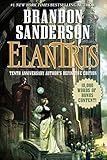
The tenth anniversary edition referenced in the title adds annotations and retrospective material from Sanderson about the novel’s development, making it the preferred version for readers interested in the craft elements alongside the story.
Frequently Asked Questions
What is "Elantris" about?
In a world where a magical city of gods has fallen and its inhabitants are cursed with a living death, a prince, a princess, and a priest navigate politics, religion, and the mystery of what destroyed Elantris.
Who should read "Elantris"?
Sanderson completionists working through the Cosmere in publication order; fantasy readers interested in his development as a writer; fans of politically-minded fantasy with a mystery core.
What are the key takeaways from "Elantris"?
Hope and community building are survival strategies, not naive responses to catastrophe Religious systems that serve power can be manipulated back against those who wield them A magic system based on symbols and geometry creates uniquely visual narrative possibilities Debut novels often reveal more about a writer's thematic preoccupations than polished later work Political power that depends on information asymmetry is always vulnerable to someone who studies it
Is "Elantris" worth reading?
Elantris is a debut novel with debut novel flaws — the prose is less assured than Sanderson's later work, the political machinations occasionally strain credulity — but the core premise is original, the magic system is intricate, and Sarene is one of Sanderson's best early protagonists. The mystery structure works, and the resolution is genuinely clever.
Ready to Read Elantris?
Check the current price on Amazon.
Check Price on Amazon (paid link)Prices and availability are subject to change. See Amazon for current price.
Review last updated: