Discworld Books in Order: How to Read Terry Pratchett's Series (2026)
Terry Pratchett's Discworld spans 41 novels across multiple sub-series. This guide explains the best reading order, which sub-series to start with, and which books are essential.
Terry Pratchett published 41 Discworld novels between 1983 and 2015. They sold over 85 million copies worldwide, made him the UK’s best-selling author of the 1990s, and produced what many readers consider the finest sustained comic fantasy series ever written. If you’ve never read Pratchett and are trying to work out where to begin, the sheer volume of the series can feel paralyzing. If you’ve read one or two and aren’t sure what to read next, the overlapping sub-series make the whole thing look more complicated than it is.
This guide solves both problems. The key thing to understand about Discworld is that you almost certainly should not start with book one — and you absolutely do not need to read the series in publication order. Pratchett designed it so you could jump in almost anywhere, as long as you understand which sub-series you’re entering.
Key Discworld Books at a Glance
| # | Title | Year | Sub-Series |
|---|---|---|---|
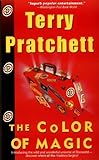
| 1 | The Colour of Magic | 1983 | Rincewind #1 |
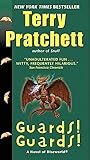
| 8 | Guards! Guards! | 1989 | City Watch #1 — best entry point |
| 13 | Small Gods | 1992 | Standalone — best single novel |
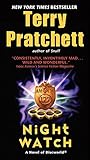
| 29 | Night Watch | 2002 | City Watch #6 — masterwork |
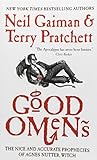
| — | Good Omens | 1990 | Non-Discworld co-written with Gaiman |
Best starting point: Guards! Guards! for most readers, or Small Gods for a standalone. Do not start with Book 1.
The Key Insight: Read by Sub-Series, Not Publication Order
Discworld is set on a flat disc balanced on the backs of four elephants standing on a giant turtle called Great A’Tuin, sailing through space. The setting is consistent across all 41 novels. But the books are grouped into loosely connected sub-series following different sets of characters, and those sub-series can be read independently of one another.
There are five major sub-series and a number of standalones. The standalones include some of the series’ finest novels. The sub-series are internally sequential — later books build on earlier ones — but you don’t need to have read the Witches sub-series to read the Death sub-series, and so on.
Here’s what you actually need to know about each one.
The Sub-Series, Explained
The City Watch (Start Here: Guards! Guards!)
The City Watch novels follow Sam Vimes, commander of Ankh-Morpork’s Night Watch, and his colleagues in the city’s police force. They are the most consistently excellent sub-series in Discworld, combining genuine detective plotting with Pratchett’s sharpest social satire and his most fully developed characters.
Guards! Guards! (Discworld #8) is the first City Watch novel and the best entry point into the entire Discworld series for most readers. A secret society attempts to summon a dragon and install a puppet king; Sam Vimes and his small, incompetent Watch are all that stand between the city and catastrophe. It introduces Vimes — one of the great characters in British comic fiction — and establishes everything that makes the Watch sub-series work: the satirical target (power, aristocracy, the nature of “legitimate” authority), the warmth underneath the comedy, and the moral seriousness Pratchett always maintained beneath the jokes.
Night Watch (Discworld #29) is the masterwork of the sub-series and possibly of the entire Discworld canon. Vimes travels back in time to the Ankh-Morpork he knew as a young constable, during a bloody revolution, and must play the role of the mentor he himself once had. It is the point at which Discworld stopped being merely excellent comedy and became serious literature. Read the earlier Watch novels first — Guards! Guards!, Men at Arms, Feet of Clay, Jingo, The Fifth Elephant — and Night Watch will hit with full force.
The Witches (Start: Equal Rites or Wyrd Sisters)
The Witches sub-series follows Granny Weatherwax, Nanny Ogg, and (later) Magrat Garlick and Agnes Nitt — three witches living in the Ramtops mountains of the Discworld. The Witches novels are Pratchett’s most explicitly literary sub-series, drawing on Shakespeare, folklore, and fairy tale with a precision that rewards close reading.
Equal Rites (Discworld #3) is technically the first appearance of Granny Weatherwax, though she’s slightly different here than she becomes. Wyrd Sisters (Discworld #6) is the more natural entry point — it’s where the full Witches dynamic clicks into place, and it’s a direct engagement with Macbeth and Hamlet that doesn’t require any knowledge of those plays to enjoy.
Neither of these titles is currently in our catalogue, but they are widely available and essential Discworld reading.
Death (Start: Mort)
Death — the anthropomorphic personification of death, who speaks IN SMALL CAPITALS and has developed a troubling fondness for humanity — appears in almost every Discworld novel, but the Death sub-series follows him and his household directly.
Mort (Discworld #4) is the first Death novel and one of Pratchett’s most beloved books. Death takes on an apprentice — a gangly, idealistic young man named Mort — with predictably problematic results. It is a very good entry point for younger readers or anyone who wants something lighter than the Watch novels while still getting the full Pratchett experience.
Rincewind (Start: The Colour of Magic — With a Caveat)
Rincewind is a failed wizard who is very good at running away. He is the protagonist of the first two Discworld novels and appears throughout the series as a kind of comic anchor.
The Colour of Magic (Discworld #1) is the first Discworld novel, and it is — honestly — not the best place to start. Pratchett himself acknowledged this. The early Rincewind books are parodies of specific fantasy tropes that were fresher in 1983 than they are now; the characterisation is thinner than the later novels; and the comedy is broader. The Colour of Magic is worth reading once you’re already invested in Discworld, both as a historical document and because Rincewind is genuinely funny. But it should not be your first Discworld novel if what you want is Pratchett at his best.
Standalone Novels (Start: Small Gods — The Best Single Book in the Series)
Discworld contains around a dozen novels that don’t fit neatly into any sub-series. The finest of these — and arguably the finest novel in the entire 41-book canon — is Small Gods (Discworld #13).
Small Gods follows Brutha, a novice in the Church of Om, and Om himself — a god who has dwindled to near-powerlessness because almost no one truly believes in him anymore. It is Pratchett’s most sustained meditation on religious faith, institutional power, and the difference between genuine belief and the performance of orthodoxy. It requires no prior knowledge of Discworld whatsoever. If you want to read one Terry Pratchett novel to decide whether you like him, read Small Gods.
Other essential standalones include Pyramids (#7), Moving Pictures (#10), and Monstrous Regiment (#31) — the last of which is one of his sharpest and most emotionally complex novels, a military satire that becomes something far more serious.
The Honest Entry Point Recommendations
For most readers: start with Guards! Guards!
It is the best introduction to what mature Discworld actually feels like. The comedy is sharp, the plot is satisfying on its own terms, and Sam Vimes is an immediately compelling protagonist. You will want to read the rest of the Watch sub-series immediately, and from there the rest of Discworld opens naturally.
For literary readers or those who want a standalone: start with Small Gods
Small Gods is the novel that persuades readers who are skeptical of fantasy or of comic fiction. It is funny, but it is also genuinely about something — the abuse of religious institutional power, the small acts of courage that change history, what it means to believe anything. It has no series baggage whatsoever.
Do not start with The Colour of Magic unless you are a completist who wants to read every novel in publication order. It is not a representative sample of what Discworld became.
All 41 Discworld Novels: Publication Order
- The Colour of Magic (1983) — Rincewind #1
- The Light Fantastic (1986) — Rincewind #2
- Equal Rites (1987) — Witches #1
- Mort (1987) — Death #1
- Sourcery (1988) — Rincewind #3
- Wyrd Sisters (1988) — Witches #2
- Pyramids (1989) — Standalone
- Guards! Guards! (1989) — City Watch #1
- Eric (1990) — Rincewind #4
- Moving Pictures (1990) — Standalone
- Reaper Man (1991) — Death #2
- Witches Abroad (1991) — Witches #3
- Small Gods (1992) — Standalone
- Lords and Ladies (1992) — Witches #4
- Men at Arms (1993) — City Watch #2
- Soul Music (1994) — Death #3
- Interesting Times (1994) — Rincewind #5
- Maskerade (1995) — Witches #5
- Feet of Clay (1996) — City Watch #3
- Hogfather (1996) — Death #4
- Jingo (1997) — City Watch #4
- The Last Continent (1998) — Rincewind #6
- Carpe Jugulum (1998) — Witches #6
- The Fifth Elephant (1999) — City Watch #5
- The Truth (2000) — Standalone
- Thief of Time (2001) — Death #5
- The Last Hero (2001) — Rincewind #7
- The Amazing Maurice and His Educated Rodents (2001) — Standalone (Carnegie Medal winner)
- Night Watch (2002) — City Watch #6
- The Wee Free Men (2003) — Tiffany Aching #1
- Monstrous Regiment (2003) — Standalone
- A Hat Full of Sky (2004) — Tiffany Aching #2
- Going Postal (2004) — Moist von Lipwig #1
- Thud! (2005) — City Watch #7
- Wintersmith (2006) — Tiffany Aching #3
- Making Money (2007) — Moist von Lipwig #2
- Unseen Academicals (2009) — Standalone
- I Shall Wear Midnight (2010) — Tiffany Aching #4
- Snuff (2011) — City Watch #8
- Raising Steam (2013) — Moist von Lipwig #3
- The Shepherd’s Crown (2015) — Tiffany Aching #5
What Makes Discworld Special
The easy answer is that Pratchett was very funny — one of the funniest writers in the English language, capable of the kind of footnotes that make you laugh out loud on a bus and feel briefly embarrassed about it. But that is not why people reread Discworld in their thirties and find it more moving than they did at fifteen.
What makes Discworld endure is the moral seriousness underneath the comedy. Pratchett believed things. He believed that power corrupts and that the powerful routinely use the language of necessity to justify cruelty. He believed that small acts of human decency matter even when no one is watching. He believed that stories shape how people understand the world, and that bad stories — stories that make it easy to dehumanise the vulnerable — cause real harm. He was furious about this. The comedy in Discworld is the form that fury took.
Sam Vimes works because he is not simply a good man — he is a man who understands how easy it would be to become a bad one, and who has to fight himself constantly to remain on the right side. Granny Weatherwax works because her power is held in check only by her own ironclad sense of self-discipline, and she knows it. Small Gods works because it is genuinely about the way institutions capture and corrupt the original impulse of belief. These are not simple ideas dressed up in comedy. They are complex ideas that the comedy makes approachable.
Good Omens: The Same Author, A Different World
Good Omens (1990) is not a Discworld novel. It is a standalone novel co-written by Terry Pratchett and Neil Gaiman, following an angel and a demon who have both grown rather fond of the Earth and conspire to prevent the apocalypse. It shares Pratchett’s satirical instincts and comic voice, but Gaiman’s darker, more mythologically dense sensibility is also clearly present throughout.
Good Omens is an excellent introduction to Pratchett for readers who want something self-contained with no series commitment. The Amazon Prime television adaptation (2019, series 2 in 2023) is also very good, though it diverges from the novel significantly in its second series.
Pratchett’s Death and the Alzheimer’s Diagnosis
In 2007, Terry Pratchett was diagnosed with a rare form of early-onset Alzheimer’s disease — posterior cortical atrophy, which attacks visual processing and spatial awareness before memory. He continued writing with assistance for eight more years, completed five more Discworld novels, and became an outspoken advocate for assisted dying.
He died in March 2015, aged 66. His final Discworld novel, The Shepherd’s Crown, was published posthumously that September, with a foreword from his editor noting that it was not quite as polished as he would have made it. Reading The Shepherd’s Crown knowing this context — Pratchett writing a farewell to the character who had been with him longest, knowing he was dying — is a different experience than reading any of the others.
His daughter Rhianna Pratchett has confirmed that no posthumous Discworld novels will be written by other hands. The series ends at 41.
What to Read After Discworld
If you’ve worked through the Watch sub-series and want more morally engaged fantasy that takes its genre seriously, the natural progressions are Ursula K. Le Guin’s Earthsea novels, Joe Abercrombie’s The First Law trilogy, or N.K. Jemisin’s Broken Earth trilogy. For more comic fantasy in the Pratchett register, Douglas Adams’ Hitchhiker’s Guide to the Galaxy is the obvious companion — though Adams’ comedy is drier and less morally interested than Pratchett’s.
If Good Omens was your entry point, Neil Gaiman’s American Gods and Neverwhere capture his solo voice and are excellent next steps.
For the Best Fantasy Books
For the definitive guide to fantasy fiction — from Tolkien and Le Guin to Brandon Sanderson and George R.R. Martin — see our Best Fantasy Books of All Time list.
More Fantasy Reading Guides
- Books Like Good Omens: Divine Comedy and Cosmic Chaos
- Books Like The Hitchhiker’s Guide to the Galaxy
Also Recommended
For the full Terry Pratchett bibliography, reviews, and biography, visit the Terry Pratchett author page on Editors Reads.
Affiliate disclosure: Links on this site are affiliate links. We earn a small commission at no extra cost to you. This does not influence our editorial recommendations.
Frequently Asked Questions
Where should I start with Terry Pratchett's Discworld?
New readers should start with either Guards! Guards! (City Watch sub-series, widely considered the best entry point for adults) or The Colour of Magic (publication order, introduces the world). Most fans recommend Guards! Guards! because the characters are immediately compelling and it works without any prior Discworld knowledge.
Do Discworld books need to be read in order?
Discworld books do not need to be read in publication order. Each sub-series (City Watch, Witches, Death, Rincewind) is internally sequential but independent of the others. You can begin with any sub-series and move between them freely. The characters occasionally cross over but the books always provide enough context.
How many Discworld books are there?
Terry Pratchett wrote 41 Discworld novels between 1983 and 2015. The series also includes several companion books, short story collections, and the illustrated Good Omens co-written with Neil Gaiman, which is set in its own world. The final Discworld novel, The Shepherd's Crown, was published posthumously in 2015.
What is the best Discworld novel for someone who has never read Pratchett?
The best single Discworld novel for a newcomer is Night Watch, which most Pratchett fans consider his finest work. However, Night Watch rewards prior knowledge of the City Watch characters. For someone starting completely fresh, Guards! Guards! builds those characters from the beginning. Mort is the best entry point if you are drawn to the Death sub-series.