Terry Pratchett was a British author whose Discworld series used comic fantasy to explore moral philosophy, politics, and what it means to be human with remarkable depth and warmth.
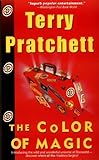
Terry Pratchett wrote over forty Discworld novels across a career spanning three decades, and the series — set on a flat world carried through space on the backs of four elephants standing on a giant turtle — is widely regarded as one of the most sustained and substantial achievements in genre fiction. The early books, including The Colour of Magic and Guards! Guards!, are primarily comic parody: affectionate, funny, and built on a detailed understanding of fantasy tropes. But the series deepened steadily, and the later novels are among the most philosophically rich popular fiction produced in the twentieth century.
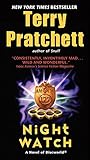
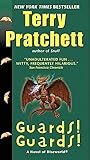
Small Gods is one of his finest: a pointed, compassionate examination of religious belief, institutional power, and what happens when a god is reduced to a single believer. Night Watch, often cited as the series’ emotional peak, sends Commander Sam Vimes back in time to witness the bloody street revolution that shaped him, and becomes a meditation on duty, history, and the moral weight of choosing to do good in a broken world. Guards! Guards! introduces the City Watch and begins the sequence that would become Pratchett’s most consistent vehicle for humanism and political thought. What looks like comedy is consistently doing harder work than it appears.
Pratchett died in 2015 from early-onset Alzheimer’s disease, having publicly campaigned for the right to assisted dying with characteristic clarity and courage. His books have outlasted their generic classification and sit alongside the best satirical fiction in English literature.
The Genius of Discworld
Terry Pratchett was one of the most beloved and inventive comic writers in the English language, and his towering achievement is the Discworld series — more than forty novels set on a flat world balanced on the backs of four elephants standing atop a giant turtle swimming through space. What began as affectionate parody of fantasy clichés evolved, over decades, into something far richer: a sprawling, interconnected satire of human society in all its absurdity. Discworld is not one story but many overlapping sequences — the wizards, the witches, the City Watch, Death himself — each offering a different vantage on Pratchett’s central subject, which was always people.
Comedy With a Conscience
Beneath the jokes, footnotes, and puns, Pratchett was a deeply serious moralist, and this is what lifts his work above mere comic fantasy. His novels tackle prejudice, war, religion, justice, the press, identity, and the abuses of power, examining them with a humane intelligence and a fierce hatred of cruelty and cant. The City Watch books, following the cynical-but-decent Sam Vimes, are among the finest, using a fantasy police force to explore questions of duty, bigotry, and what it means to be good. Pratchett’s comedy and his ethics were inseparable; he made readers laugh and think in the same sentence.
Unforgettable Characters
Part of Discworld’s enduring appeal lies in its cast. Death, who speaks in capital letters and develops an unexpected fondness for humanity, remains one of the most cherished characters in modern fiction. The witch Granny Weatherwax, the canny conman Moist von Lipwig, the indomitable young witch Tiffany Aching, and the relentless Sam Vimes recur across the series, growing and deepening over many books. Pratchett’s gift for character meant that even minor figures felt fully alive, and readers form lasting attachments to a world that, for all its fantasy trappings, is recognisably our own.
Terry Pratchett’s Reputation Endures
Pratchett wrote with extraordinary productivity even after his public diagnosis with early-onset Alzheimer’s, which he faced with characteristic honesty and advocacy until his death in 2015. Because Discworld is organised into sub-series, newcomers need not start at the beginning; Guards! Guards! (the Watch), Mort (Death), or Wyrd Sisters (the witches) are all excellent entry points, and Small Gods works beautifully as a standalone. His blend of riotous humour, sharp social satire, and genuine warmth earned him a knighthood and a vast, fiercely loyal readership, and his books remain some of the most reread in modern fantasy — proof that comedy, done well, can carry the deepest truths.
Beyond Discworld
While Discworld is his monument, Pratchett’s range extended beyond it. He co-wrote Good Omens with Neil Gaiman, a beloved comic novel about an angel and a demon trying to avert the apocalypse, and he wrote acclaimed fiction for younger readers, including the Tiffany Aching books and the standalone novel Nation, which many consider among his finest and most moving work. He also collaborated on science fiction in his later years. Across all of it runs the same combination of humour, humanity, and moral seriousness that defined his Discworld, proving that his gifts were not tied to a single world but were the expression of a particular and irreplaceable sensibility.
A Lasting Influence
Pratchett’s influence on comic and fantasy writing has been profound, and his work occupies an unusual place in readers’ affections, inspiring a devotion closer to love than mere admiration. His quotable wisdom, his unforgettable characters, and his ability to find the profound within the absurd have given his books extraordinary staying power and reread value. In his final years he became a prominent and characteristically clear-eyed advocate on the subject of dying with dignity, facing his own illness with the same honesty and wit that marked his fiction. His knighthood and his enduring popularity confirm his status as one of the most important British writers of his generation — a comic novelist whose laughter always carried a deep and humane intelligence.
Expanding the Shelf
The Truth, Thief of Time, Feet of Clay, The Fifth Elephant, Lords and Ladies, Interesting Times, Men at Arms, and Hogfather make rewarding next steps for anyone who has enjoyed the major works.
Reading Guides