Dune vs The Lord of the Rings: Which First?
Two novels claim the title of greatest speculative fiction ever written. Dune and The Lord of the Rings disagree about almost everything — mythology vs ecology, consolation vs catastrophe, a universe of gods vs a universe of oil. Here is how they compare and which to read first.
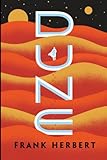
The argument has been running for sixty years and it will not be settled here. Dune by Frank Herbert and The Lord of the Rings by J.R.R. Tolkien are the two novels most frequently named when the question is: what is the greatest speculative fiction ever written? They are also, as arguments go, almost perfectly opposed.
Tolkien built a world rooted in grief for a vanishing England, populated with gods and myths and a cosmology older than memory, written in a prose that reaches for the cadences of Norse saga. He wanted to give England the mythology it had lost. Herbert built a world rooted in ecology, geopolitics, and the seductive danger of charisma — a desert planet whose politics run on the energy equivalent of oil, whose prophets are manufactured, whose hero is a warning. He wanted to write a novel about the lies we tell ourselves when we follow great men.
They do not agree about what mythology is for, what a hero should be, or whether the universe owes its readers consolation. Reading both is one of the foundational experiences of serious speculative fiction. Understanding what they disagree about is the most useful preparation for doing so.
Quick Comparison
| Dune | The Lord of the Rings | |
|---|---|---|
| Author | Frank Herbert | J.R.R. Tolkien |
| Year | 1965 | 1954–55 |
| Genre | Science fiction | Fantasy |
| World-building philosophy | Ecology, politics, resource scarcity | Mythology, linguistics, cosmological depth |
| Hero’s arc | Tragic, cautionary | Eucatastrophic, redemptive |
| Prose style | Dense, layered, aphoristic | Archaic, lyrical, deliberate |
| Accessibility | Demanding from page one | Slow-building but rewarding |
| Series scope | 6 Herbert novels (+ many posthumous) | 3 volumes (+ The Hobbit, The Silmarillion) |
Tolkien’s World: Mythology as the Foundation
The Lord of the Rings does not begin as a story about saving the world. It begins as a story about a birthday party, an old hobbit, and a ring he is reluctant to leave behind. This is deliberate. Tolkien was a philologist who had spent decades constructing the languages, histories, genealogies, and cosmologies of Middle-earth before he wrote a word of narrative — and he understood that the power of myth comes not from its scale but from the density of the reality it implies. You believe in Middle-earth before you understand why, because it is built like a place that existed before the first page and will continue existing after the last.
The novel’s central conflict — the Fellowship’s quest to destroy the One Ring before the Dark Lord Sauron can reclaim it — is structurally simple. What is not simple is what Tolkien does with it. The Ring does not merely grant power. It corrupts the desire for good, twisting heroic intention into the kind of domination it is supposed to destroy. Boromir wants to use the Ring to save his people. This is not an evil desire. But the Ring knows how to find a way in through the noble impulse, which is why the only person who can carry it to its destruction is someone so small and so hungry for comfort that he does not want to use it at all.
Tolkien’s philosophical architecture is Christian in its bones, though not in its details: the idea that the world is fallen, that heroism involves sacrifice, and that the ultimate victory belongs to the humble rather than the powerful. Frodo does not destroy the Ring through heroic will. He fails at the crucial moment — Gollum destroys it for him, accidentally, and through his own consuming need. Tolkien called this eucatastrophe — the sudden turn by which a seemingly inevitable defeat becomes an unexpected victory — and he considered it the structural signature of all true mythology. The world is saved not by greatness but by grace.
The prose style requires adjustment for readers raised on contemporary fantasy. Tolkien writes in a register influenced by the Old English texts he studied — Beowulf, the Edda, the Kalevala — and his sentences move at a pace that commercial publishing has long since abandoned. The chapters set in the Shire have the warmth and wit of an English rural comedy. The chapters set in Rohan reach for something closer to saga. The darkness of Mordor achieves a bleakness that modern grimdark fantasy is still measuring itself against. The variation in register is not inconsistency. It is the work of a writer who understood that tone, like geography, shapes how a reader inhabits a world.
Herbert’s World: Ecology as the Foundation
Dune opens with an epigraph from a fictional document, one of dozens of such epigraphs that appear throughout the novel, each attributed to works — histories, religious texts, court analyses — from centuries after the events being narrated. This is Herbert’s first and most significant structural choice. Before the story begins, the reader is placed outside it, looking back from a future in which Paul Atreides is already a mythological figure. The question the novel is actually asking is established before page one: how does this happen, and what does it cost?
The universe Herbert constructs is built on a single resource: melange, a spice found only on the desert planet Arrakis that extends life, enables prescience, and powers interstellar navigation. Without it, the Spacing Guild cannot fold space. Without folded space, the empire cannot function. Arrakis is, structurally, the Middle East — a vast desert sitting on the resource that makes civilisation possible, whose native inhabitants have been systematically dispossessed and whose conquerors have learned to call exploitation stewardship.
Herbert was explicit about his intentions. He began Dune by researching the ecology of Oregon’s sand dunes and the agricultural projects attempting to stabilise them — and then asked what happened to cultures that lived inside a resource system they were destroying from outside. Arrakis is not a backdrop. It is the argument. The desert shapes the Fremen as surely as the ocean shaped the Norse — their religion, their bodies, their social structures, their relationship to water and death all emerge from the environment they inhabit. This is ecological thinking applied to world-building, and no novel in the genre has done it better.
Paul Atreides is Herbert’s most sophisticated creation and his most carefully constructed trap. He is the protagonist readers are meant to identify with: intelligent, noble, brave, heir to a great house, inheritor of a destiny. He is also — and Herbert builds this case throughout the entire novel and tears it apart in the three sequels — the most dangerous kind of figure a society can produce: a charismatic leader whose followers invest him with divine authority and follow him off a cliff. The prescience Paul develops through melange does not free him from fate. It shows him fate and removes his ability to refuse it. The hero’s journey, in Dune, is a road into catastrophe dressed up as triumph.
The prose is dense and rewards attention. Herbert writes dialogue that carries subtext on multiple levels simultaneously — characters say one thing for one audience, meaning another thing for a second audience, while the reader has information both audiences lack. The in-world epigraphs reward re-reading after the novel is finished. The appendices on Arrakeen ecology, religion, and language are not supplementary — they are part of the experience, the equivalent of Tolkien’s index of names or the Red Book’s genealogies.
World-Building Philosophy: The Core Disagreement
Tolkien and Herbert build from opposite directions, and understanding this is the key to understanding what makes each novel great.
Tolkien begins with language. He invented Quenya and Sindarin — complete Elvish languages with their own phonological history, grammar, and poetry — before he had a story for them. From language came mythology. From mythology came geography, history, and people. The world is the primary creation; the story is the delivery mechanism. This is why Middle-earth feels inexhaustible — it exceeds the novel, as any real place does.
Herbert begins with a problem. He asks: what would a civilisation built entirely on a non-renewable resource look like, from the inside, at the moment of maximum fragility? The world-building follows from the question rather than preceding it. Arrakis is not a place to inhabit but a system to understand. Its beauty is real — Herbert’s desert descriptions are extraordinary — but it is always also an argument.
The difference produces different reading pleasures. Tolkien’s world rewards immersion: the more you slow down, the richer the experience, and the reward for reading The Silmarillion and The Hobbit is a sense of Middle-earth’s depth that goes far beyond any individual narrative. Herbert’s world rewards analysis: the more you interrogate the systems he has built — asking how the Bene Gesserit breeding program actually works, what the Spacing Guild’s prescience means for causality, what the ecological shift Paul initiates implies for the empire’s future — the more the novel gives back.
Prose and Accessibility
Both books demand patience. Neither is forgiving of readers who want orientation and momentum from the first chapter.
The Lord of the Rings is the slower starter. The Fellowship of the Ring spends its first hundred pages in the Shire, establishing Frodo’s ordinary life before disrupting it. This is entirely intentional — Tolkien understood that the scale of the catastrophe to come requires a baseline of smallness and normality to measure against — but modern readers accustomed to the pace of post-2000 epic fantasy may find the section testing. The novel accelerates through the journey to Rivendell and becomes genuinely propulsive once the Fellowship forms.
Dune does not wait. Its first chapter drops the reader into an unfamiliar universe, an unstable political situation, a family in danger, and a protagonist whose significance is being gestured at through religious prophecy before anyone explains what the religion is. Herbert trusts the reader to accumulate understanding as the novel progresses, and his glossary is a tool rather than an afterthought. The novel moves at a thriller pace once Paul and Jessica reach the desert and find the Fremen — but its opening hundred pages, like Tolkien’s, require the reader’s trust before they begin to pay it back.
On prose style: Tolkien is the more distinctively literary writer. His battle scenes, his landscapes, and his set pieces — the Mines of Moria, the Dead Marshes, Pelennor Fields — are achieved through prose that has no close equivalent in contemporary fantasy. Herbert is the sharper sentence-by-sentence writer when it comes to political irony and psychological insight; his prose is harder and less expansive but more precise in its effects.
Thematic Depth: Power and Its Costs
Both novels are, at their core, about power: what it does to the people who hold it, what it costs the people who resist it, and whether it is possible to use it without being corrupted by it.
Tolkien’s answer is largely no — the Ring cannot be used, only destroyed, and the Shire must be saved by the very people who refused to seek greatness — and his novel is consolatory in a way that Herbert’s is not. The ending of The Return of the King is among the most moving in English-language fiction. Tolkien earned that ending over three volumes of accumulated sacrifice and loss, and the eucatastrophe, when it comes, is not cheap. But it is a comfort. The world is saved. The wounds are real but the healing is real too.
Herbert’s answer is darker and, I would argue, more honest. Paul Atreides succeeds. He defeats his enemies, reclaims his father’s house, avenges his father’s murder, and sets in motion a religious and political revolution that will reshape the known universe. He also, in the process, condemns billions of people to die in his name. Dune Messiah and its successors make this cost explicit, but the seeds of it are visible in the first novel for any reader paying attention. Herbert does not want you to feel relieved at the end. He wants you to feel uneasy.
This is the philosophical difference between the two novels’ treatments of power. Tolkien believes in the power of small and humble heroism to resist and ultimately triumph over evil. Herbert believes that heroism, at sufficient scale, becomes indistinguishable from what it was supposed to defeat.
Series Scope: How Much to Commit
A crucial practical question for new readers is whether these are books or series — and the answer differs substantially.
The Lord of the Rings is, in Tolkien’s own conception, a single novel published in three volumes for practical reasons. The Fellowship of the Ring, The Two Towers, and The Return of the King form one continuous story with a single arc. Read all three; they are not separable. The Hobbit, published earlier, is a companion rather than a prequel in the strictest sense, but reading it first transforms the experience of The Fellowship of the Ring. The Silmarillion and Tolkien’s other posthumously published works are for those who want to go deep into the mythology; they are not prerequisites for the main narrative.
Dune is a different case. The first novel is complete. It earns its own ending. Frank Herbert’s five sequels — Dune Messiah, Children of Dune, God Emperor of Dune, Heretics of Dune, and Chapterhouse: Dune — form a single extended argument about the consequences of the first novel’s events, escalating in abstraction and philosophical complexity with each book. Dune Messiah is the most essential sequel; the later books are for committed readers willing to follow Herbert into increasingly demanding territory. The posthumous novels by Brian Herbert and Kevin J. Anderson expand the universe commercially but are not considered canonical by most of the serious readership.
Which Should You Read First?
Read The Lord of the Rings first — but read The Hobbit before you start.
The case for Tolkien first: it is the more emotionally generous of the two novels, and it builds the reader’s capacity for the kind of patient, immersive reading that both books require. The experience of living inside Middle-earth for three volumes — of learning what it feels like to inhabit a secondary world so fully realised that it exceeds its own story — is excellent preparation for the different demands of Arrakis. Readers who go to Dune first sometimes find Middle-earth less alien than it needs to be; readers who go to Tolkien first find that Dune’s political density lands with more force because their standard for depth has been raised.
There is also a chronological logic: Tolkien invented the form. Herbert responded to it. Reading them in that order gives you the original and then the critique, which is the better intellectual experience.
Read Dune second, with time to let Tolkien settle. Come to Herbert knowing what deep world-building looks like when its purpose is consolation — and let him show you what it looks like when its purpose is warning.
For A Game of Thrones — George R.R. Martin’s deliberate complication of both traditions — read after both. Martin began his series as a response to Tolkien’s moral certainties and absorbed Herbert’s political seriousness, and his work reads very differently once you know what it is arguing with.
Frequently Asked Questions
Is Dune or The Lord of the Rings better?
The honest answer is that they are not competing for the same prize. The Lord of the Rings is the more emotionally generous novel — its world is a gift, its tone consolatory, its ending among the most moving in fiction. Dune is the more intellectually provocative one — it trusts the reader to hold contradictions, resists comfort at every turn, and leaves you more disturbed than satisfied. Readers who want to be transported into a world of beauty and mythology will prefer Tolkien. Readers who want to be made genuinely uncomfortable by the mechanics of power will prefer Herbert. Most serious readers of speculative fiction eventually find both essential.
Which book is harder to read: Dune or The Lord of the Rings?
They are difficult in different ways. The Lord of the Rings is long and its pace is slow by modern standards — Tolkien dwells lovingly in his world, and readers accustomed to fast-moving contemporary fantasy sometimes find the first volume a test of patience. Dune’s difficulty is structural: its opening chapters drop the reader into a fully realised universe with minimal orientation, and its appendices and glossary are not decoration but reference. Dune moves faster than Tolkien once it gets going, but its first hundred pages demand active reading. Neither book rewards skimming.
Should I read The Hobbit before The Lord of the Rings?
Yes, and for reasons beyond mere preparation. The Hobbit is a shorter, tonally lighter novel that introduces Bilbo Baggins, the One Ring, and the geography of Middle-earth in a register that most readers find immediately accessible. It makes the tonal shift into The Lord of the Rings — where the stakes are world-historical and the tone is elegiac rather than adventurous — land with considerably more force. Readers who begin with The Fellowship of the Ring without having read The Hobbit often feel the novel is slow to earn its emotional weight. The Hobbit earns it for you in advance.
Do I need to read all six Dune books?
No, and this is important to state clearly. The first Dune novel is a complete work with a beginning, a middle, and an ending that resolves its central conflicts while leaving the larger political universe open. Frank Herbert wrote five sequels, each of which escalates the philosophical stakes and complicates Paul Atreides’s legacy in increasingly abstract ways. Dune Messiah, the immediate sequel, is a deliberate deconstruction of the first novel and works best if you loved Dune and want to see Herbert dismantle his own hero. The later books become progressively more demanding and polarising. Reading the first novel alone is entirely defensible.
What should I read after Dune and The Lord of the Rings?
After Tolkien, the most natural next step is A Game of Thrones by George R.R. Martin, which began as a conscious reaction against Tolkien’s moral clarity — Martin wanted to write a secondary world epic where no one was safe, where heroism had political consequences, and where the wrong people won. After Dune, Ursula K. Le Guin’s The Left Hand of Darkness and The Dispossessed offer the same seriousness of political and philosophical purpose with tighter formal control. Isaac Asimov’s Foundation series occupies similar territory — civilisation, collapse, and the question of whether history can be engineered — and rewards comparison.
For the Best Fantasy and Science Fiction
For the definitive guides to epic fantasy and science fiction — from Tolkien and Herbert to the best of contemporary speculative fiction — see our Best Fantasy Books and Best Science Fiction Books lists.
Affiliate disclosure: Links on this site are affiliate links. We earn a small commission at no extra cost to you. This does not influence our editorial recommendations.
Frequently Asked Questions
Is Dune or The Lord of the Rings better?
The honest answer is that they are not competing for the same prize. The Lord of the Rings is the more emotionally generous novel — its world is a gift, its tone consolatory, its ending among the most moving in fiction. Dune is the more intellectually provocative one — it trusts the reader to hold contradictions, resists comfort at every turn, and leaves you more disturbed than satisfied. Readers who want to be transported into a world of beauty and mythology will prefer Tolkien. Readers who want to be made genuinely uncomfortable by the mechanics of power will prefer Herbert. Most serious readers of speculative fiction eventually find both essential.
Which book is harder to read: Dune or The Lord of the Rings?
They are difficult in different ways. The Lord of the Rings is long and its pace is slow by modern standards — Tolkien dwells lovingly in his world, and readers accustomed to fast-moving contemporary fantasy sometimes find the first volume, The Fellowship of the Ring, a test of patience. Dune's difficulty is structural: its opening chapters drop the reader into a fully realised universe with minimal orientation, and its appendices and glossary are not decoration but reference. Dune moves faster than Tolkien once it gets going, but its first hundred pages demand active reading. Neither book rewards skimming.
Should I read The Hobbit before The Lord of the Rings?
Yes, and for reasons beyond mere preparation. The Hobbit is a shorter, tonally lighter novel that introduces Bilbo Baggins, the One Ring, and the geography of Middle-earth in a register that most readers find immediately accessible. It makes the tonal shift into The Lord of the Rings — where the stakes are world-historical and the tone is elegiac rather than adventurous — land with considerably more force. Readers who begin with The Fellowship of the Ring without having read The Hobbit often feel the novel is slow to earn its emotional weight. The Hobbit earns it for you in advance.
Do I need to read all six Dune books?
No, and this is important to state clearly. The first Dune novel is a complete work. It has a beginning, a middle, and an ending that resolves its central conflicts while leaving the larger political universe open. Frank Herbert wrote five sequels, each of which escalates the philosophical stakes and complicates Paul Atreides's legacy in increasingly abstract ways. Dune Messiah, the immediate sequel, is a deliberate deconstruction of the first novel and works best if you loved Dune and want to see Herbert dismantle his own hero. The later books become progressively more demanding and polarising. Reading the first novel alone is entirely defensible.
What should I read after Dune and The Lord of the Rings?
After Tolkien, the most natural next step is A Game of Thrones by George R.R. Martin, which began as a conscious reaction against Tolkien's moral clarity — Martin wanted to write a secondary world epic where no one was safe, where heroism had political consequences, and where the wrong people won. It is a valuable corrective and a great novel in its own right. After Dune, Ursula K. Le Guin's The Left Hand of Darkness and The Dispossessed offer the same seriousness of political and philosophical purpose with tighter formal control. Isaac Asimov's Foundation series occupies similar territory — civilisation, collapse, and the question of whether history can be engineered — and rewards comparison.


