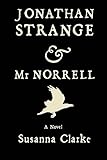
Susanna Clarke is a British author whose two novels — Jonathan Strange and Mr Norrell and Piranesi — are among the most original works of literary fantasy written this century.
Susanna Clarke spent a decade writing Jonathan Strange and Mr Norrell, and the patience shows. The novel — set in an alternate nineteenth-century England where magic was once practiced and has now returned — is a remarkable achievement: funny, unsettling, impeccably researched, and written in a prose style that precisely mimics the discursive voice of Regency-era fiction, complete with extensive footnotes that constitute a parallel history of English faerie magic. It is rightly counted among the most successfully realized alternate worlds in contemporary fiction, and its combination of wit and genuine strangeness has made it a touchstone for literary fantasy.
Then came Piranesi, published in 2020 after Clarke spent years struggling with chronic fatigue syndrome. It is a completely different kind of book: brief, mysterious, and entirely unlike anything else in contemporary fiction. Its narrator lives in an infinite house of tidal halls and marble statues and records his life in journals without knowing who he is or how he came to be there. The slow revelation of the novel’s reality is masterfully managed, and the book manages to be both puzzle and meditation on memory, loss, and belonging.
Clarke is not a prolific writer, and both her novels demand patient readers willing to enter worlds on their own terms. But for those who do, the rewards are exceptional. She writes with a confidence and idiosyncrasy that is entirely her own.
Reading Guides