Where to Start with Susanna Clarke: A Reading Guide
Where to start with Susanna Clarke — whether to begin with Jonathan Strange & Mr Norrell or Piranesi. A complete reading guide to her novels.
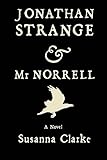
Susanna Clarke (born 1959) is the British novelist who spent ten years writing her debut novel and produced one of the most original and most praised works of fantasy literature of the twenty-first century. Jonathan Strange & Mr Norrell (2004) is a genuine one-off — there is nothing quite like it in the genre — and her second novel Piranesi (2020), written during an extended illness, is its complete formal and tonal opposite: intimate, concentrated, mysterious, and beautiful. She has published only two novels, but both are extraordinary.
Where to Start: Jonathan Strange & Mr Norrell (2004)
Clarke’s masterpiece — and one of the most remarkable fantasy novels ever written. Set in an alternate England during the Napoleonic Wars, where magic is real but has not been practised for three centuries, the novel follows two magicians: Gilbert Norrell, a reclusive Yorkshire scholar who has spent his life hoarding magical books and knowledge; and Jonathan Strange, a young gentleman who discovers a natural gift for magic and becomes first Norrell’s pupil, then his rival, then (during Wellington’s Peninsular Campaign in Spain) the most celebrated magician in England.
Clarke writes in an archly Victorian style — discursive, ironic, formally elaborate — with extensive footnotes citing the magical histories of an entire fictional tradition. The novel’s England is simultaneously recognizable (the social world of Austen and Dickens, the military world of Sharpe) and profoundly strange, populated by fairies from a vanished northern kingdom who are far more dangerous than they appear. Winner of the Hugo Award, the World Fantasy Award, and an enormous readership.
Piranesi (2020)
Clarke’s second novel — and its complete formal opposite. Two hundred pages, written in a voice of extraordinary innocence and strangeness: Piranesi is a young man living in an infinite House whose halls contain the sea, clouds moving through the upper corridors, and thousands of marble statues. He keeps a journal; he worships the House; he eats fish from the tidal corridors. There is one other person, the Other, who visits twice a week and asks questions about the House’s secrets.
The novel gradually reveals what the House is and who Piranesi actually is — a revelation that is among the most moving in recent fiction. Written during the illness that kept Clarke from full health for a decade, it is a novel about the mind creating its own world to survive, and about what happens when the real world returns.
Why Jonathan Strange & Mr Norrell Is the Ideal First Book
For a reader new to Susanna Clarke, Jonathan Strange & Mr Norrell is the ideal first book because it is her celebrated debut and the fullest expression of her distinctive gift, the sophisticated, literary, and richly imagined fantasy that treats magic with intelligence and depth. Jonathan Strange & Mr Norrell imagines an alternate England in which magic is real, following two very different magicians who set out to revive English magic, rendered with rich historical detail, a pervasive sense of the uncanny, and a wealth of invented lore. As an entry point, it offers the fullest expression of Clarke’s gifts, the sophisticated literary fantasy, the rich historical evocation, and the intelligent, atmospheric treatment of magic and the uncanny. It welcomes the newcomer with its richly imagined world, its intelligence, and its atmosphere, drawing the reader into a vast and immersive literary fantasy. It is her celebrated debut and a fine representation of her gifts, so that the new reader encounters Clarke at her most ambitious. For the newcomer, then, Jonathan Strange & Mr Norrell is the natural and ideal starting point.
What to Expect as a New Reader
As a new reader, you can expect Jonathan Strange & Mr Norrell to be a sophisticated, immersive, and richly imagined literary fantasy, treating magic with intelligence and depth. You can expect a richly imagined world, for the novel imagines an alternate England in which magic is real and is being revived, with its own deep history, lore, and rules of magic, rendered in immersive detail. You can expect sophisticated literary fantasy, for Clarke treats magic not as mere spectacle but as a subject for intelligent, literary imagination, with wit, depth, and a distinctive voice. You can expect rich historical evocation, for the novel is set in an alternate version of early nineteenth-century England, evoked with convincing detail and texture, complete with scholarly footnotes. You can expect a pervasive sense of the uncanny, for the novel is suffused with a feeling of the strange, the eerie, and the numinous. You should expect a long and immersive novel that rewards patient engagement. Expect, in short, a sophisticated, immersive, and richly imagined literary fantasy, an intelligent and atmospheric introduction to Clarke’s gifts.
Going Deeper After Your First Book
Once Jonathan Strange & Mr Norrell has introduced you to Clarke’s distinctive fantasy, the reader who wishes to go deeper can turn to her other novel, Piranesi, which displays her gifts in a very different and more intimate register. Piranesi is short, spare, and mysterious, set in a strange and labyrinthine world, and it explores themes of isolation, the uncanny, and the power of the imagination with the same intelligence and atmosphere that mark her debut, in a wholly different form. Reading it after Jonathan Strange & Mr Norrell deepens your appreciation of Clarke’s distinctive gifts, the intelligent, literary treatment of magic and the uncanny, the atmospheric power, and the extraordinary imagination, and reveals her remarkable range, from the vast to the intimate. Her characteristic gifts run through both novels, and the reader who has been immersed in Jonathan Strange & Mr Norrell will find them in Piranesi. Building your reading journey through Clarke’s work is a matter of moving from her vast, immersive debut to her spare, intimate later novel. The reader who begins with Jonathan Strange & Mr Norrell and continues with Piranesi will discover a writer of extraordinary imagination and range.
Reading Susanna Clarke
Clarke’s two novels are so different in scale, tone, and form that they can seem to belong to different writers: Jonathan Strange is a Victorian epic of a thousand pages; Piranesi is an intimate novella of two hundred. What they share is a quality of absolute conviction — Clarke creates her alternative worlds (the magic-haunted England of the Napoleonic era, the House of infinite halls and tidal seas) with such precision and such consistency that the reader inhabits them completely. Begin with Piranesi if you want her voice immediately and accessibly; begin with Jonathan Strange if you are prepared for one of the great reading commitments of your life.
Frequently Asked Questions
Where should I start with Susanna Clarke?
The answer depends entirely on what kind of reader you are. Jonathan Strange & Mr Norrell (2004) is Clarke's masterpiece — a 1,000-page alternative history of English magic set during the Napoleonic Wars, written in the style of a Victorian novel with extensive footnotes, that is one of the most original and most accomplished fantasy novels ever written. Piranesi (2020) is its complete opposite: a 200-page novella, intimate and mysterious, narrated by a man living alone in a House of infinite hallways that contains the sea. If you are prepared for length and commitment, start with Jonathan Strange; if you want Clarke's voice in concentrated, immediately accessible form, start with Piranesi.
What is Jonathan Strange & Mr Norrell about?
Jonathan Strange & Mr Norrell (2004) is set in an alternate early nineteenth-century England where magic exists but has not been practised for centuries. Gilbert Norrell, a reclusive Yorkshire magician who has spent his life hoarding magical knowledge, comes to London to restore English magic to practical use — and finds himself both celebrated and challenged when Jonathan Strange, a gifted young amateur, becomes his pupil and then his rival. The novel spans the Napoleonic Wars (Strange accompanies Wellington's campaigns) and is written throughout in an archly Victorian style, complete with footnotes citing fictional magical histories. Winner of the Hugo Award and the World Fantasy Award.
What is Piranesi about?
Piranesi (2020) is narrated through the journal of a young man who calls himself Piranesi, living in a vast and infinite House whose halls contain marble statues, the sea, and clouds. He is not alone — there is one other person, whom he calls the Other — but he has no memory of any other world. The novel gradually reveals what the House is, who Piranesi really is, and what has been done to him — unfolding as a mystery of identity and memory written in a voice of extraordinary innocence and strange beauty. Short, perfect, and deeply moving.
Is Jonathan Strange & Mr Norrell too long?
Jonathan Strange & Mr Norrell is genuinely long — about 1,000 pages in most editions — and it is written in a deliberately paced Victorian style that rewards rather than rushes. Readers who bounce off the first hundred pages often find that the novel opens considerably once Strange appears and the rivalry between the two magicians begins. The footnotes (some of which are extended stories in themselves) are part of the novel's pleasure, not optional extras. Most readers who commit to it find it one of the most rewarding reading experiences of their lives. Piranesi, at 200 pages, is the perfect quick alternative.